Home › Interior Remodeling › South Pasadena
Interior remodeling in South Pasadena
Interior remodeling in South Pasadena, CA works best when new finishes suit the house’s own era, whether it’s a 1910s Craftsman, a Tudor Revival or a Monterey Colonial. Los Angeles Home Remodelers is the design-build interior remodeling contractor that handles floors, tile, paint, drywall, doors, closets and fireplaces as one coordinated job.
Your project manager schedules the trades, books plan check with the city’s Building & Safety Division when a scope needs it and keeps older rooms lead-safe. Most single-room jobs run a few days to a couple of weeks. You’ll get a free in-home visit and a written, itemized estimate.
Bonded & Insured | Written Workmanship Warranty
We walk each room, match the trim and check your historic status. No charge.
Thanks — we got your request. We'll call you to set up your free in-home visit.
Period interiors, done to match
Serving Mission West, Oak/Laurel, Ramona Street and homes across South Pasadena, CA.
Interior remodeling in South Pasadena usually happens in older rooms: about a third of the city’s homes were built before 1940, and close to two in three before 1960.
Whole neighborhoods from 1900 to 1939 still stand largely intact, in Craftsman, Revival and Art Deco styles, with a few Victorians among them. Each style came with its own trim profiles, door designs and plaster finishes.
So we match the finishes to the house, not to a catalog. A Tudor gets its arched openings patched true, a Spanish Colonial keeps its smooth plaster, and a Craftsman keeps its stained casings.

What we do inside South Pasadena homes
Choose one trade or several. Each card opens that service’s own page.

Most pre-1940 walls in town are plaster on lath, often with hairline cracks above every door head. We patch sound plaster with setting compound, replace failed sections and skim the joint flat.
Arched openings and coved ceilings keep their curves instead of getting a square drywall shortcut.

Interior painting in South Pasadena starts with the age of the house. We choose sheens and colors that suit a Craftsman, Tudor or Spanish Colonial room, then patch, caulk and prime before any finish coat.
Old layers get tested, and scraping is done wet and contained.

Original doors here come in many styles: five-panel fir, arched plank and glass-paneled French pairs. We repair and rehang the ones you have, and match a new door to the old where one’s missing.
Antique knobs and hinges can usually be cleaned and reused.
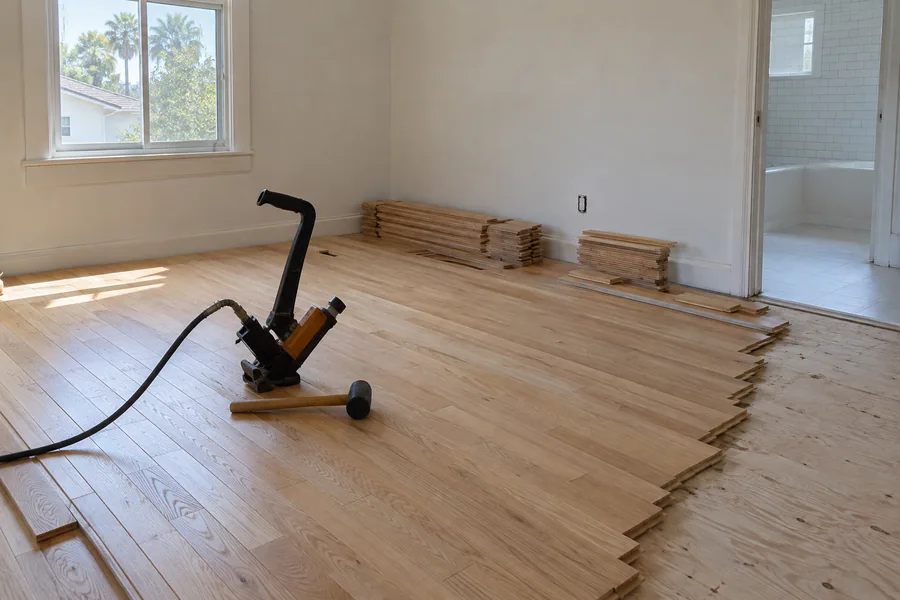
Oak and fir floors often survive under carpet in pre-war rooms. We measure what’s left of the wear surface, sand and refinish the boards that can take it, and patch in matched pieces.
Where a floor’s too thin to sand again, we lay new hardwood that fits the period.

Entry halls, laundry rooms and hearths in older houses often carry cracked or patched tile. We set new porcelain or ceramic on a flat, stiff base, with a crack-isolation membrane over any movement below.
Simple white or solid-color tile reads right in most period rooms.
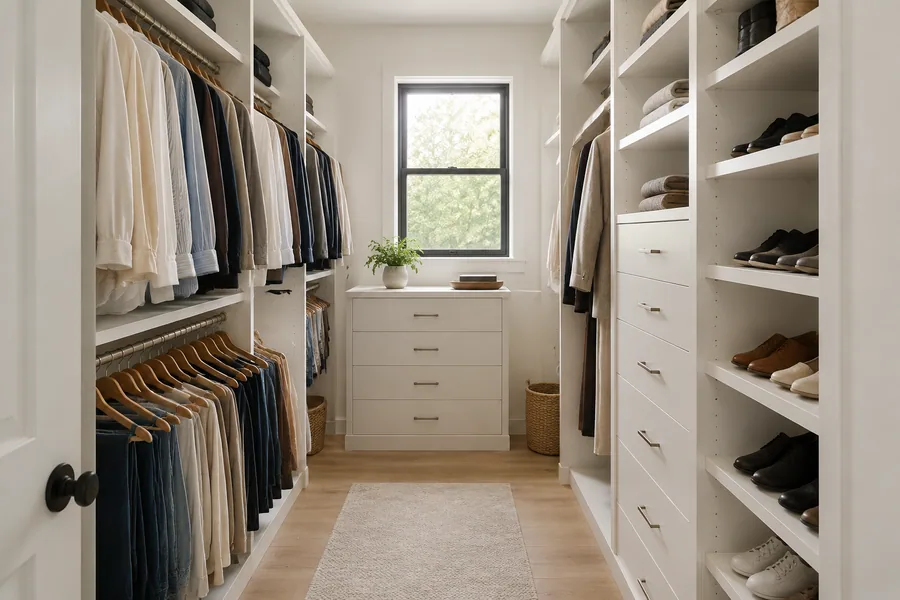
Pre-1940 bedrooms rarely offer more than a narrow reach-in. We fit adjustable shelves, double rods and drawers to every inch of it, or build a shallow wardrobe wall along one side of the room.
Finishes match your trim, so the new storage looks original.
How it works
You’ll know your home’s historic status, the order of work and the price before anything’s ordered.
We note your house’s style and look up whether it’s on the city’s Inventory of Historic Resources.
Old paint, flooring and textured ceilings get sampled, and you see the lab results in writing.
When your scope needs a permit, we file through OpenGov and book plan check by appointment.
Plaster, paint, floors and trim go in that order. The last day is a punch-list walk with you.
South Pasadena’s Building & Safety Division, in the Community Development Department, takes permit applications through the OpenGov Customer Portal, and plan check is by appointment. The city’s site doesn’t spell out which interior projects need a permit, so we confirm your scope with the division before work begins.
Community Development also staffs the Cultural Heritage Commission. Homes on the Inventory of Historic Resources need a Certificate of Appropriateness for alterations, including changes to primary facades. We found no written exemption for interior work, so we check your property’s status and ask the city whenever a scope comes close.
One town, many eras
The city’s General Plan names Craftsman, Queen Anne, Shingle, Spanish Colonial, Monterey, Tudor Revival and Mid-Century Modern homes. Each era used different trim, doors and wall finishes, and a wrong match shows right away.
Before we order materials, we match:
Where a profile isn’t sold anymore, a millwork shop grinds a knife to copy it, and we install the new pieces right beside the originals.
Mid-Century houses get the opposite approach: flush doors, crisp drywall and one floor running through the open rooms.

Pricing a South Pasadena interior
Period matching and plaster repair move the price more than the size of the room.
After the visit, we price each room’s prep, materials and labor on its own line.
Trim and doors cut to match an old profile cost more than stock pieces.
Rebuilding arches and coves in plaster takes more hours than flat drywall.
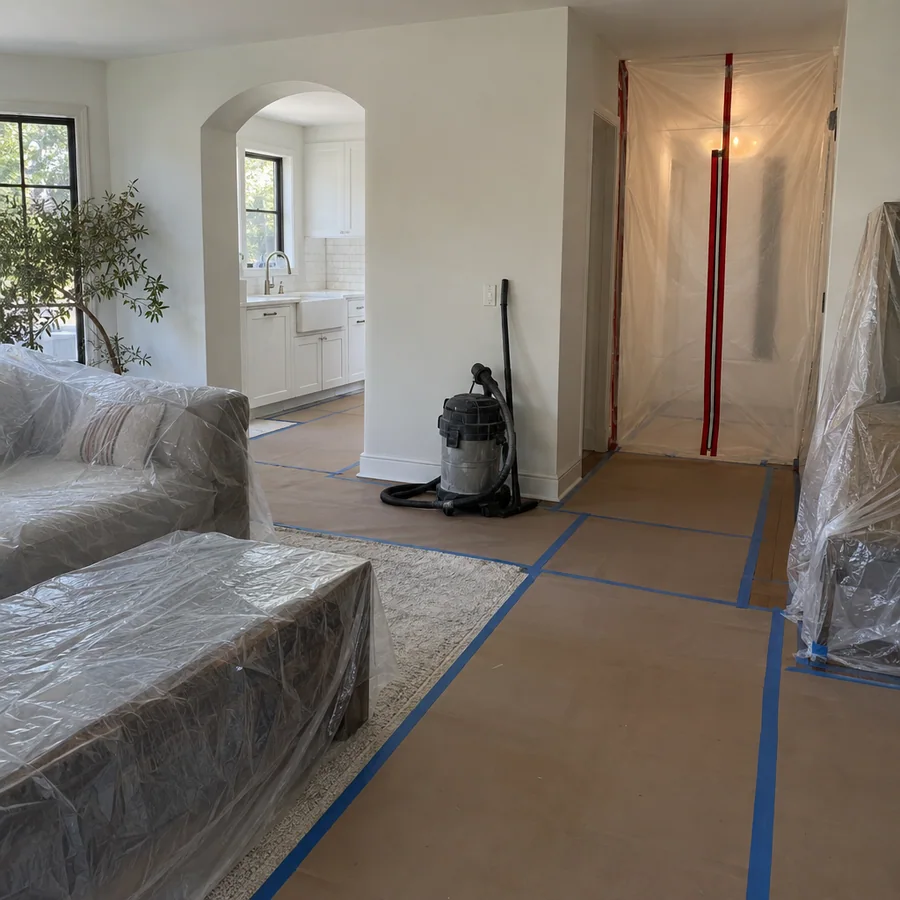
Asbestos or lead findings add containment, abatement and days.
Tight halls and narrow stairs slow material handling and setup.
A permit or a historic review step adds fees and calendar time.
One visit covers walls, floors, doors and historic status. You’ll know the order of work and the price before you commit to anything.
Questions
Straight answers on permits, historic status and old plaster walls.
Floors, paint, plaster and drywall, doors, closets, tile and fireplaces, booked one at a time or together. In pre-1940 houses, most jobs also include plaster repair and lead-safe prep, and both get their own price lines.
It depends on the scope. Electrical, plumbing, gas and wall changes generally call for one. The city’s site doesn’t list interior remodels plainly, so we confirm with Building & Safety and file through OpenGov when needed.
Most likely, yes. The Certificate of Appropriateness covers alterations to inventory properties, including primary facades, and we didn’t find a written interior exemption. We confirm with Community Development before work starts, so nothing stalls mid-job.
Yes. We take a sample piece to a millwork shop, which cuts a matching profile when none is sold. New casing and baseboard go in beside the old and get painted or stained to blend.
Not unless they’ve failed. Sound plaster is dense, quiet and part of the house’s character. We re-anchor and patch it, and swap in drywall only where it’s crumbling or water-damaged.
We assume it’s present in any pre-1978 house until a test says otherwise. Work areas get plastic containment, no dry sanding and a HEPA cleanup under the EPA’s renovation rules.
Most single-room jobs take a few days to a couple of weeks. Plaster repair, custom millwork and any historic review add time, and your calendar shows each room’s dates in writing.
Keep planning
Our overview of interior work: the order of trades, testing and combined projects.
Flooring installation in South Pasadena, from refinishing old oak to laying new planks.
Sheens and colors picked for the age of your house, over patched, primed walls.
From the blog
Now booking free in-home visits
Matched trim, sound plaster and the right floors make a remodel look like it’s always been there. Los Angeles Home Remodelers plans it room by room. Book your free in-home visit.
Mon–Sat, 8am–6pm
Tell us the rooms and the style of your house. We’ll check plaster, floors and trim, then price every line.
Thanks — we got your request. We'll call you to set up your free in-home visit.