Home › Interior Remodeling › Hardwood Floor Installation
Hardwood Flooring Contractor
Hardwood floor installation with Los Angeles Home Remodelers puts solid or engineered wood down the right way for your house: nailed to a wood subfloor, glued to a slab or floated. Our interior remodeling crews install and refinish oak and other hardwoods across Los Angeles, CA.
One project manager handles moisture readings, acclimation, subfloor prep, installation, sanding and finish coats, then baseboards and cleanup. Most prefinished installs take a few days, and site-finished floors run about a week while the coats dry. Pricing starts with a free in-home visit and a written, itemized estimate that prices each step.
Bonded & Insured | Written Workmanship Warranty
We check the subfloor, read its moisture and price your floor line by line. No charge, no obligation.
Thanks — we got your request. We'll call you to set up your free in-home visit.
Hardwood floors in Los Angeles
Serving homes across Los Angeles, CA.
Hardwood floor installation starts with one decision: how the boards attach. Your subfloor makes that call, and the species and finish come after it.
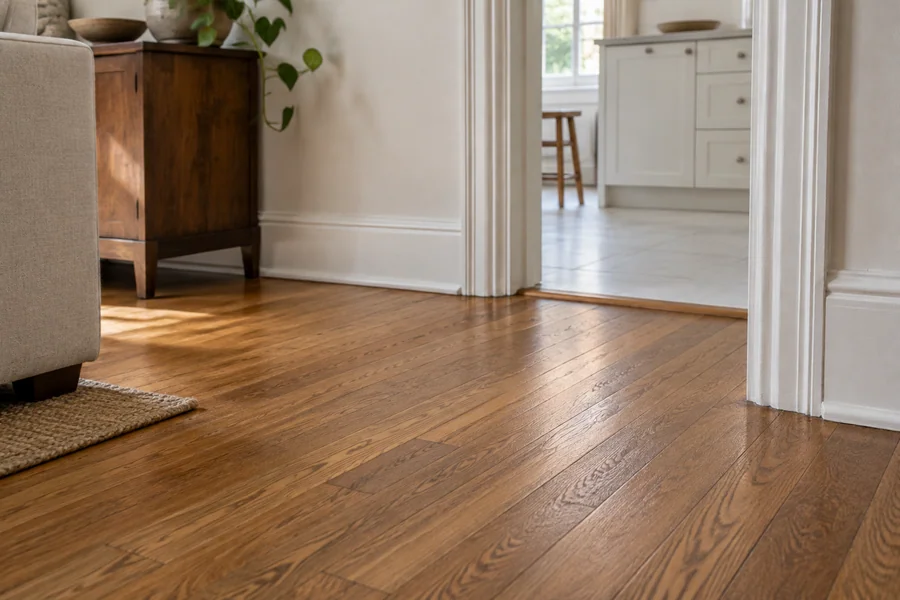
Raised floors in older Craftsman bungalows and Spanish homes take nail-down solid oak. Slab ranch houses take engineered wood, glued or floated once the concrete passes a moisture test.
Still weighing wood against vinyl plank or tile? Our flooring installation page lines them up room by room.

Hardwood projects
Each one starts with a moisture reading.

Took out a wall, or found bare patches under the old carpet? Most older LA floors are red oak strip, and we weave in new boards of the same species and width, offsetting the end joints so no straight seam shows.
Then we sand and stain the whole room together, and the patch disappears into the floor around it.

Herringbone and chevron suit Spanish Revival living rooms and modern entries alike. Each short board is set by hand from a center line we snap down the room.
Pattern floors need a dead-flat base and more cutting at the walls, so we flatten the subfloor first and plan the borders before we start.
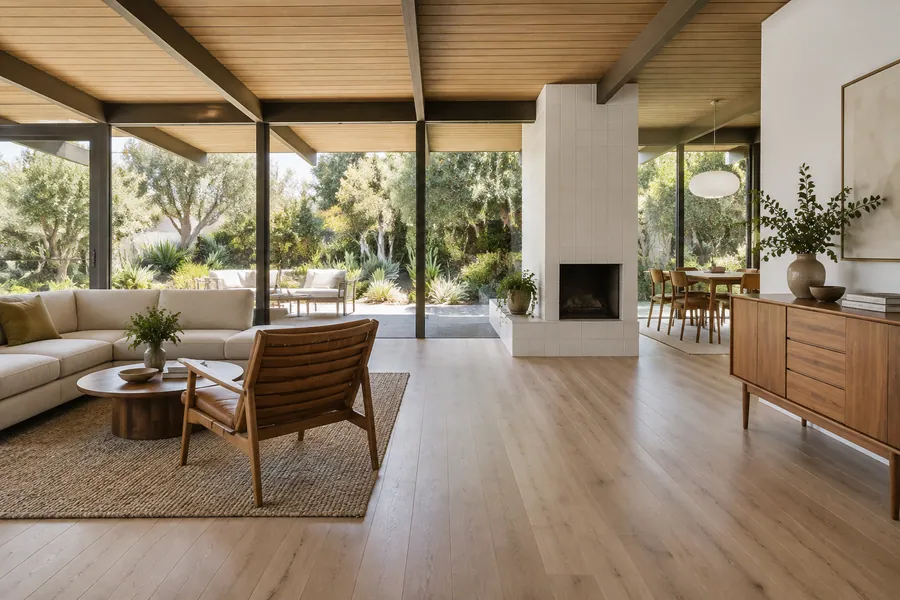
Wide planks show more grain and fewer seams, which is why they’ve become the look people ask for most. They also move more with humidity than narrow strips.
For wide planks, we usually suggest engineered boards, especially over a slab, and we glue or nail them to stop cupping.
How it works
You choose the wood after we know what the subfloor can take.
We measure, lift a vent cover or a corner of carpet to see what’s underneath, and read moisture in the subfloor or slab.
You choose from samples laid on your floor. Then we order the wood and let it acclimate in the house until its readings match the subfloor’s.
On a raised floor, we screw down squeaks, plane high seams and roll out underlayment paper. On a slab, we level the low spots and seal or prime the concrete.
Boards go down nailed, glued or floated. Site-finished floors get sanded, stained and coated, and the baseboards and quarter round go back last.
Hardwood choices
Six decisions shape every hardwood floor, and your subfloor makes the first one for you.
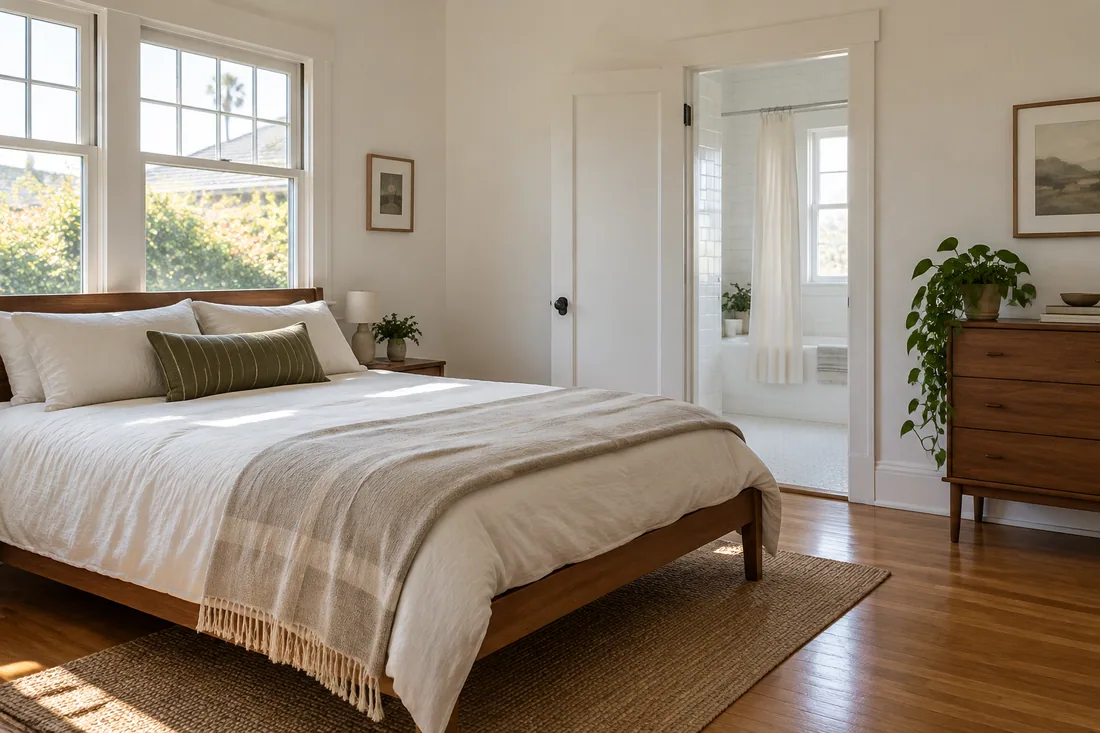
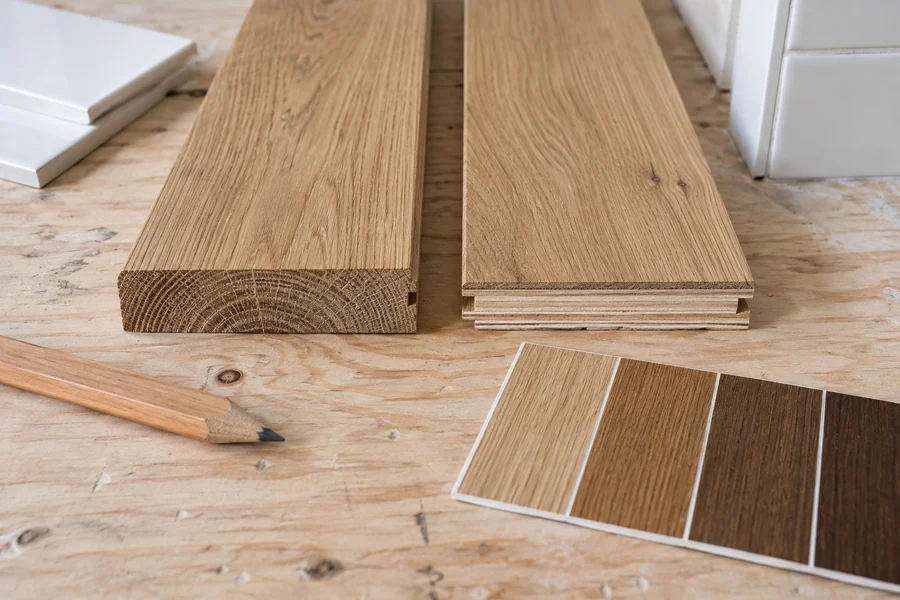
Solid hardwood boards are milled from a single piece of wood, with a tongue and groove on the edges. They’re the thickest wood floor you can buy, so solid oak can be sanded and refinished many times.
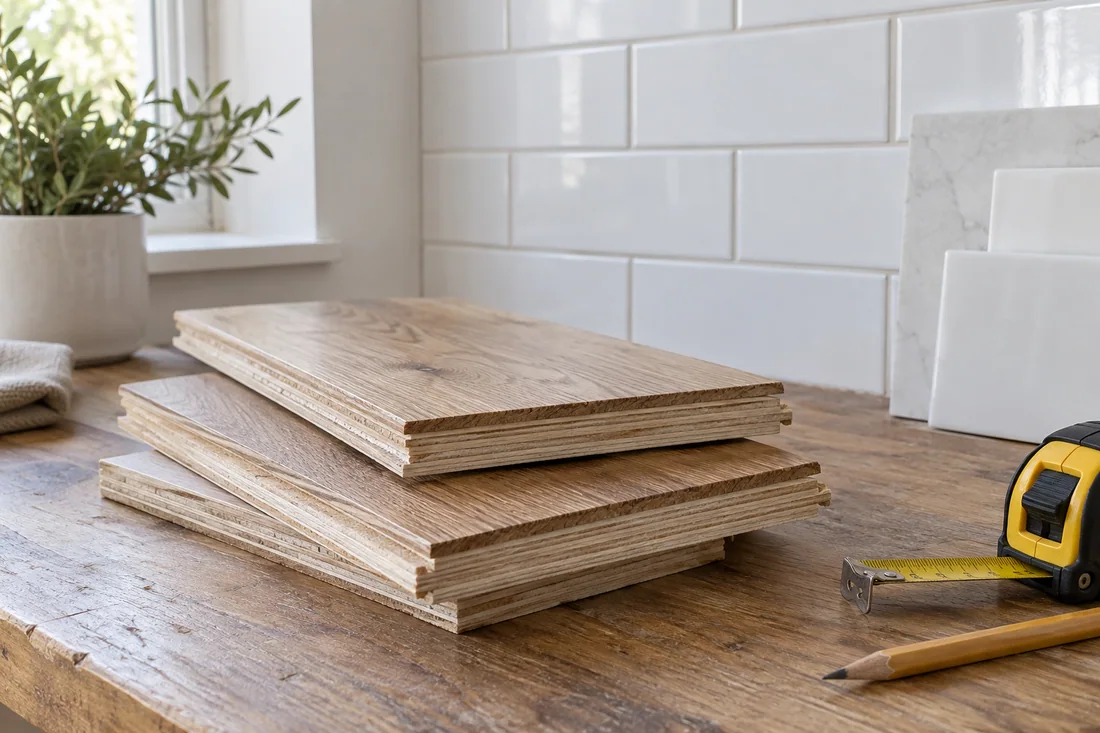
Engineered hardwood bonds a sawn hardwood top layer to cross-laid plywood plies. The plies resist each other’s movement, which keeps wide planks flat on a slab or over a heated floor.

Site-finished boards go down raw, then we sand them flat and stain and coat them in place. Prefinished boards arrive with a factory finish, so you skip the sanding and walk on them the same day.
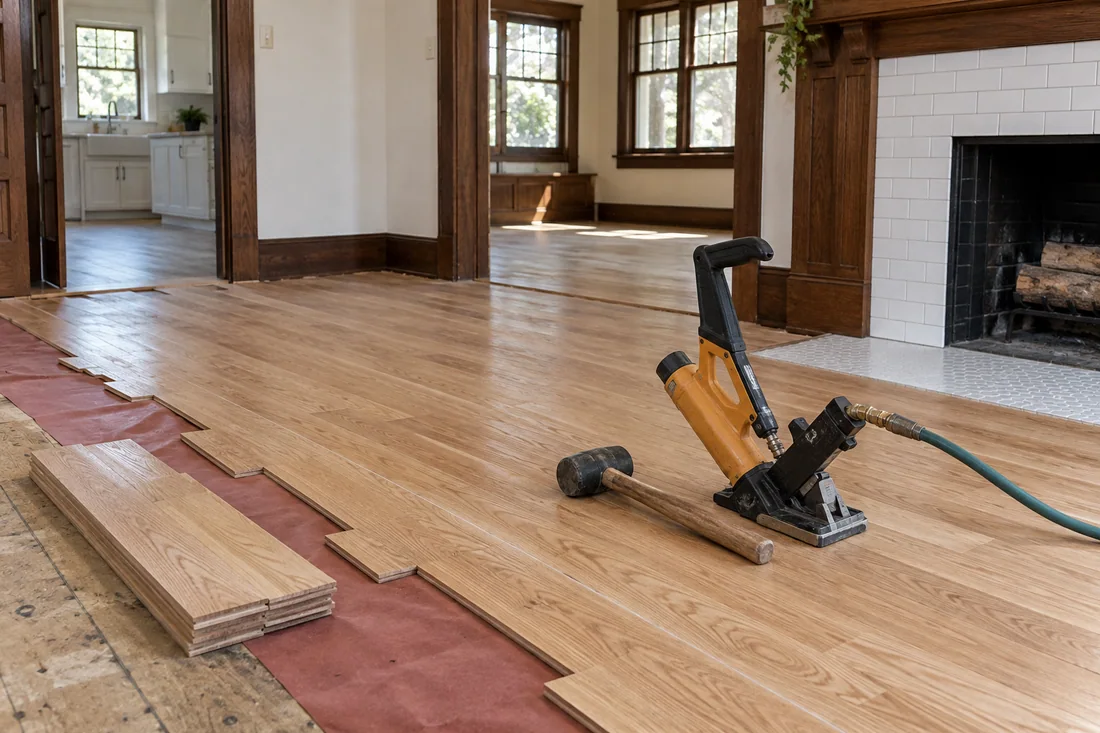
Nail-down is the traditional method on raised wood floors. A floor nailer drives cleats through each board’s tongue into the subfloor, after we screw the subfloor tight and roll out underlayment paper.
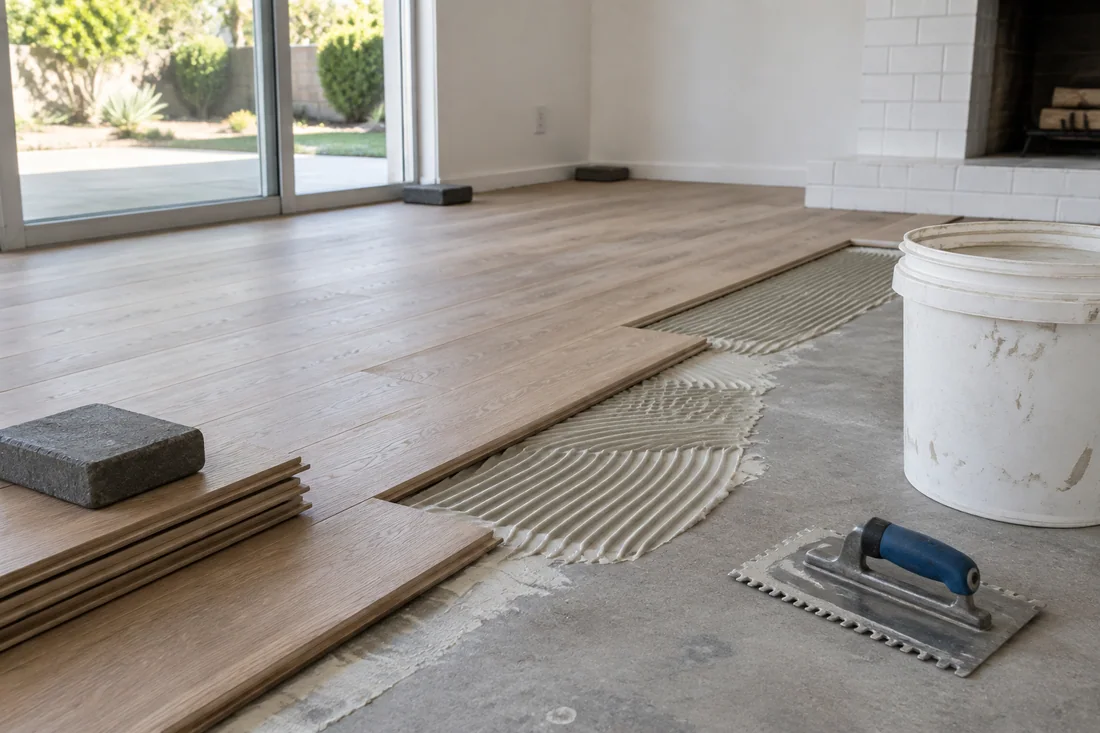
On a slab, engineered planks either glue straight to the concrete or float over foam with a vapor barrier. Glue-down feels solid and quiet; floating goes in faster and comes up more easily later.
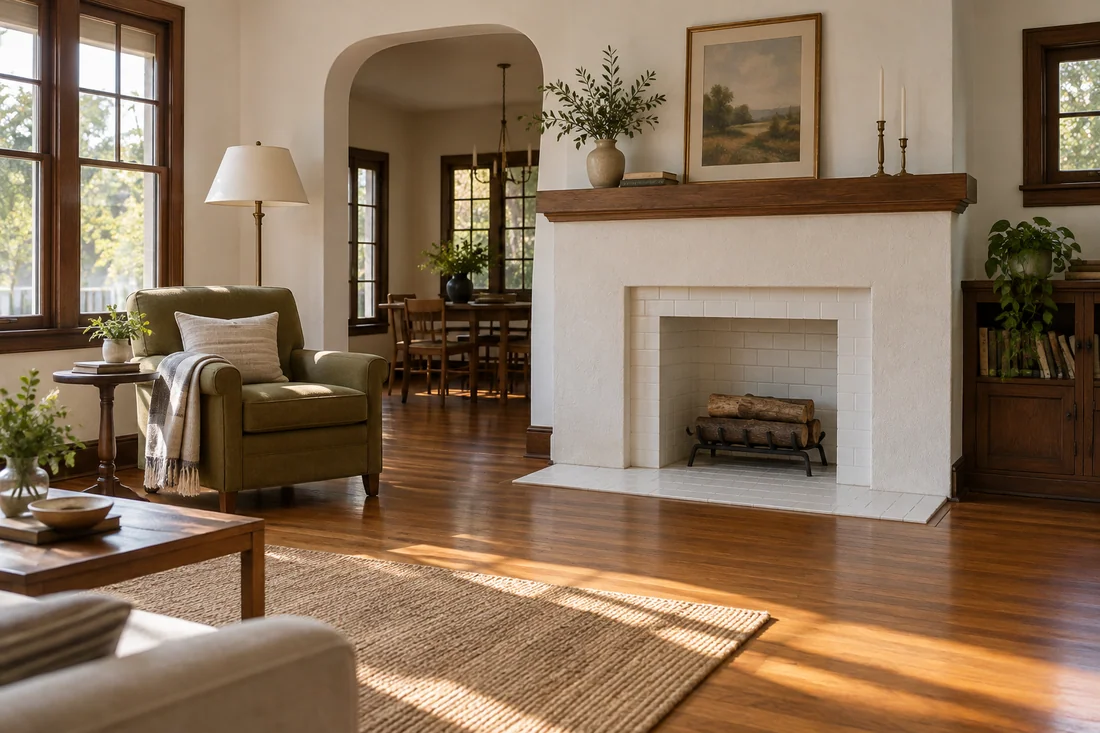
Plenty of older LA homes still have oak under the carpet. If the boards have wood left above the tongue, we sand to bare wood, fill the gaps, then stain and seal them, with far less work than a new floor.
Acclimation and moisture
Most hardwood problems start with moisture, not the boards. Wood swells as it takes on water and shrinks as it dries, so we read the wood, the subfloor and the slab before a single board goes down.
Here’s how we keep a new hardwood floor flat and tight:
Thin gaps between solid boards during dry Santa Ana weeks are normal. They close again when the air turns humid.
Homes near the beach and hillside houses with damp crawlspaces get extra readings, because wet ground under the house shows up in the floor.

Old floors
Most original oak in LA homes has another sanding left in it. Here’s what decides the call.
What you see
Our call
Why
Watch out for
Dull finish, scratches in the top coat
Screen and recoat
New finish without sanding to bare wood
Wax or polish residue blocks the new coat
Gray, worn or dented boards room-wide
Full sand and refinish
Cuts below the damage to fresh wood
Deep pet stains may stay dark
Black water or pet stains in one area
Repair: weave in new boards
Swaps the damaged boards and keeps the rest
New boards need sanding with the room
Cupped or buckled boards
Fix the moisture, then repair or replace
Boards only stay flat once the water source is gone
Sanding too soon leaves crowned boards
Worn to the tongue, nail heads showing
Replace
No wood left above the tongue to sand
Check the subfloor while it’s open
Pull a floor register and we can see how much wood sits above the tongue. That tells you how many sandings are left.
We stain small squares in a corner of your floor, so you pick the color on your own oak, not a showroom board.
Water-based finish dries fast, smells less and keeps oak close to its natural color. Oil-based finish ambers over time.
A site-finished floor needs the room empty for the sanding and the coats. We sequence rooms so you always have somewhere to sleep.
One visit gives you moisture readings, a look at the subfloor and stain samples on your own boards.
Questions
Quick answers on wood, slabs, finishes and timing.
Species, plank width and the install method set most of it. Site finishing, stairs, subfloor repair and old-floor removal add lines, so the written estimate after your free visit itemizes each one.
Yes, as engineered wood glued down or floated, once the slab passes a moisture test. Solid boards need a plywood subfloor built over the slab first, which raises the floor.
Neither wins everywhere. Solid oak suits raised wood floors and takes many sandings, while engineered wood suits slabs and wide planks because it moves less.
Until the wood’s moisture reading sits close to the subfloor’s, which we check with a meter. That often takes several days, but the reading decides, not the calendar.
Prefinished floors take foot traffic right away. Site-finished floors take socks once the last coat dries, and rugs and heavy furniture wait longer while the finish cures.
Usually, yes. We source the same species and width, weave the new boards in, then sand and stain the whole room so old and new read as one floor.
Not if you choose with claws in mind. A harder species, a matte finish and a mid-tone color hide scratches, and a recoat now and then renews the top.
Far less than it used to be. Our sanders pull dust into collection bags, and we seal doorways and air vents with plastic before we start.
Water-based polyurethane suits most homes because it dries fast and stays clear. Oil-based polyurethane warms oak toward amber, and hardwax oil gives a low-sheen look you can touch up in spots.
Loose subfloor panels and nails rubbing in their holes cause most squeaks. We screw the subfloor to the joists before the new boards go down, which stops them at the source.
More interior services
One team for floors, walls, paint, doors and closets, scheduled in the right order.
Hardwood, engineered wood, LVP, tile and carpet compared and matched room by room.
Vinyl plank that takes spills and claws, in baths, rentals and family rooms.
From the blog
Now booking free in-home visits
Real wood, attached the right way for your subfloor and finished in the color you picked. Book your free in-home visit for moisture readings, stain samples and a written, itemized estimate.
Mon–Sat, 8am–6pm
We read the subfloor, sample your stain and send a priced scope. No charge, no obligation.
Thanks — we got your request. We'll call you to set up your free in-home visit.