Home › Interior Remodeling › Luxury Vinyl Plank Flooring
LVP Flooring Installation
Luxury vinyl plank flooring gives you a wood or stone look that shrugs off spills, dog claws and busy hallways, with click-lock or glue-down planks laid over a flat, dry base. Los Angeles Home Remodelers is an interior remodeling contractor installing LVP across Los Angeles, CA.
Your project manager handles the LVP flooring installation start to finish: slab moisture checks, flattening, underlayment, planks, trim and haul-away. Most rooms go in within a day, and most whole floors take a few days. Pricing starts with a free in-home visit and a written, itemized estimate that shows the prep and the planks as separate lines.
Bonded & Insured | Written Workmanship Warranty
We check the floor for flatness and moisture, then send an itemized price. No charge, no obligation.
Thanks — we got your request. We'll call you to set up your free in-home visit.
LVP flooring in Los Angeles
Serving homes across Los Angeles, CA.
Luxury vinyl plank flooring gives you a wood look you can mop, and it lasts when the base beneath stays flat and the planks have room to move.
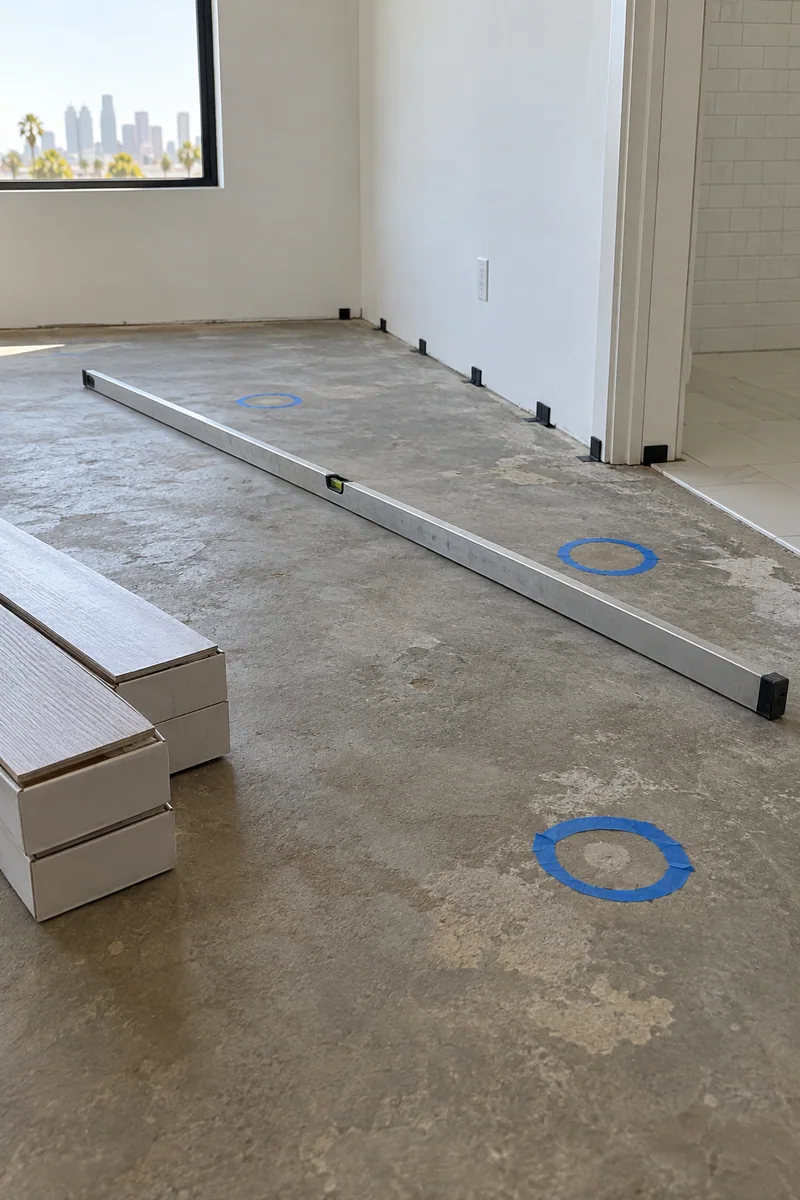
So we check flatness with a long straightedge, read slab moisture and plan the expansion gaps before you pick a color.
Want real wood instead? Our hardwood floor installation page covers solid and engineered boards.
LVP projects
Three jobs where vinyl plank beats wood and carpet.

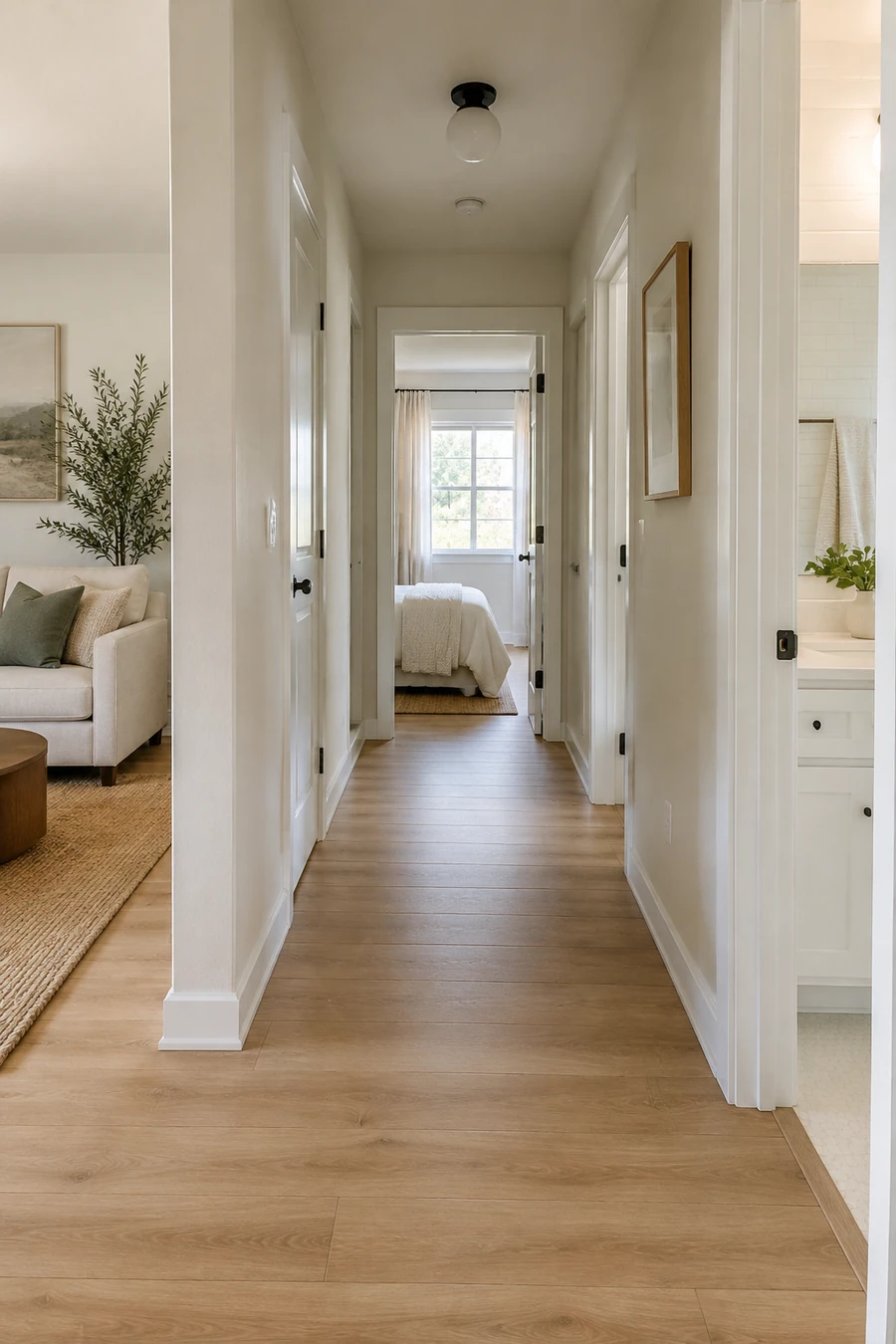
Rigid-core LVP is ideal for a bath or laundry room floor: warmer than tile, easy to mop and unharmed by splashes. We pull the toilet, run the planks under it and reset it on a new wax ring.
Along the tub and the walls, we seal the edge with silicone so mop water stays on top of the floor.

Own a rental or an ADU? LVP takes tenant wear and goes in fast between leases, and one neutral plank through every room keeps the unit easy to show.
We leave a spare box on site, so a gouged plank later becomes a quick swap instead of a new floor.
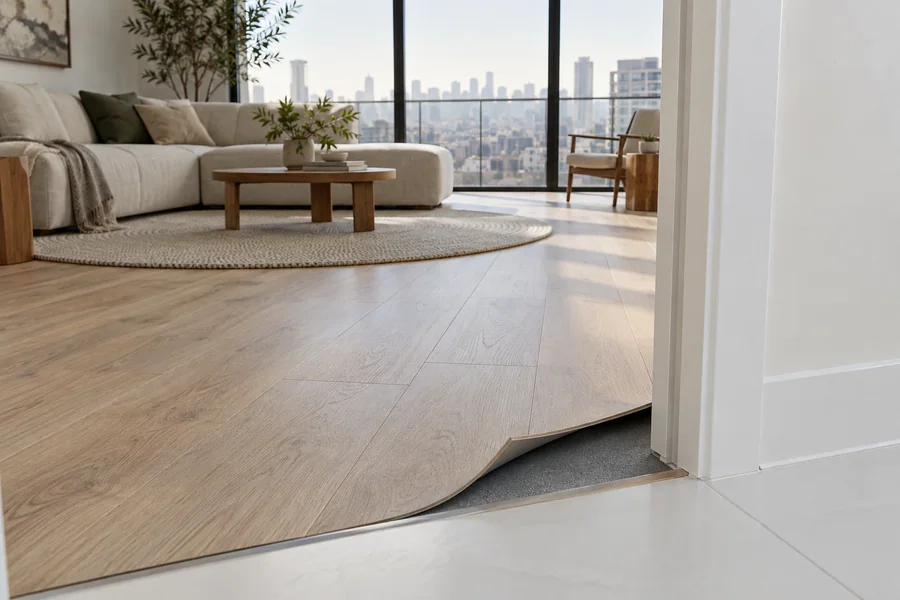
Many condo HOAs set a minimum sound rating for hard floors over a neighbor’s ceiling. Send us your building’s flooring rules, and we’ll match the plank and pad to them and supply the specs your board asks for.
We also book the service elevator and work inside the building’s allowed hours.
How it works
You know how flat your floor is before you order a single box.
We measure, lay sample planks in your light and run a long straightedge across each room to find dips and humps. Slabs get a moisture reading.
You choose the look. We match the core, the wear layer and the underlayment to the room, your pets and any HOA rule.
Crews pull the old floor or fill the grout lines on tile we’re keeping. Then we grind the high spots and patch the low ones until the floor is flat.
Planks click or glue down with a gap at every wall. Then we fit transitions and quarter round, and in baths we reset the toilet.
LVP choices
The print is what you see. These six choices are what you live on.

Click-lock planks lock edge to edge and end to end, then float over the subfloor with no nails or glue. It’s the fastest LVP install and goes over most flat floors, as long as the planks can expand at the walls.
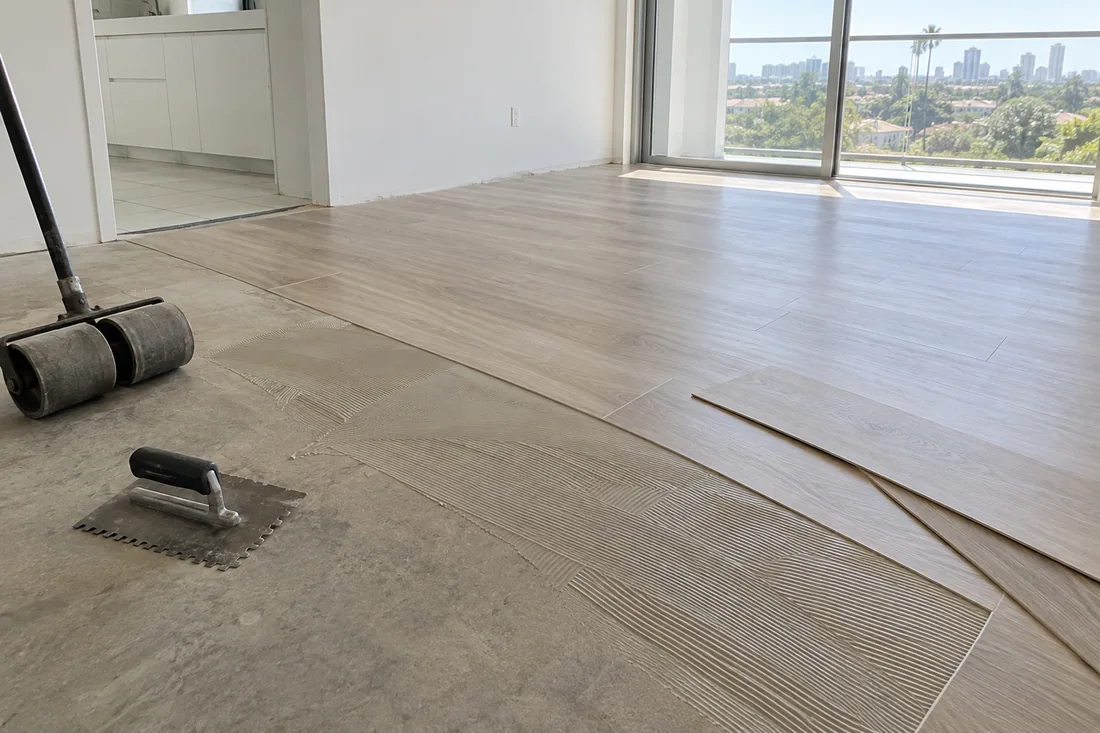
Glue-down planks are thinner and bond to a smooth slab or underlayment panel with flooring adhesive. They feel solid underfoot and stay put in strong sun and wide-open rooms.
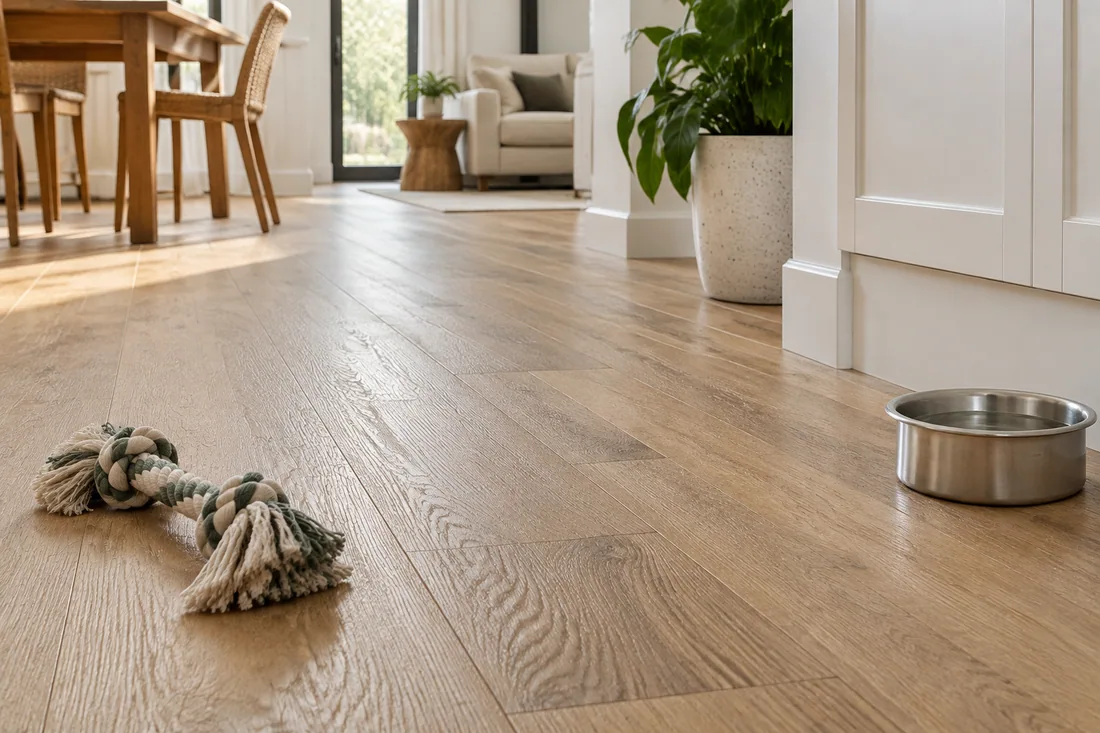
The wear layer is the clear top coat that protects the printed look. It’s measured in mils, and a thicker one stands up to claws, grit and chair legs longer.
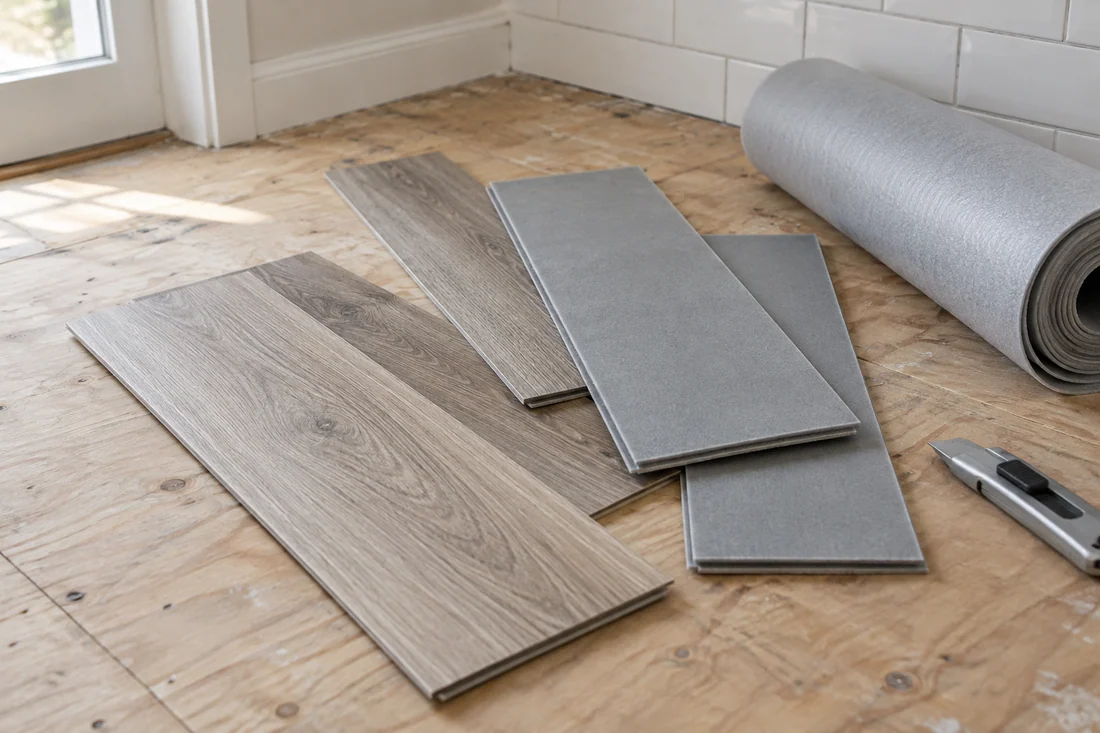
Underlayment adds comfort, quiets footsteps and, on a slab, can block moisture. Many planks come with a pad attached, and a second pad under them makes the joints flex and break.
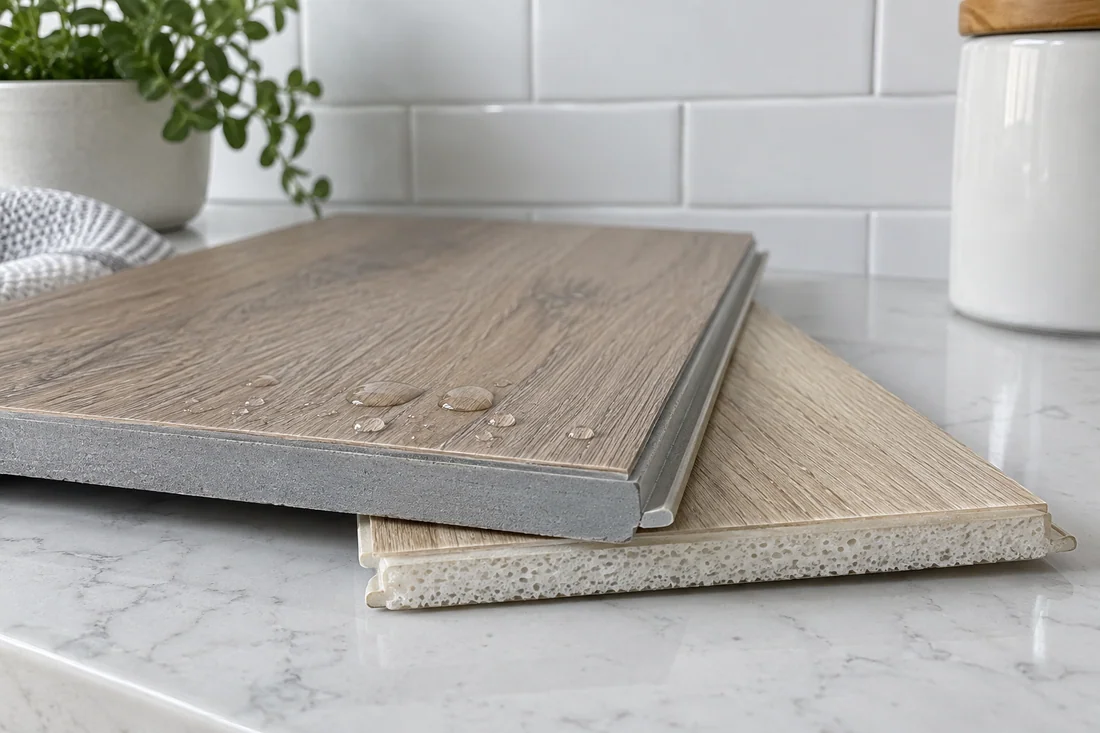
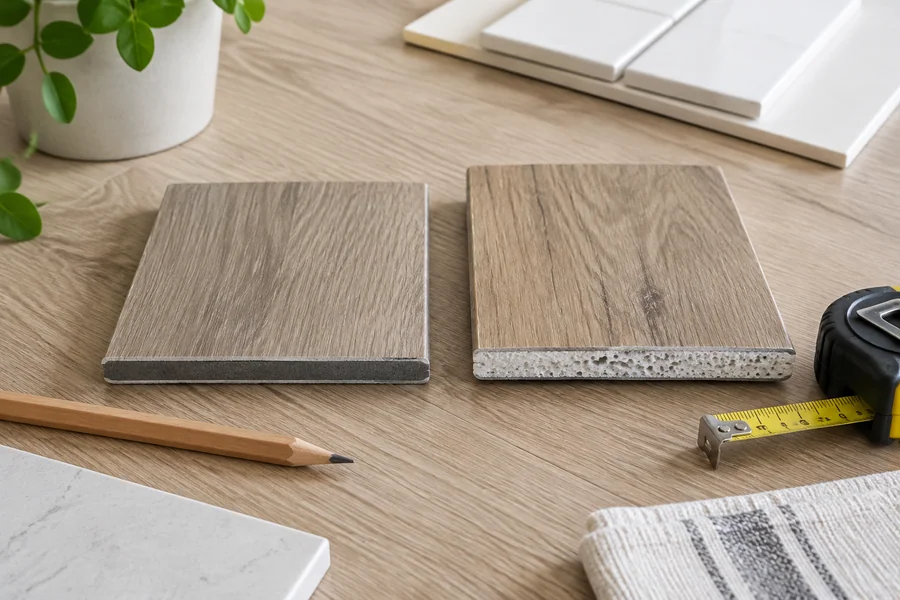
SPC (stone-plastic composite) cores are dense and rigid, so they resist dents and bridge small flaws. WPC (wood-plastic composite) cores are foamed, so they feel softer and quieter but dent more easily.
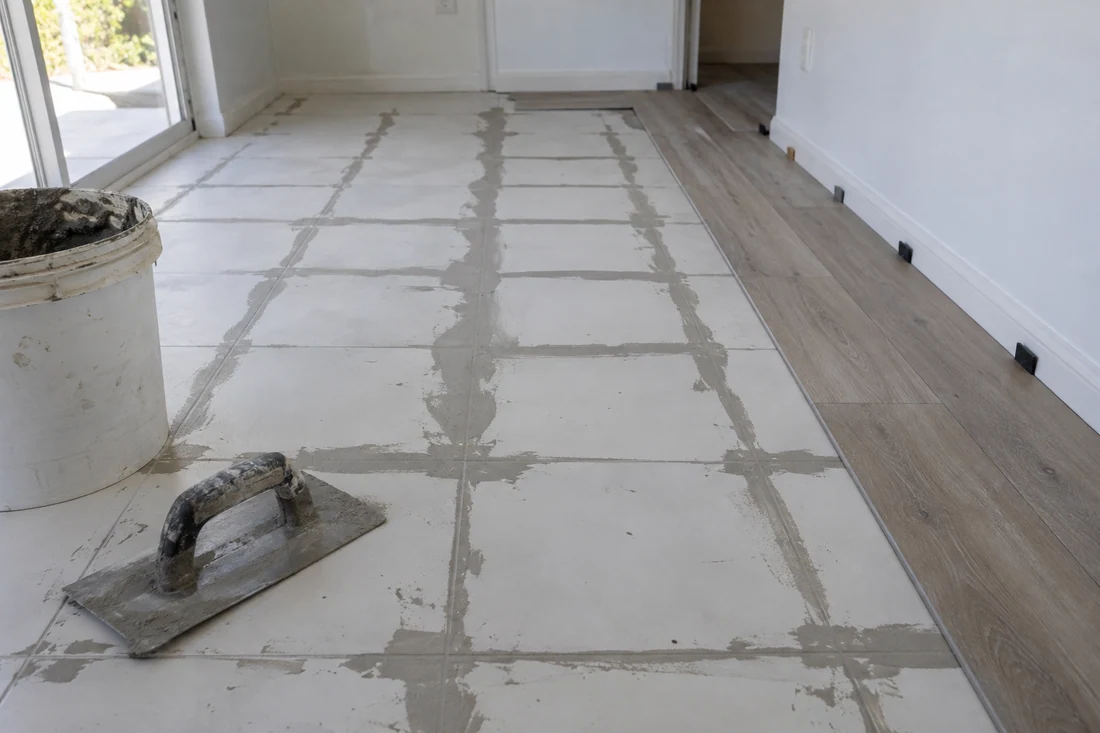
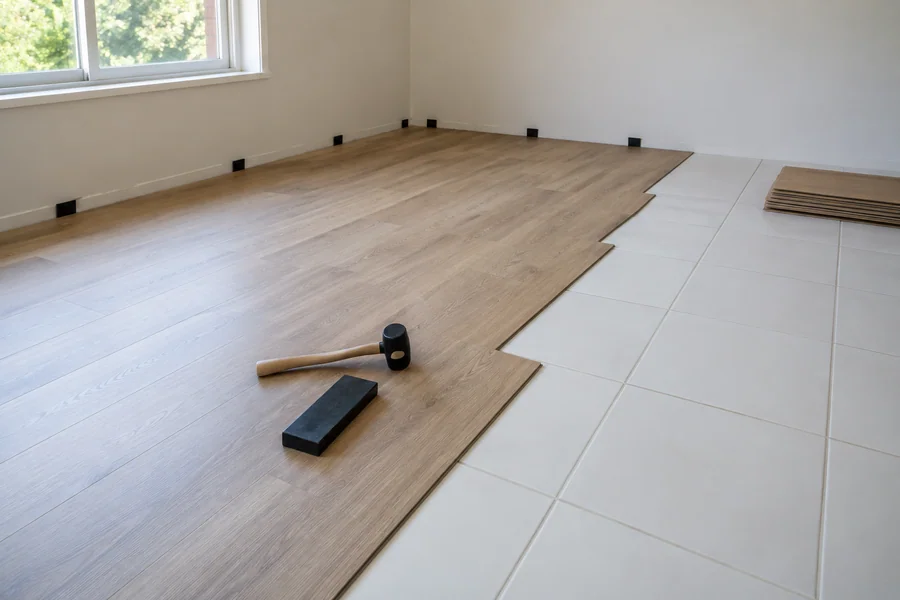
LVP goes straight over a concrete slab once it passes a moisture check, and over old ceramic tile that’s flat and well bonded. We fill the grout lines first, because they’ll show through thinner planks.
Why LVP fails
Almost every LVP failure traces back to the base or the edges, not the plank. Joints pop open on a wavy floor, and planks buckle when they can’t expand.
Here’s what we do on every LVP install:
A floating floor pinned under a heavy built-in can’t move, so it buckles somewhere else. We stop the floor short of it and trim the edge.
A plank that shrugs off water won’t stop ground moisture from collecting under it, so a damp slab gets a barrier or a glue rated for it.
Compare
These three get cross-shopped most. Here’s where each one wins.
Floor
Best for
Watch out for
Water on the surface
Rigid-core LVP (SPC)
Slabs, pets and wet rooms
Firm and cool underfoot
Handles spills and mopping
Flexible-core LVP (WPC)
Bedrooms and upstairs comfort
Dents under heavy furniture feet
Handles spills and mopping
Glue-down LVP
Sunny rooms and wide-open floor plans
Needs a smooth base; slower to remove
Handles spills and mopping
Laminate
Dry living areas and tight budgets
Swells where water seeps into the seams
Wipe spills right away
Engineered wood
Real wood grain and resale appeal
Scratches and water marks
Wipe spills right away
The plank survives water, but water through the seams still reaches the subfloor. In wet rooms, we seal the edges.
LVP on stairs gets glued down with matching stair nosing on every tread. Floating planks never go on a stair.
Strong afternoon sun can fade some planks and make them expand. Shades help, and glue-down holds better in sunrooms.
Plank colors get discontinued. A box saved from your install makes a future repair an exact match.
One visit gives you flatness and moisture checks, plus samples to see in your own light.
Questions
Straight answers on water, wear, underlayment and install time.
The plank, the prep and the square footage set most of it. Old-floor removal, slab grinding, stairs and baseboards each show up as their own line on the written estimate you get after the free visit.
Most LVP planks are. The seams and edges aren’t fully sealed, so a leak can still run under the floor and soak the subfloor. In baths and laundry rooms, we seal the perimeter and fix any leak first.
Often, yes, if the tile is flat and well bonded. We fill the grout lines so they don’t show through and check door clearances, since the floor gets taller.
Only the kind your plank calls for. Many planks come with a pad attached, and adding a second one lets the joints flex until they break. On a slab, a vapor barrier may still go down first.
SPC is denser and resists dents, so it suits pets and busy rooms. WPC is softer and quieter, so it suits bedrooms and upstairs rooms.
The wear layer resists everyday scratches, but grit and bare furniture feet still mark it. Felt pads, a mat at each door and a thicker wear layer keep it looking new longer.
Most single rooms go in within a day, and a whole floor takes a few days. Glue-down floors take longer, because the base has to be smooth and the adhesive needs time.
Yes, glued down with matching stair nosing on each tread. We never float planks on stairs, because they’d shift under your feet.
Some planks can fade or expand under hot sun through big glass. Shades help, and glue-down planks stay put better in sunrooms.
Yes. We unclick floating planks back to the damaged one or cut it out, and glue-down planks lift out one at a time. Your spare box makes the match exact.
More interior services
Floors, walls and finishes for the whole interior, run by one project manager.
Every floor type side by side, picked by room and laid over a prepped subfloor.
Solid or engineered wood nailed, glued or floated, and old oak brought back.
From the blog
Now booking free in-home visits
A floor that handles water, dogs and daily traffic, laid flat so the joints stay tight. Book your free in-home visit, and we’ll check flatness, lay out samples and write you an itemized estimate.
Mon–Sat, 8am–6pm
We check flatness, read the slab and send a priced scope. No charge, no obligation.
Thanks — we got your request. We'll call you to set up your free in-home visit.