


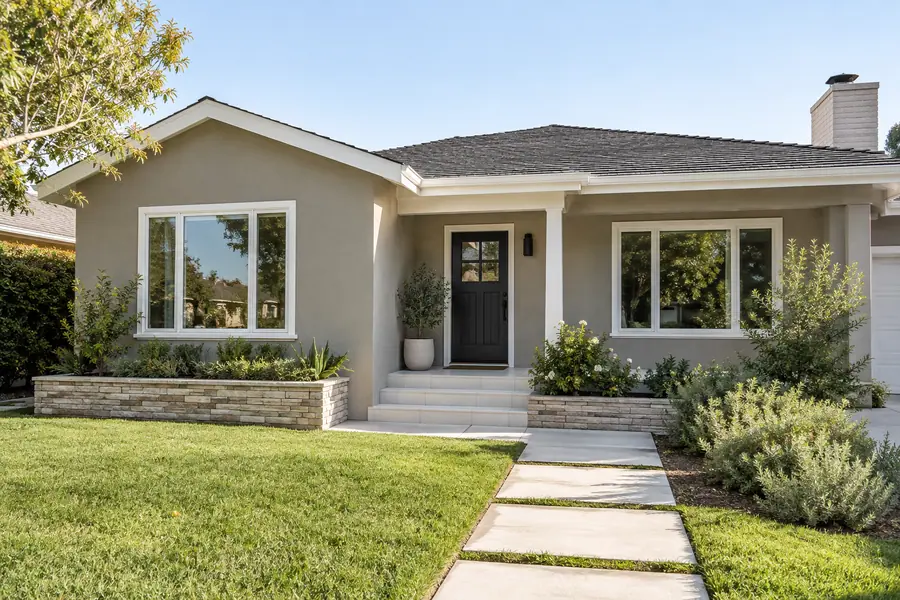
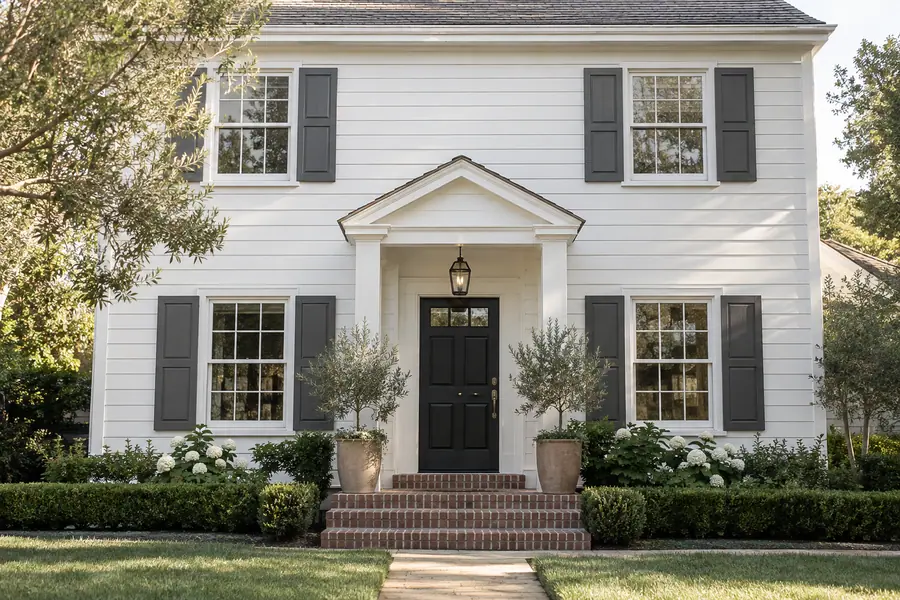

Home Exterior Remodeling in Los Angeles
As an exterior remodeling contractor in Los Angeles, we replace your windows, sliding glass doors, stucco, paint, siding and roof as one coordinated job, so the house sheds water and looks cared for. Los Angeles Home Remodelers is a design-build contractor working across Los Angeles, CA.
One project manager pulls the permits window, door and re-roof jobs often need, checks which Title 24 and cool-roof rules apply, and keeps prep lead-safe on pre-1978 homes. Roof and windows go in before stucco and paint; most single-trade jobs take days to a few weeks, and a full exterior runs longer. A free in-home visit gets you a written, itemized estimate.
Bonded & Insured | Written Workmanship Warranty
We walk all four sides of the house, look at the roof, the openings and the walls, and tell you what to fix first. No charge, no obligation.
Thanks — we got your request. We'll call you to set up your free in-home visit.
Exterior remodeling in LA
Serving homes across Los Angeles, CA.
Our exterior remodeling in Los Angeles puts the roof, the windows and doors, the walls and the paint under one contract and one schedule. You get one team planning the sequence and closing the house up each night, instead of four crews blaming each other for a leak.
Water decides where every exterior job starts. A worn roof, a window set without flashing or a crack in the stucco lets rain reach the framing, and no coat of paint will stop it.
We trace the leaks first, then build from the top down and finish with paint.
Exterior remodeling services
Pick the part of the house that’s wearing out, or combine several. Every service runs on one plan and one schedule, from the ridge of the roof down to the last coat of trim paint.
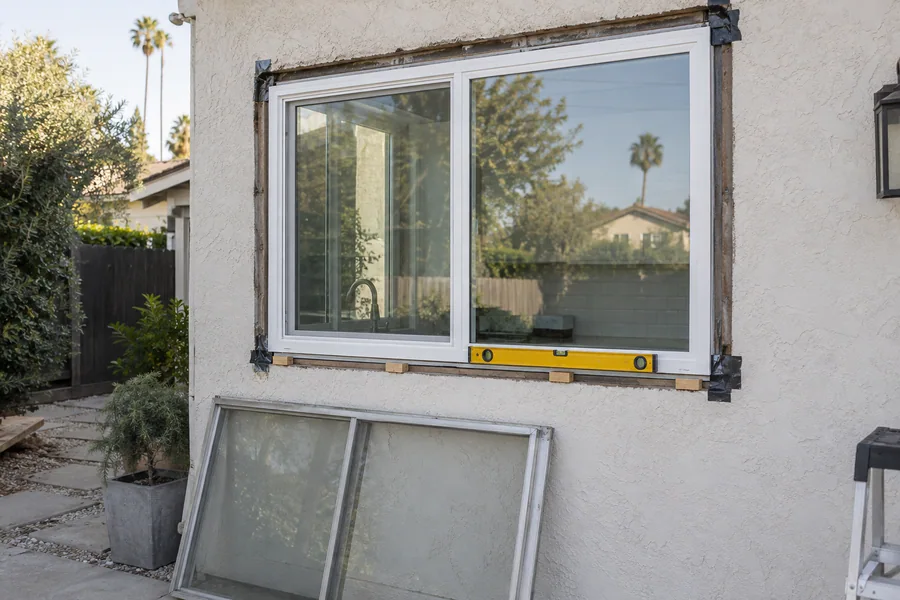
Window replacement swaps drafty single-pane aluminum or tired wood windows for energy-efficient dual-pane units with Low-E glass, so rooms stay quieter and hold their temperature. Retrofit units leave the stucco alone; full-frame installs fix rot and failed flashing.
Replacement windows in California generally have to meet Title 24, and we check the permit with your city. Our window replacement page compares frames, styles and installs.
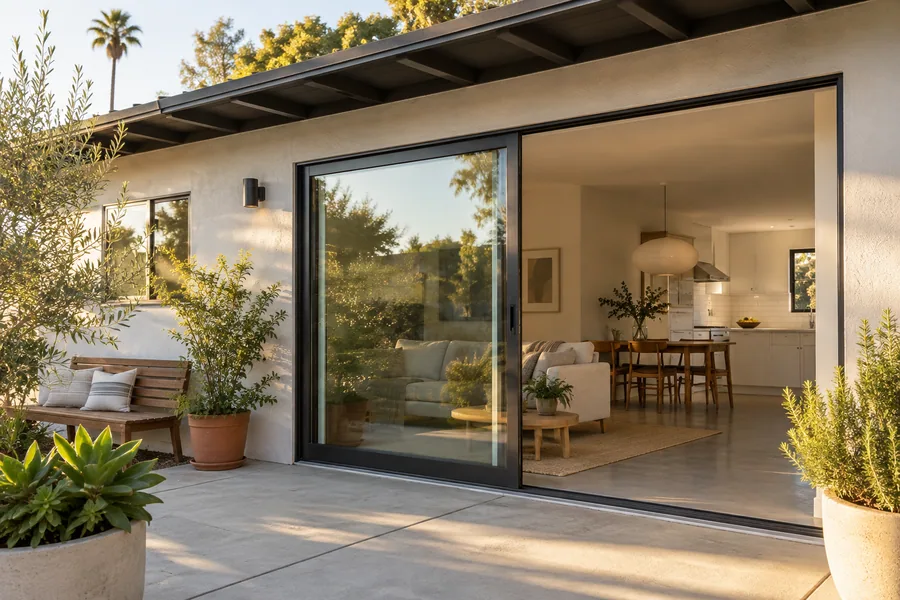
A new sliding glass door ends the sticking, the drafts and the water at the track. You can swap a worn two-panel slider for a new one, or widen the opening for a multi-slide or French patio door.
A wider opening needs a new header sized by an engineer. Our sliding glass door page covers rollers, thresholds and safety glass.
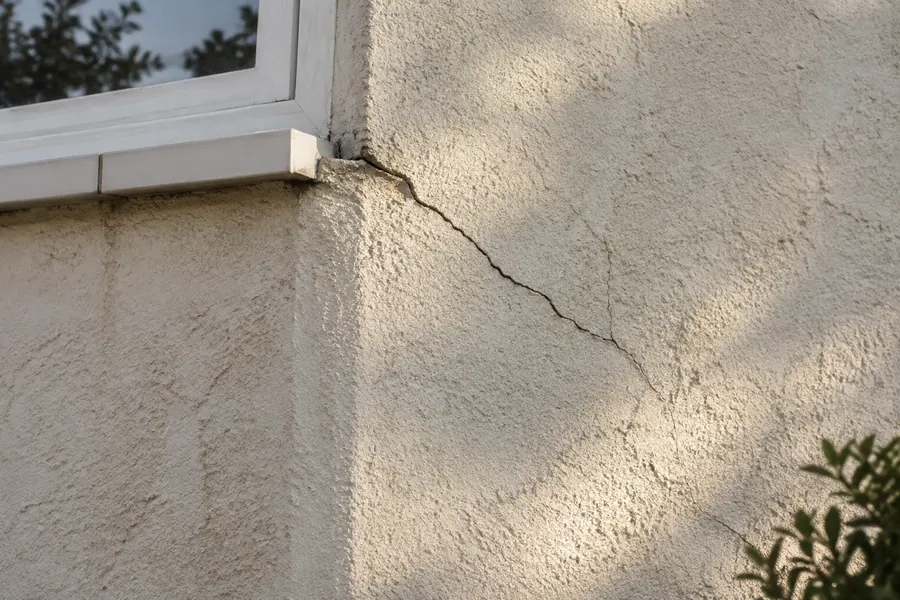
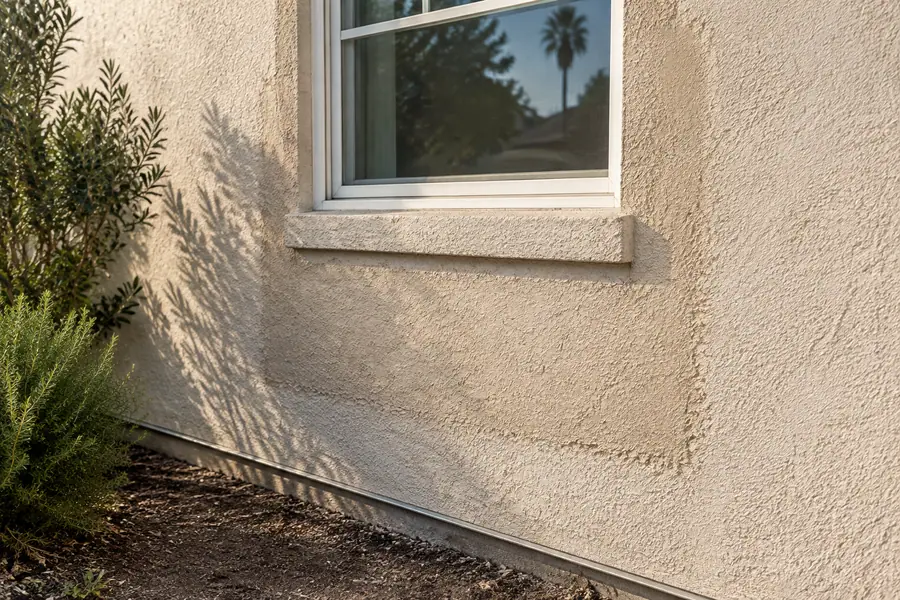
Stucco repair closes cracks and patches damaged sections and the gaps around new windows, with the texture matched so the patch vanishes under paint. Where old stucco is failing, we strip it and apply a new system over fresh paper and lath.
Cracks that keep coming back usually point to water or movement behind the wall. Our stucco page explains repair, re-coat and re-stucco.
Exterior house painting lasts when the prep does: washing, scraping, caulking and priming the stucco, trim and eaves before the finish coats. We choose a masonry paint or an elastomeric coating to suit each wall.
On pre-1978 homes, prep follows lead-safe rules. Our exterior painting page covers prep, coatings and picking colors.
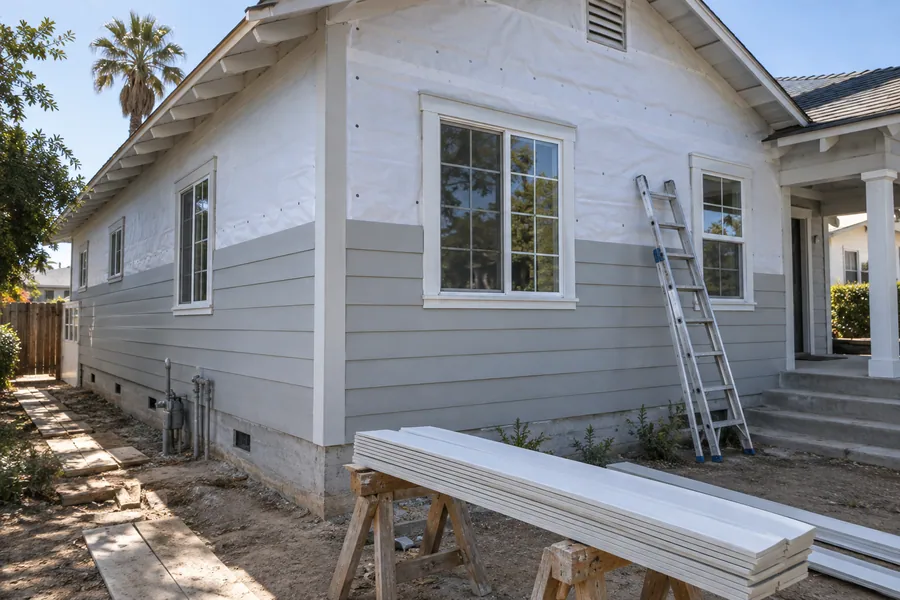
Siding installation replaces rotted wood or worn panels with fiber-cement lap, board-and-batten or shingle siding over a new weather barrier. Water that slips behind the boards drains out instead of soaking the studs.
On hillside lots in a Very High Fire Hazard Severity Zone, we check which ignition-resistant materials apply. Our siding page compares materials by house style.
Roof replacement tears off the old shingles, tile or flat-roof membrane, repairs the decking, and lays new underlayment and flashing before the new roof goes on. It’s the first job in a full exterior, because it protects everything below.
Re-roofs in LA usually need a permit, and some must meet cool-roof rules. Our roof replacement page compares shingle, tile and low-slope roofs.
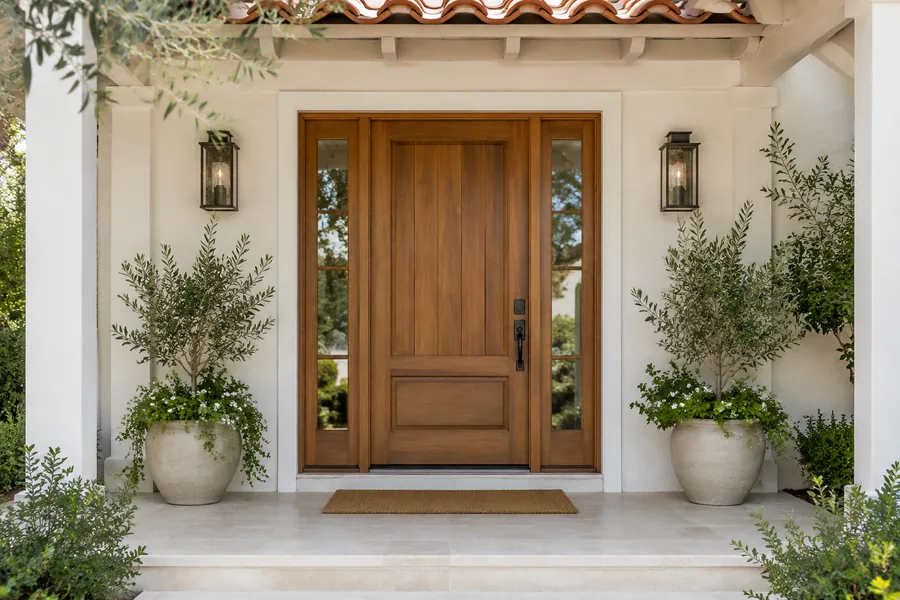
A new front door fixes sticking, drafts and a worn threshold, and it sets the tone for the whole front of the house. We hang pre-hung doors in wood, fiberglass or steel, with a sill pan and flashing under the threshold.
Sidelights and transoms get safety glass where the code calls for it. Ask about entry doors at your free visit.
Eaves, fascia and gutters carry roof water away from your walls. When the fascia rots or a gutter overflows, water runs down the stucco and into the window heads.
We replace rotted rafter tails and fascia boards, add drip edge, and hang new gutters with downspouts that empty away from the foundation. It’s easiest during a re-roof, so ask about it at your free visit.
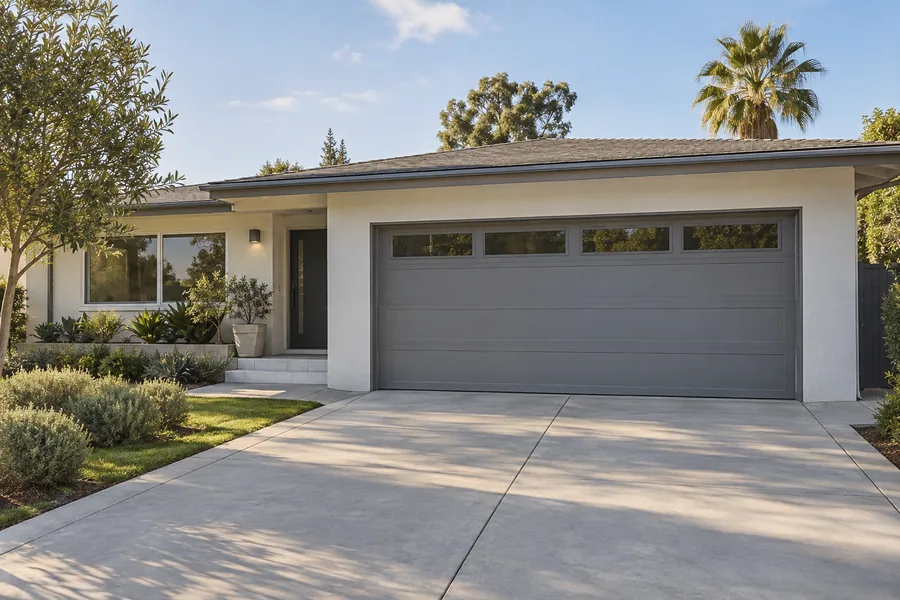
On many ranch and tract houses, the garage door is the biggest opening facing the street. We replace warped wood or dented steel doors with insulated sectional doors, new tracks and a new opener.
The stucco or trim around the opening gets patched to match, and the weather seal at the slab gets replaced so rain and leaves stay out. Ask about garage doors at your free visit.
How it works
Before any exterior renovation starts, you’ll know what goes first, what needs a permit and what each trade includes.
Call or send the form with your address and the problem: a leak, drafty windows, cracked stucco or faded paint. We check the house’s age and any historic overlay before we visit.
We check the roof and attic for stains, probe sills and trim for dry rot, and open and close every window and door.
You get the roof, openings, walls and paint priced as separate lines, plus testing, permits and haul-away.
Once you sign, we order windows and roofing, file permits and book the weather-sensitive work into dry weeks.
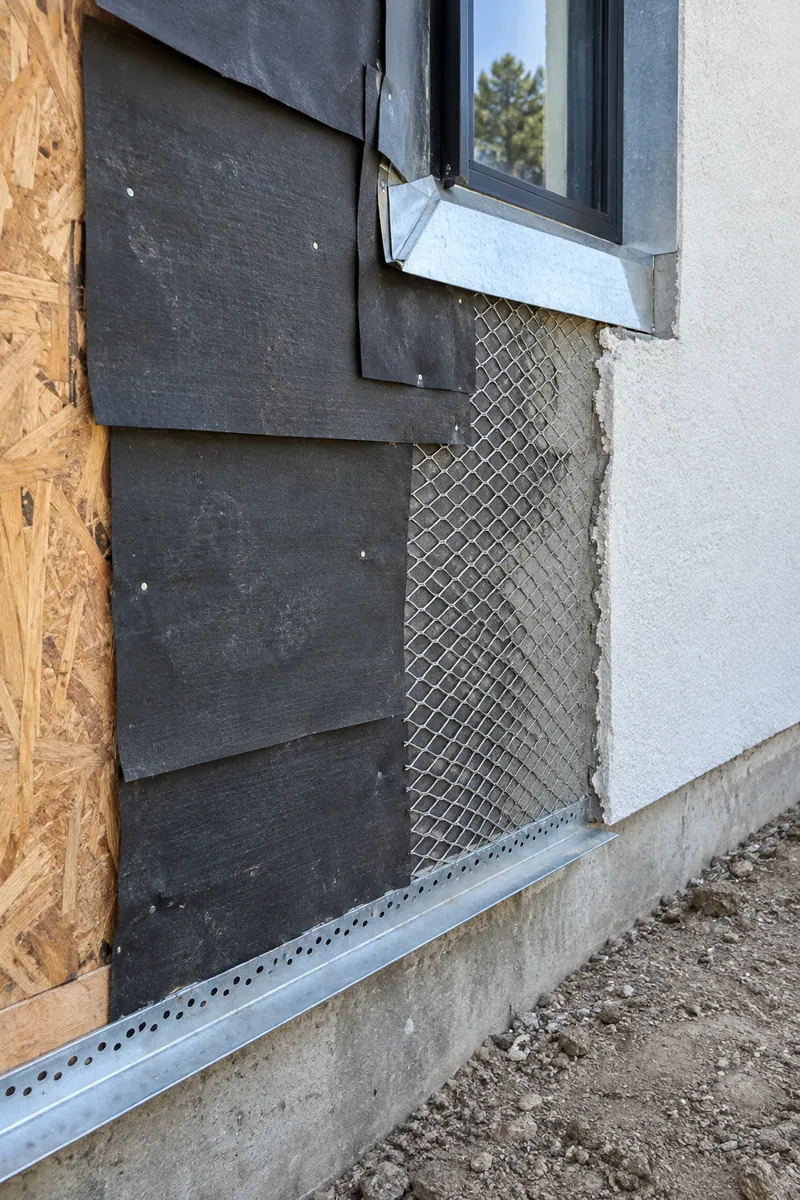
Ask how they’d flash a new window in a stucco wall. A builder who can walk you through the paper lap, the sill and the weep screed leaves you a dry wall; one who can’t leaves you a leak.
Next, read what each bid leaves out. Low exterior bids often skip dry rot repair, stucco patching around new windows, primer or permit fees, then add them back as change orders. Link each payment to finished work, like the roof signed off or the windows in.
How we work
When tear-off exposes soft decking or rotted sheathing, your project manager sends photos that day and explains the repair before anyone cuts further.
Roof, windows, stucco, siding and paint sit in the contract as separate lines. Hidden damage, like dry rot behind old siding, gets priced and signed off by you before a crew fixes it.
We pull out only the windows and doors we can set that day, and an open roof gets dried in or tarped before the crew leaves.
House styles we work on
Your home’s style decides which materials go back on and which details we keep. Pick the one closest to yours.
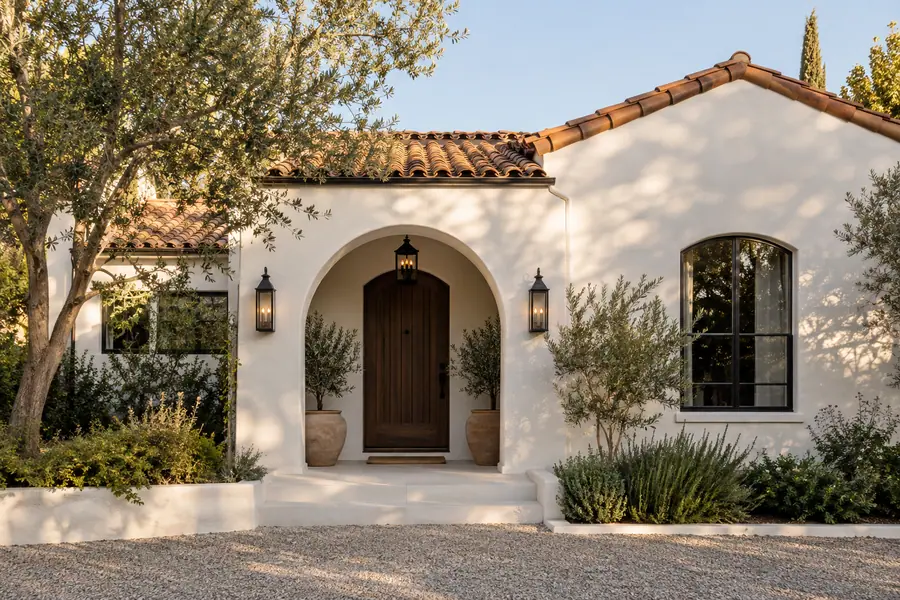
Spanish houses wear smooth stucco, clay tile roofs and slim steel-look windows set deep in the wall. We keep those deep reveals when the windows change, and sound clay tile goes back on over new underlayment.
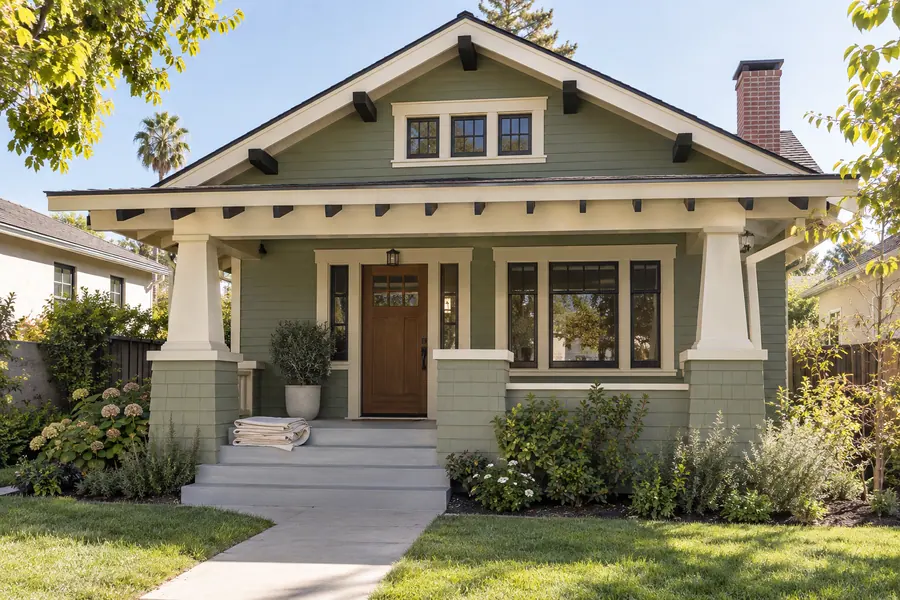
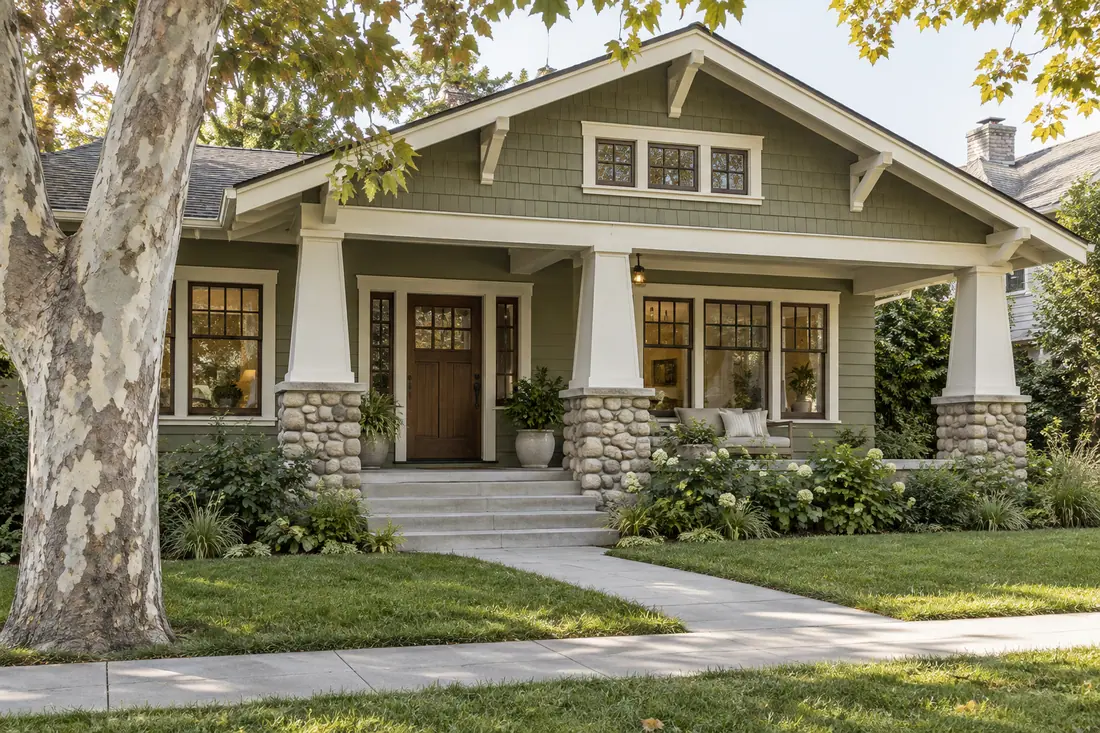
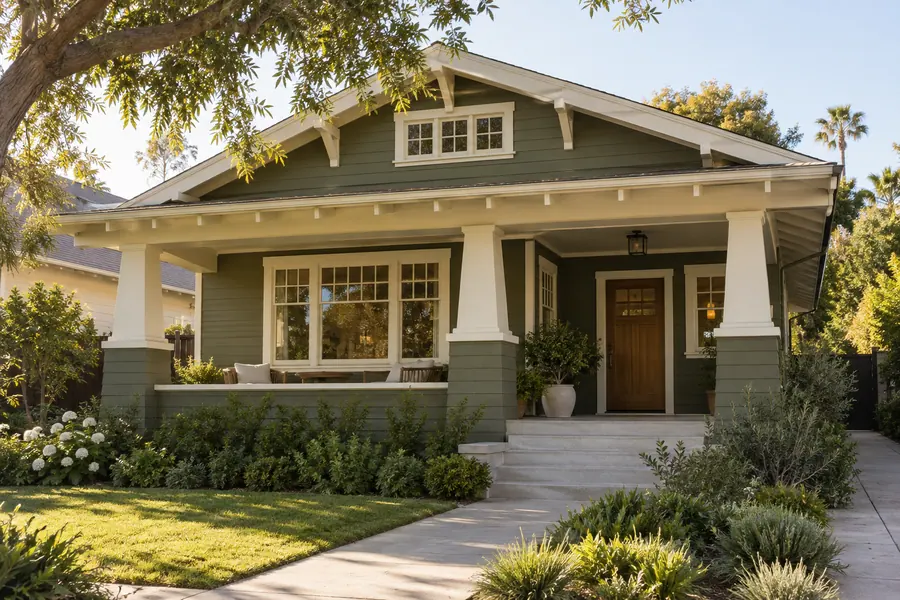
Craftsman homes carry wood lap siding or shingles, deep eaves with exposed rafter tails and divided-lite wood windows. The old paint is often lead, so prep runs lead-safe and only the rotted boards come off.
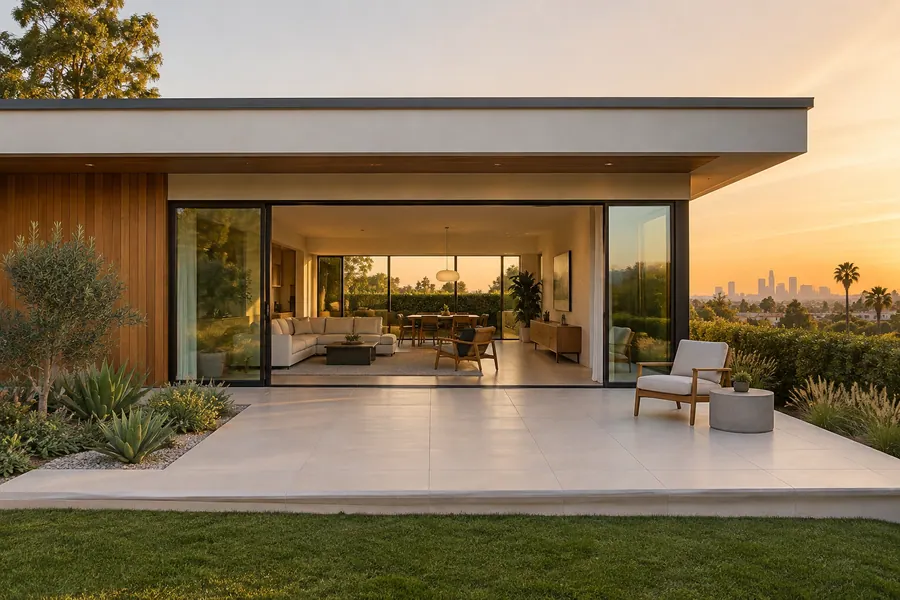
Mid-century homes run on big glass, flat or low-slope roofs and clean stucco or wood planes. A flat roof needs a membrane and drains that stop ponding, and every new pane has to meet Title 24.
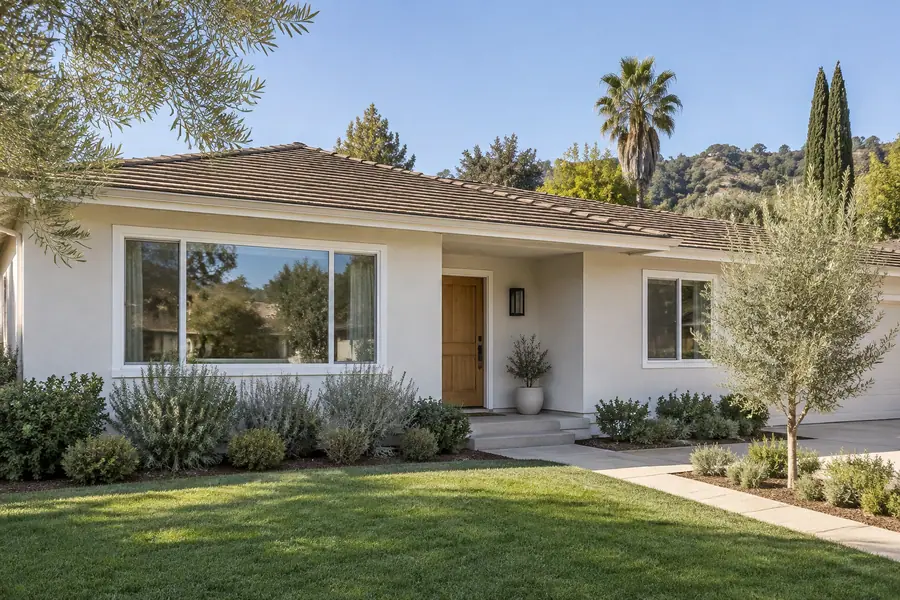
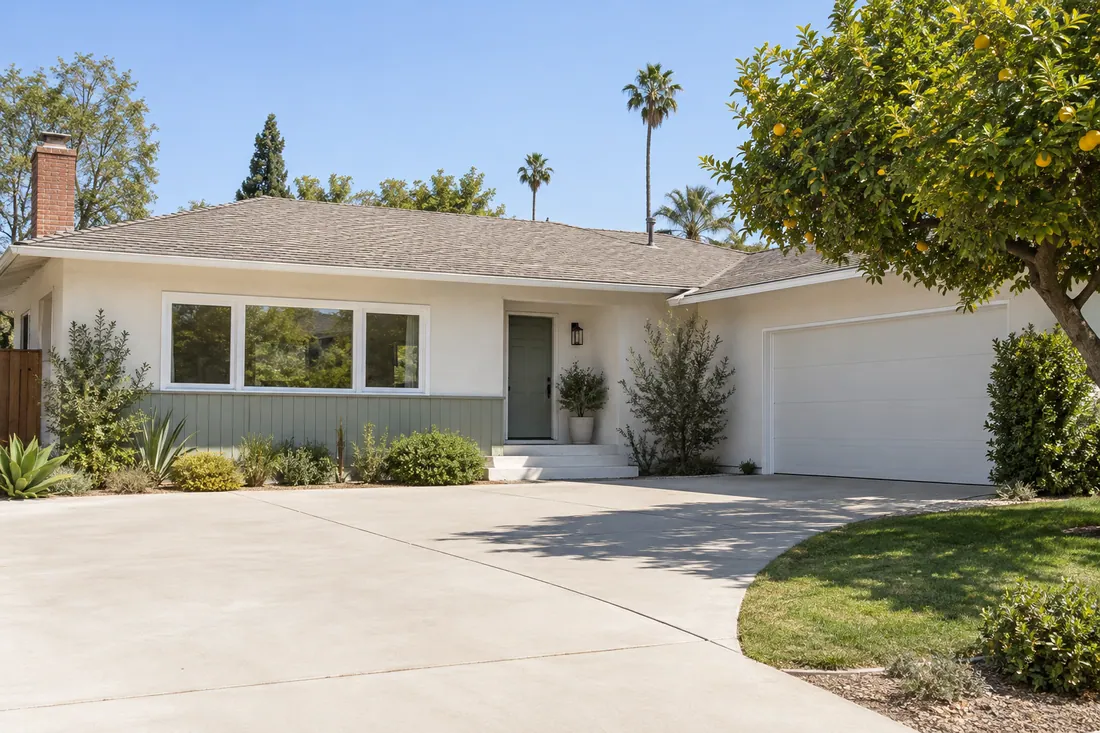
Ranch houses sit long and low, with stucco walls, wood trim and original single-pane aluminum sliders. Dual-pane windows, a re-roof over sound decking and fresh paint on the stucco and fascia cover what most of them need.
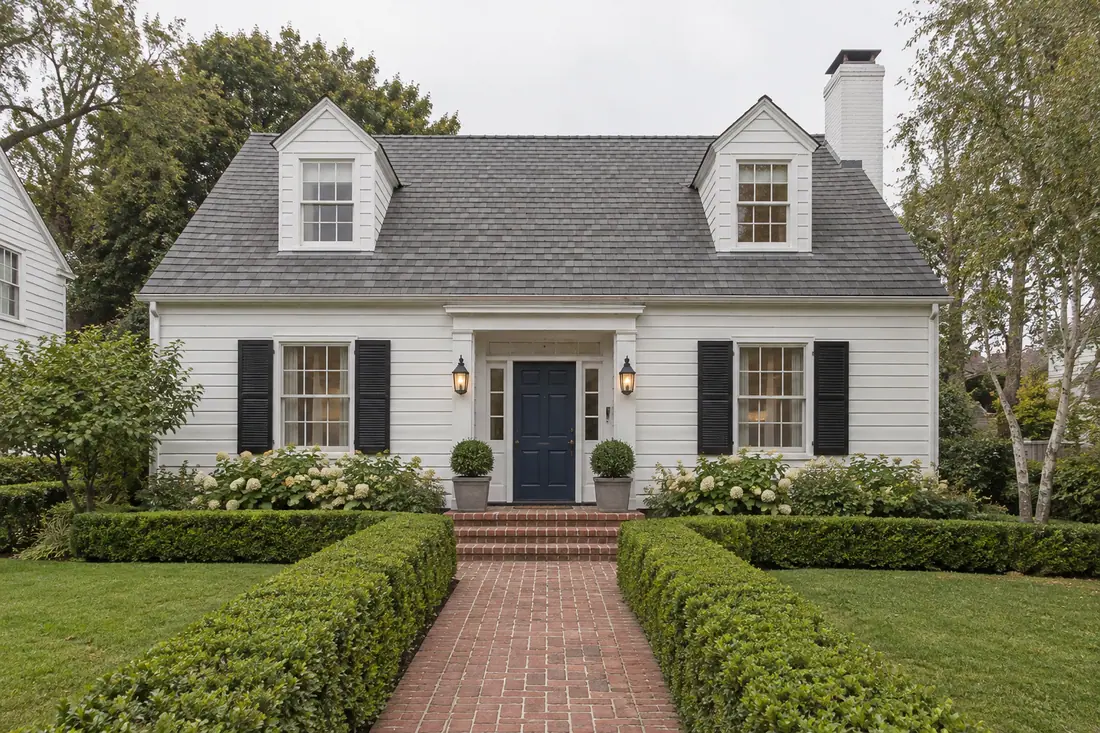
Traditional and Cape Cod houses have steeper shingle roofs, lap siding or painted brick, shutters and a centered front door. The front reads as a symmetrical set, so window sizes and trim stay consistent.
Newer flat-fronted houses depend on crisp stucco planes, metal window frames and parapet roofs. Parapet caps and window corners are where they leak, so those get detailed before the finish coat.
The building envelope
Water intrusion starts at joints, not in the middle of a wall, so we build every joint to shed water outward.
Here’s what we check and rebuild:
Paint can’t fix a leak. It hides a crack for a season, then peels as water keeps working in behind it, so we find the water path and repair it before any finish goes on.
When old stucco, siding or roofing comes off, we inspect the framing and sheathing underneath. Soft or stained wood gets photographed, priced and replaced before the wall closes.
Design gallery
Curb appeal comes from an exterior that suits the house underneath it. Here are six directions; your home’s style decides which one fits.
Spanish Revival with smooth stucco and clay tile
Craftsman with new lap siding and deep eaves
Mid-century with wide sliders and a flat roof
Valley ranch with dual-pane windows and fresh trim
Traditional front with a new entry door
Modern stucco with dark window frames
Exterior remodeling cost
What’s under the old surface moves the price more than the size of the house.
A per-window or per-square price online can’t see your decking, your flashing or the rot behind the trim. Your written estimate after the visit lists each trade separately, and that’s the number to budget from.
A roof, windows and paint done together share one setup and one round of protection instead of three.
Soft decking, rotted sheathing or dry rot behind old siding adds repair lines once the surface is open.
Each window or door adds a unit, flashing and a patch, and full-frame installs need more wall work.
Clay tile, fiber-cement siding and a full re-stucco take more labor than shingles or a fresh color coat.
Lead or asbestos tests, a steep two-story roof, HPOZ review and fire-zone materials each add lines.
Why choose us
Most exterior leaks start where one trade’s work meets the next. With one contractor running all of them, you get this:
We’re a bonded, insured general contractor. We pull the window, door and roofing permits ourselves and meet each inspector.
Roof and openings go in before stucco and paint, so no crew cuts into finished work.
We trace stains and soft spots to their source at the visit, so the scope fixes the cause.
Stucco texture, siding reveal and window patterns get matched to your home’s era.
Pre-1978 paint gets EPA lead-safe containment during prep and a cleanup check after.
Plants and pools get covered, nails get swept daily, and you get a written workmanship warranty.
The schedule
Most single-trade jobs take days to a few weeks on site, and a full exterior with a roof, windows, stucco and paint runs longer. Permits and window orders usually set the start date.

Phase 01
We walk the house, test old paint or siding where the age calls for it and write the scope. This usually wraps up in about 1–2 weeks, lab results included.
Phase 02
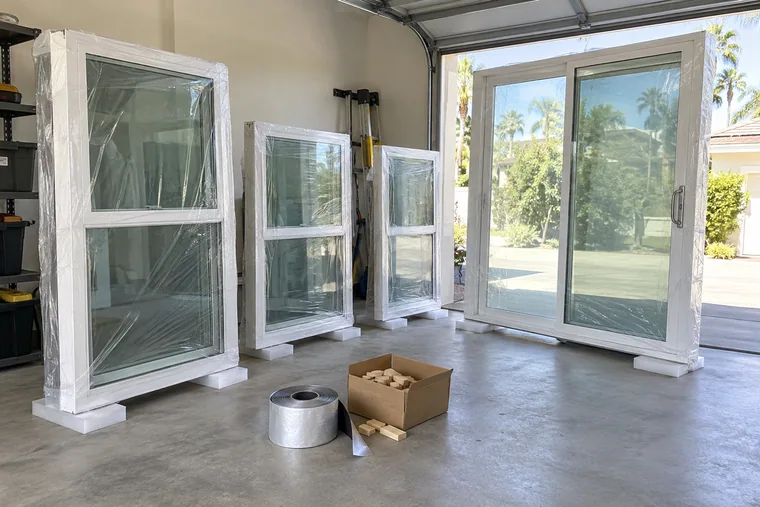
We file with LADBS or your city's building department and order windows, doors and roofing. Made-to-size windows often take several weeks to arrive, so this phase sets the start date.
Phase 03
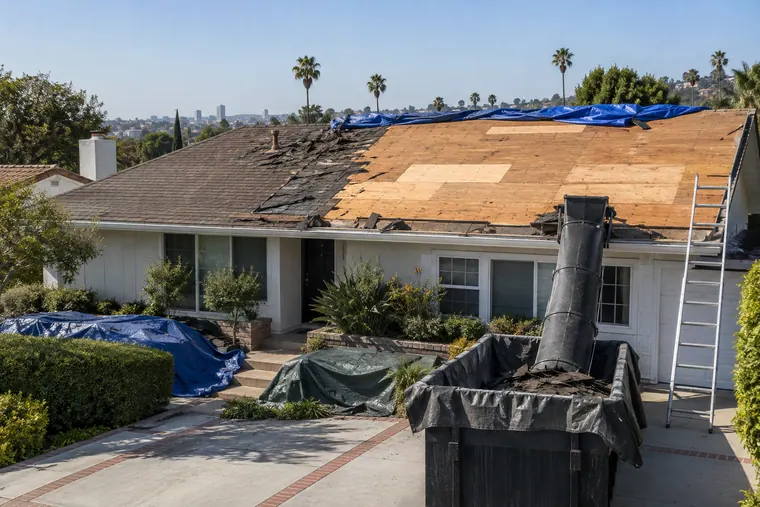
The roof comes off and goes back on first. Then windows and doors go in a few at a time, and each opening closes the day it's opened.
Phase 04
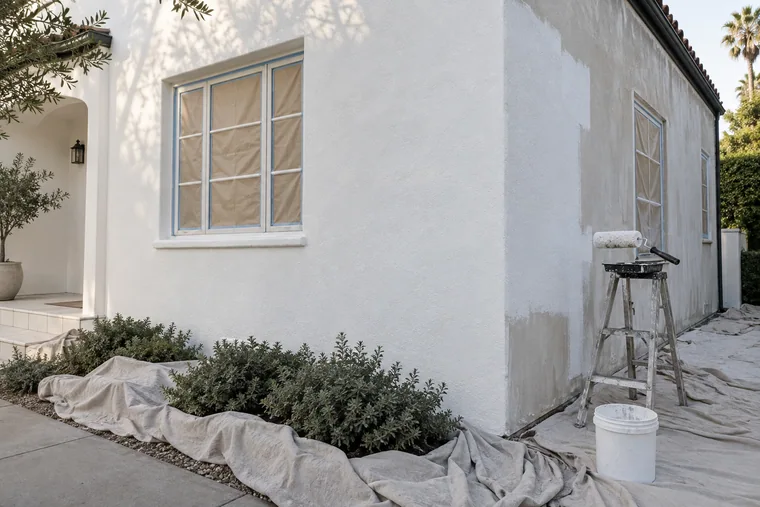
Stucco patches cure before paint, siding goes on over new paper, and the painters finish walls and trim. After the final inspection, we walk the punch list with you and close every item.
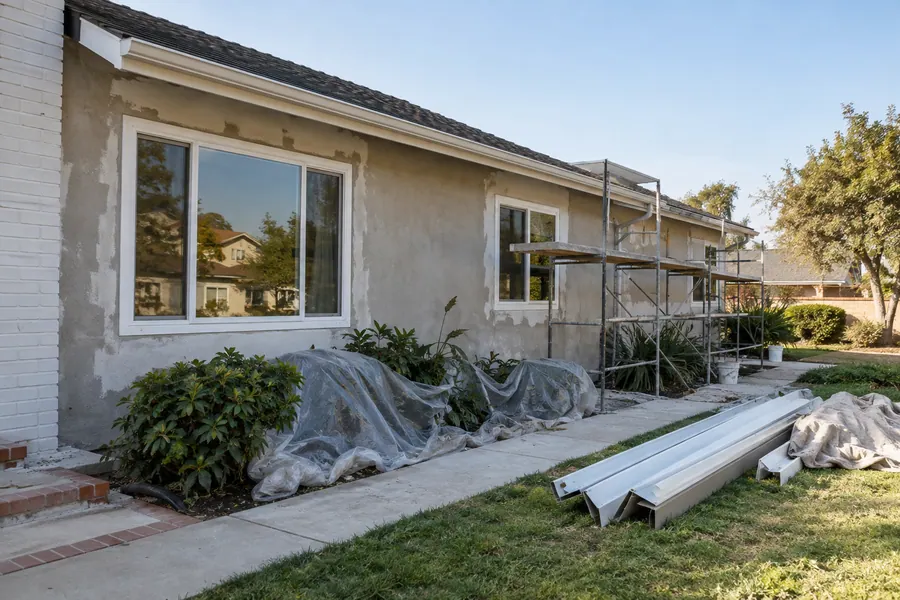
One visit shows you where water’s getting in, which trade goes first and what needs a permit. There’s no charge and nothing to sign.
Service area
We remodel home exteriors across Los Angeles, CA, on flat Valley streets and on hillside lots with fire-zone rules. The cities below are where our exterior crews work most. Call, and we’ll set up a free in-home visit.
Questions
Straight answers on cost, work order, permits, energy rules and timing.
It comes down to which trades you combine and what’s under the old surface. Window count, roof type, stucco or siding, and any rot repair or testing move the price. Your written, itemized estimate after the visit prices your house.
Roof first, then windows and doors, then stucco or siding, then paint. Each layer laps over the one below it, so water runs outward and no crew has to cut into finished work.
Often, yes. In the City of LA, window and door replacements and re-roofs usually need an LADBS permit, and larger stucco or siding jobs may too. Paint and small patches usually don’t. Outside the city, we confirm with your city’s building department.
Generally, yes. Title 24, the California Energy Code, sets limits for how much heat a replacement window lets through. We check the rule for your climate zone and order units carrying the NFRC labels the inspector looks for.
Sometimes. Title 24 sets cool-roof rules for some re-roofs, depending on the climate zone, the slope and how much of the roof gets replaced. We check what applies to yours before you pick a material or color.
Expect lead-safe work. Paint on pre-1978 homes may contain lead, so prep follows EPA lead-safe practices: containment, careful scraping and a cleanup check. Old siding and roofing may also get an asbestos test before removal.
It may. Inside a City of LA HPOZ, visible exterior changes such as windows, doors, siding and roofing go through review, and HOAs often set colors and window styles. We check your address and start approvals before anything gets ordered.
Late spring through early fall suits roofing, stucco and paint, because all three want dry weather. Window and door work runs year-round, since each opening closes the same day.
Most single-trade jobs take days to a few weeks on site. A full exterior takes longer, partly because stucco patches need time to cure before paint, and you get the phase dates in writing.
Repair it when the cracks are small and the wall behind is dry and solid. Replace it when it’s soft, bulging or hiding water damage across large areas. Our stucco page covers both.
More remodeling services
Layout, structure and systems reworked inside the house, timed with the work outside.
New square footage out back or up a story, with roof and stucco matched to the old house.
Floors, paint, drywall and doors inside, scheduled once the outside is sealed.
From the blog
Now booking free in-home visits
A roof, windows and walls built in the right order keep the weather out and look like one house from the curb. Book your free in-home visit, and we’ll show you what to fix first.
Mon–Sat, 8am–6pm
We check the roof, walls and openings and price each trade on its own line. No charge, no obligation.
Thanks — we got your request. We'll call you to set up your free in-home visit.