Home › Office Remodeling › Commercial Flooring
Commercial Flooring in Los Angeles
Commercial flooring installation gives your office a floor built for rolling chairs, heavy foot traffic and nightly cleaning: carpet tile, LVT, polished concrete, rubber or porcelain, laid over a tested, level slab. Los Angeles Home Remodelers is a commercial remodeling contractor installing office flooring across Los Angeles, CA.
One project manager handles slab moisture tests, furniture moves, landlord and building approvals, and any LADBS permits your wider scope needs. We install after hours or zone by zone, and most suites take about 1–3 weeks on site. Your price comes from a free walkthrough and a written estimate itemized by area.
Bonded & Insured | Written Workmanship Warranty
We measure each area, look at the slab under your old floor and note the building’s work hours. No charge, no obligation.
Thanks — we got your request. We'll call you to set up your free in-home visit.
Office flooring in LA
Serving businesses across Los Angeles, CA.
Commercial flooring takes more wear than any other finish in your suite: chair casters, mail carts, wet shoes at the door and a cleaning crew every night. We choose the floor for each area by how it’s used, then install it on concrete we’ve tested and leveled.
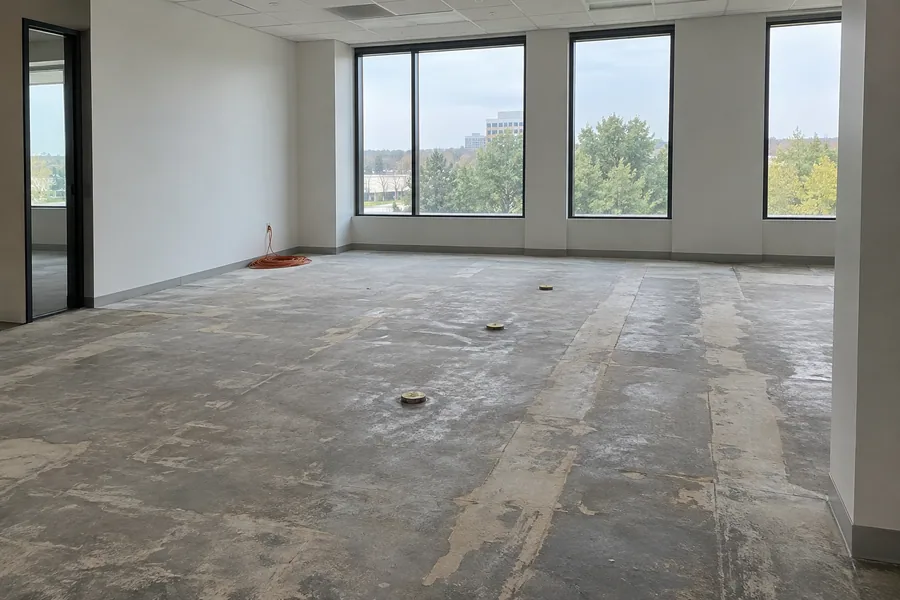
Prep is the real job in older LA buildings. A mid-century low-rise can hide old vinyl tile and black adhesive under its carpet, and a converted warehouse slab is often cracked, sloped or damp.
One crew handles removal, prep, install, wall base and transitions, so nothing falls between trades.
Flooring services
Pick the scope that fits your suite. Removal, slab prep and cleanup come with every one.

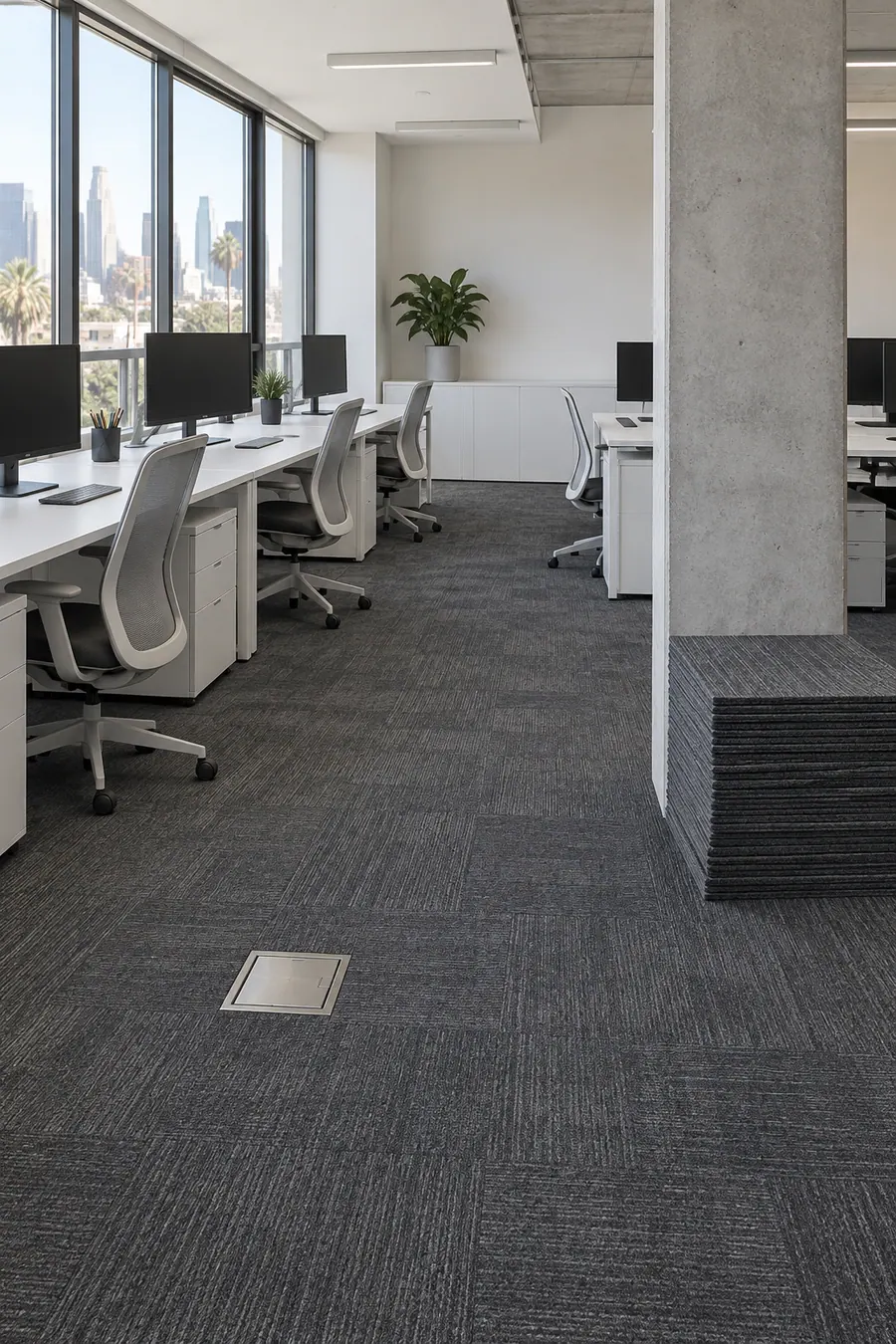
Office flooring replacement swaps a worn floor for a new one with most of your furniture still in the room. We pull up the old carpet or vinyl, scrape off the glue and set fresh wall base once the new floor’s down.
Where the floor type allows, workstations go up on furniture lifts and the new floor slides in under them, so nobody takes desks apart.
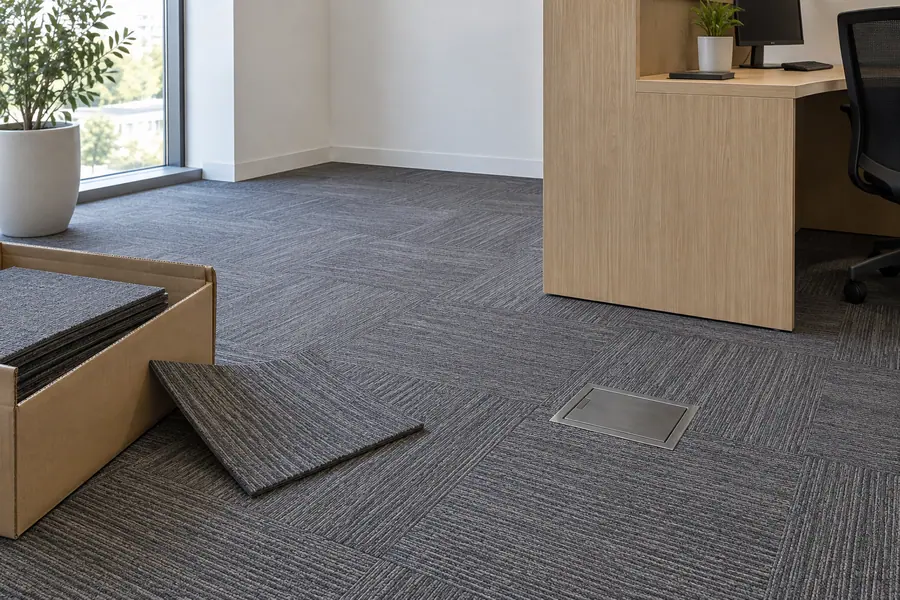
Commercial carpet tile installation lays modular squares or planks on a pressure-sensitive adhesive, so one stained tile lifts out and a spare drops in. Tiles also cut cleanly around floor boxes and column bases.
You pick the pattern first: monolithic, quarter-turn or ashlar. We leave you a box of spares from the same dye lot.
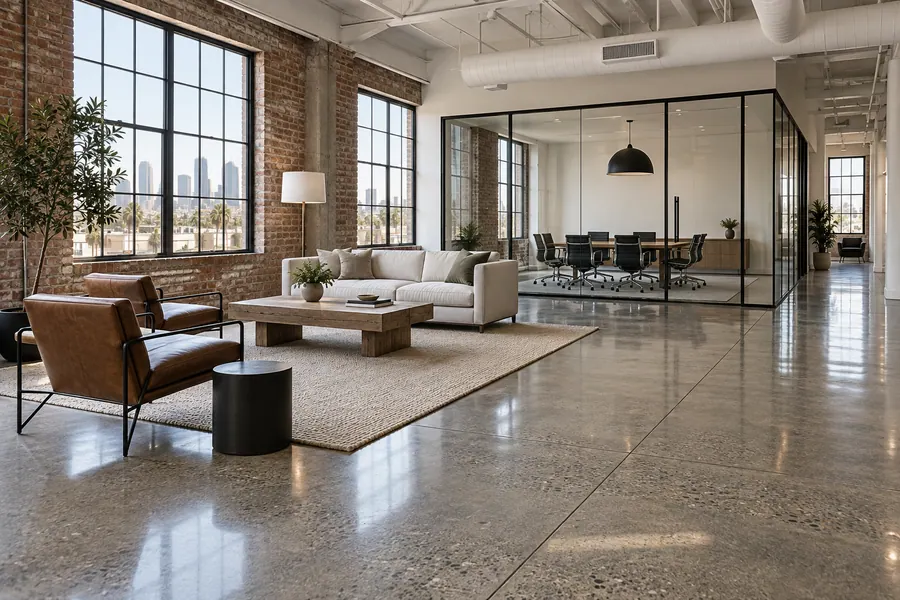
Polished concrete turns the slab you already have into the finished floor. We grind it with diamond tooling, harden the surface with a densifier and polish it to the sheen you choose, from matte to high gloss.
Sealed concrete is the lighter version: cleaned, ground lightly and coated. Both suit lofts and ground-floor suites, where rugs and wall panels quiet the echo.
How it works
Four steps take you from worn carpet to a new floor. No adhesive goes down until the slab passes its tests.
We measure each area, pull back a corner of the old floor and note floor boxes, thresholds and your building’s work hours.
We run moisture and pH tests on the slab, bring samples for each area and price every material on its own line.
Old flooring and glue come up, cracks get filled and low spots get leveled with a cement underlayment.
We lay the floor zone by zone, set base and transitions, then walk it with you and leave spare material for repairs.
We install while your office is empty: evenings, weekends or one zone at a time. Each shift ends with furniture back in place and the area vacuumed. If an adhesive needs longer before chairs roll on it, we tape off that zone and tell you when it’s ready.
Your building manager sets the rules for freight elevator times, debris removal and the loading dock. We book all three before night one and map the zones with you, so each department knows which night its area goes down.

Slab prep
Most commercial floor failures start under the floor, not on top of it. Moisture rising through the concrete breaks down adhesive, so tiles lift, planks gap and seams bubble.
Here’s what we check and fix before install:
A slab that tests wet still has options: a moisture-mitigation coating, an adhesive rated for higher readings or a floor that needs no glue. We price each one so you can choose.
Older buildings can hide 9-inch vinyl tile or black mastic that may contain asbestos. We check for a current asbestos survey before removal, and a licensed abatement contractor handles anything that tests positive.
Flooring materials
Match each area to its main stress: casters, spills, weight or sound. Most suites use two or three of these floors.
Material
Best for
Watch out for
Upkeep
Carpet tile
Open offices, private offices and conference rooms
Stains near the entry and the coffee station
Nightly vacuuming; swap worn tiles
LVT (luxury vinyl tile)
Corridors, break rooms and reception
Shows every dip in an unleveled slab
Damp mop with a neutral cleaner
Polished concrete
Lofts, studios and showroom offices
Cracks and old patches stay visible
Dust mop; burnish now and then
Sealed concrete
Storage, server rooms and back-of-house
Sealer wears through in traffic lanes
Recoat the sealer as it wears
Rubber
Fitness rooms, stairs and mailrooms
Some products smell like rubber at first
Damp mop; no wax needed
The hardest-wearing pick for lobbies, restrooms and break rooms. A crack-isolation membrane goes over slab cracks so the tile above stays whole.
Rolling chairs wear a floor faster than feet do. Hard casters suit carpet tile, and soft casters protect LVT and concrete.
Hard floors carry footfall noise to the tenant underneath. Many high-rises require an acoustic underlayment, so we check your building’s rules first.
California’s CALGreen code sets VOC limits for flooring adhesives and carpet. We use products that meet them and keep the data sheets for your file.
One walkthrough tells you the slab’s condition, which floor suits each area and how many nights the install takes. There’s no charge and nothing to sign.
Questions
Short answers on materials, timing, permits, slab moisture and working around your team.
Call, and talk it over with the project manager who’d run your install.
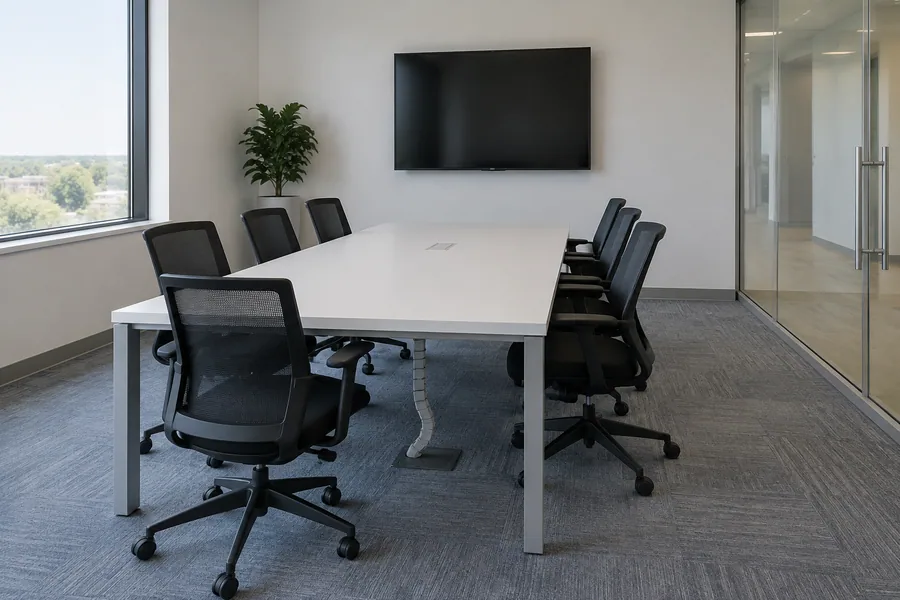
Carpet tile in the work areas, with LVT or porcelain wherever spills happen, is the most common mix. Lofts often keep polished concrete. The materials table above compares all six floors by use, risk and upkeep.
Most suites take about 1–3 weeks on site, set by square footage, prep and how many zones we phase. A few rooms can often finish over one weekend. Grinding or leveling a rough slab adds days, and your schedule goes in the contract.
Usually not for the floor covering alone, since replacing carpet or vinyl is finish work. That changes when the job adds walls, floor boxes or plumbing, or rides with a larger tenant improvement. We confirm with LADBS for your scope.
Often, yes. With carpet tile and many glue-down floors, we raise workstations on furniture lifts and lay the floor under them. Files, printers and loose chairs move zone by zone, and every piece goes back where it stood.
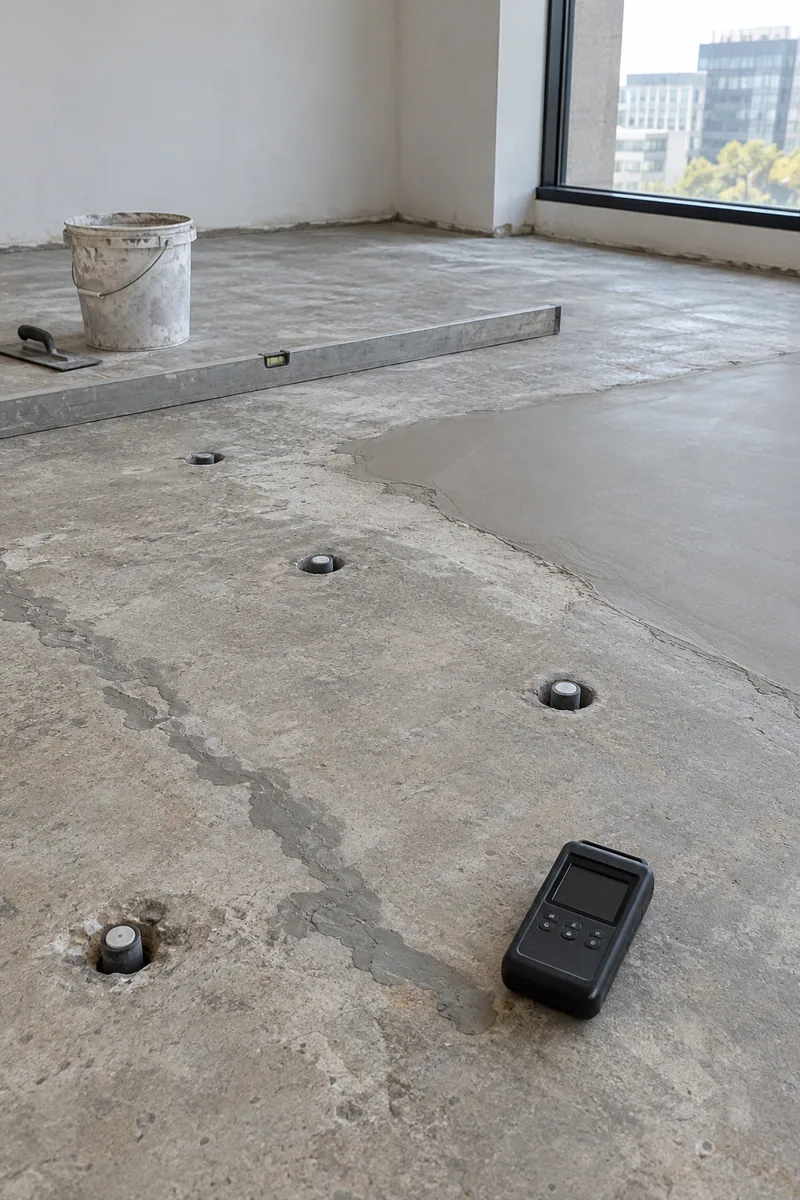
We drill small holes, set relative-humidity probes in the slab and read them once they settle, usually a day later. We also check surface pH. Then we compare the readings with the flooring maker’s limits before choosing an adhesive.
For most offices, yes. You replace one damaged tile instead of a whole room, and tiles work with furniture lifts. Broadloom still suits a quiet boardroom or executive office where an unbroken look matters.
LVT or porcelain tile. Both handle spills and mop clean, and LVT is softer and quieter underfoot. Keep carpet tile out of the break room and away from the coffee station.
Some floors and adhesives give off an odor for a few days. We use low-VOC products, install in the evening or on weekends and ventilate the suite, so most of the smell clears before your team returns.
More office services
Build-outs, renovations and refreshes for LA offices, run by one project manager.
Glass fronts, drywall partitions and demountable walls that turn open floor into rooms.
LED fixtures, lighting controls, circuits and data planned for your new layout.
From the blog
Now booking free walkthroughs
A floor that lasts starts with a tested slab and the right material in each area. Book your free walkthrough and leave with samples, an install schedule and a written, itemized estimate.
Mon–Sat, 8am–6pm
We measure every area, test the slab and price each material line by line. No charge, no obligation.
Thanks — we got your request. We'll call you to set up your free in-home visit.