Home › Restaurant Remodeling › Hood & Ventilation
Commercial Hood Installation in LA
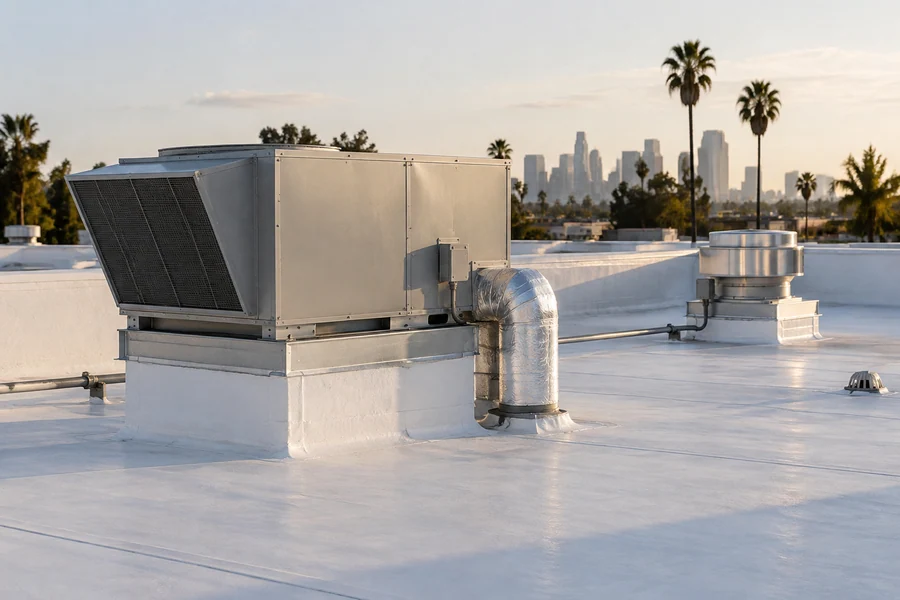
Restaurant hood installation gives your cook line a Type I or Type II hood, a welded grease duct, a roof exhaust fan and makeup air to replace what it pulls out. Los Angeles Home Remodelers handles it as a restaurant remodeling contractor across Los Angeles, CA.
One project manager runs the LADBS mechanical permit, the county health department’s food-facility plan check where your scope needs it, landlord roof approval and the licensed specialist who certifies your fire suppression system. Most hood swaps take about 1–2 weeks, mostly after hours, and a new system about 3–5 weeks on site. You’ll get a free walkthrough and a written, itemized estimate.
Bonded & Insured | Written Workmanship Warranty
We measure the line, look at the roof and check any hood that’s already there. No charge, no obligation.
Thanks — we got your request. We'll call you to set up your free in-home visit.
Hood and ventilation in LA
Serving restaurants across Los Angeles, CA.
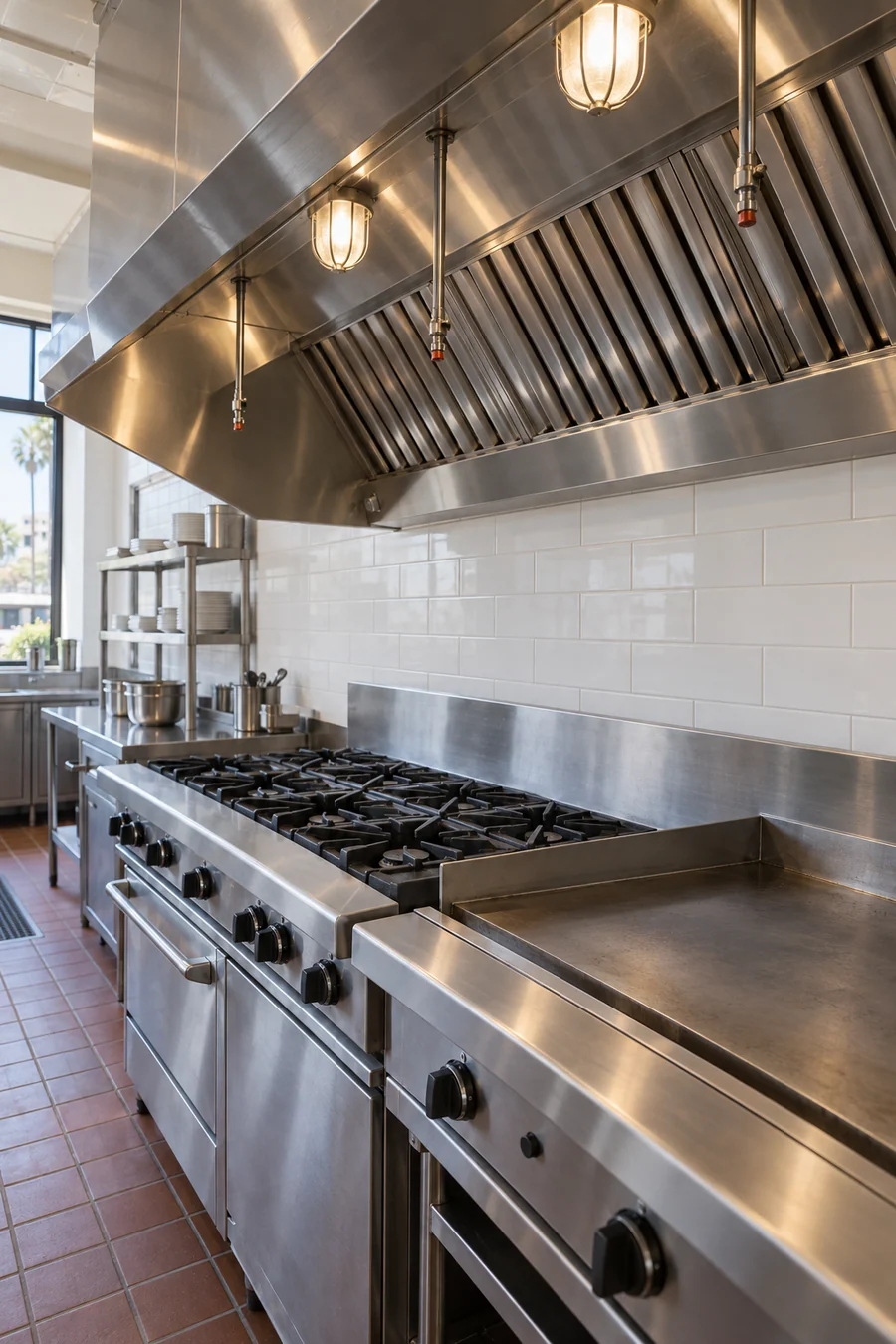
Restaurant hood installation starts with your menu, because the equipment you cook on sets the hood type, its length and how much air it moves. We size the hood, duct, fan and makeup air as one system.
Get one piece wrong and the whole kitchen feels it. If the makeup air falls short, the hood can’t pull what it was built for, and smoke spills off its edges into the dining room.
Older storefronts with apartments upstairs rarely have a straight path to the roof. We trace the duct route, through a fire-rated shaft or up the outside wall, before you commit to a menu or a lease.
Hood and ventilation services
Pick the scope your kitchen needs. Each one includes its permit drawings, roof work and inspections.
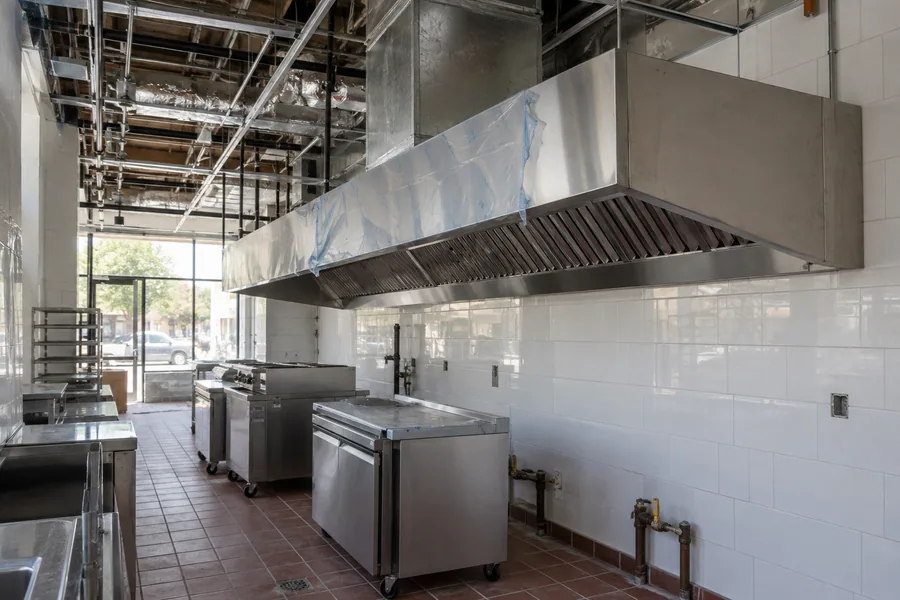
Commercial hood installation for a new or rebuilt line covers the whole exhaust system: the hood, a welded grease duct, the exhaust fan on its roof curb and a makeup air unit. The hood hangs to the equipment layout your chef signs off on.
The suppression specialist pipes the hood while our crew finishes the walls, so testing starts once the line’s ready.
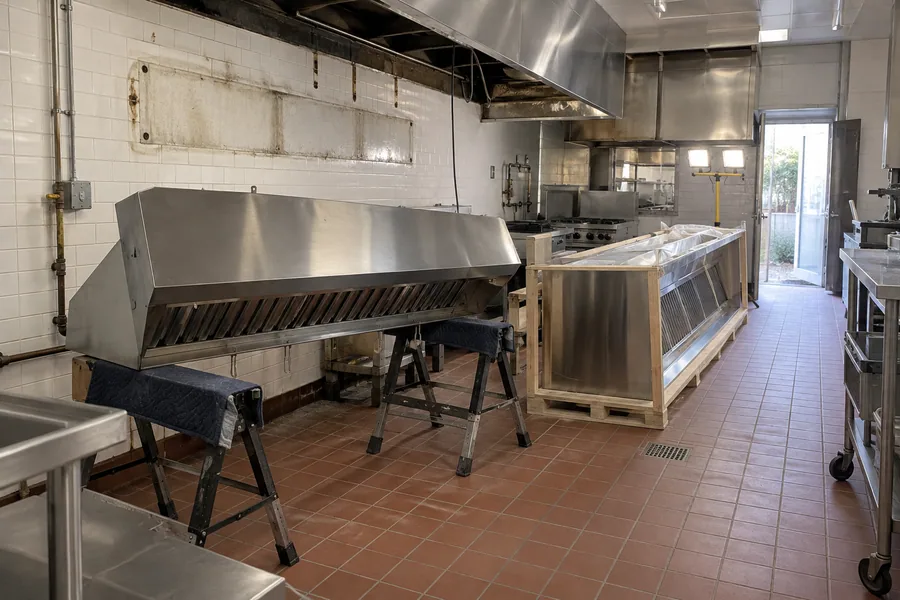
Taking over a space where the last restaurant ran a lighter menu? We replace the hood with a longer or heavier-duty one when your fryers, charbroiler or wok range won’t fit under the one that’s there.
If the duct and fan check out, we keep them and price the reuse as its own line, so you can see what it saves.

A kitchen that runs hot or smoky usually needs more air coming in, not just more going out. We add or upsize the makeup air unit and the exhaust fan, then interlock them so they always start together.
Afterward, a balancing crew measures the airflow at the hood and records it for your inspection file.
How it works
The roof and the duct route get planned first, because they decide where everything else can go.
We measure the cook line, open the ceiling where the duct would run and look for a fan spot your landlord will allow.
A mechanical engineer draws the hood, duct, fan and makeup air. We file the mechanical permit with LADBS and add the hood to your health plans when the scope calls for it.
Curbs and duct prep go in while you’re still open. The hood swap itself lands on closed days or overnight, and the duct gets a leak test before it’s closed in.
The suppression specialist runs the acceptance test and the fire inspector checks it. LADBS then signs off the mechanical work.
Hood system parts
A hood is six parts that pass inspection together. Here’s what each one does and what we check on it.
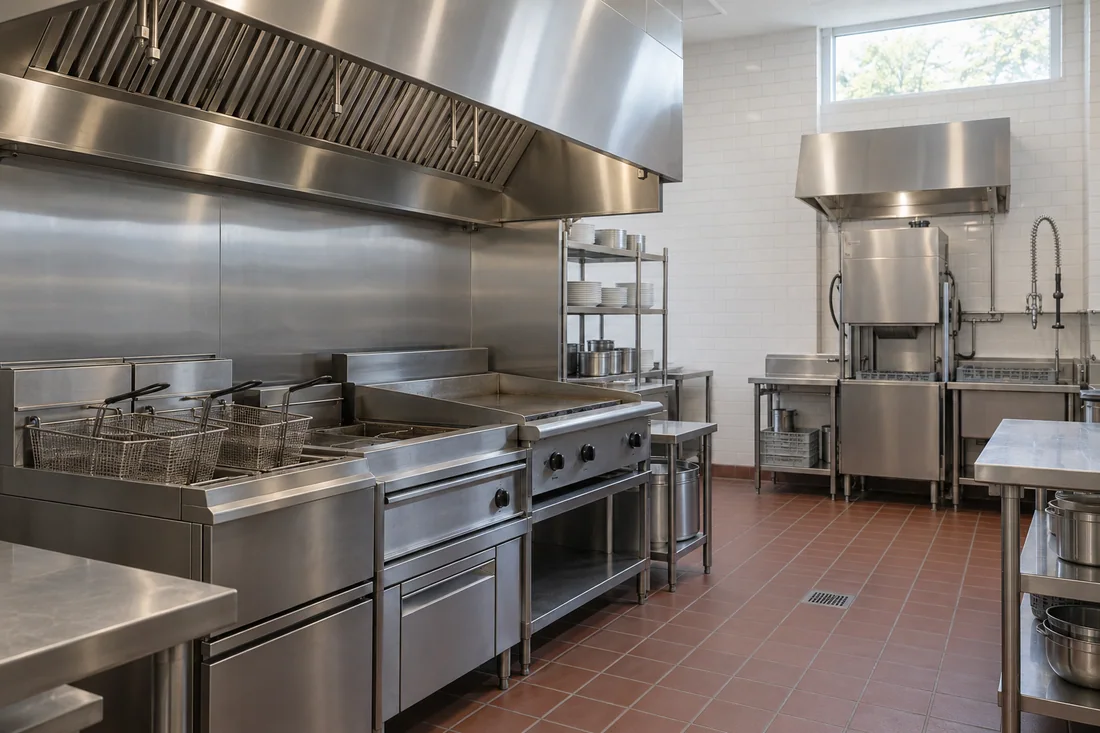
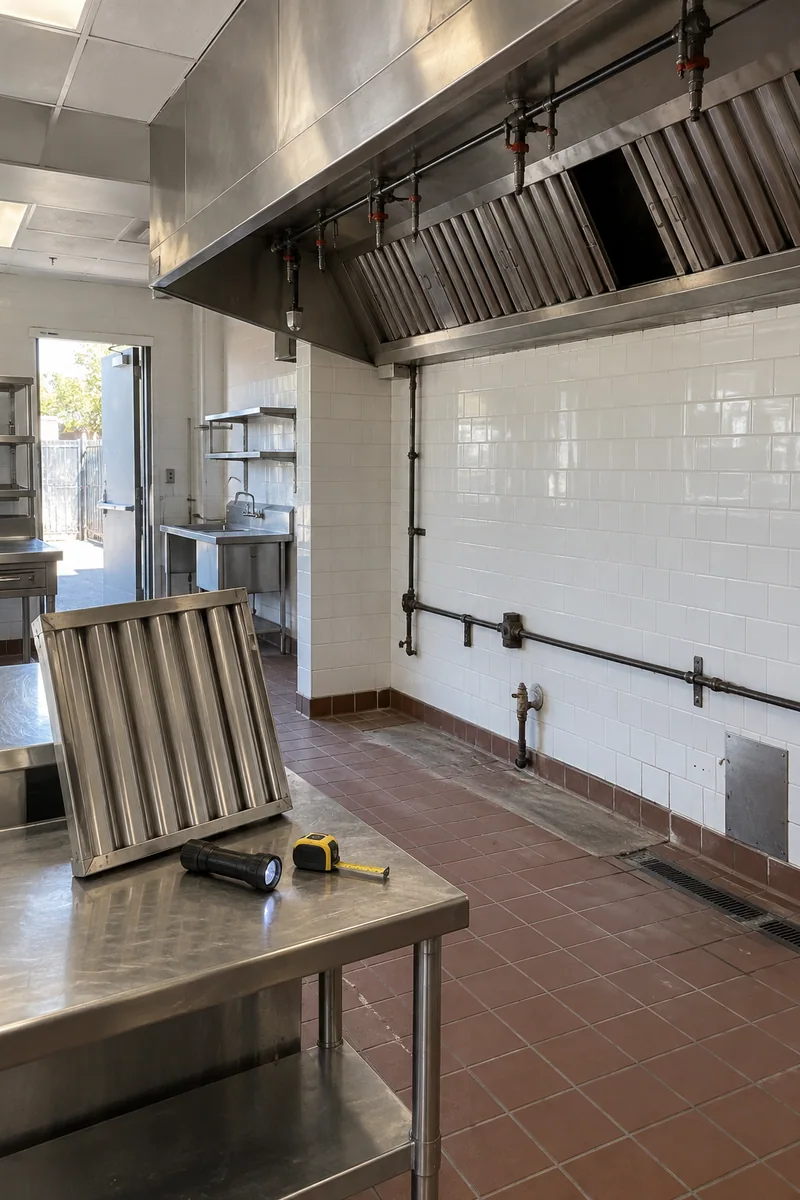
A Type I hood goes over equipment that makes grease or smoke, and it needs a grease duct and a fire suppression system. A Type II hood handles heat and steam only, such as over a dishwasher.
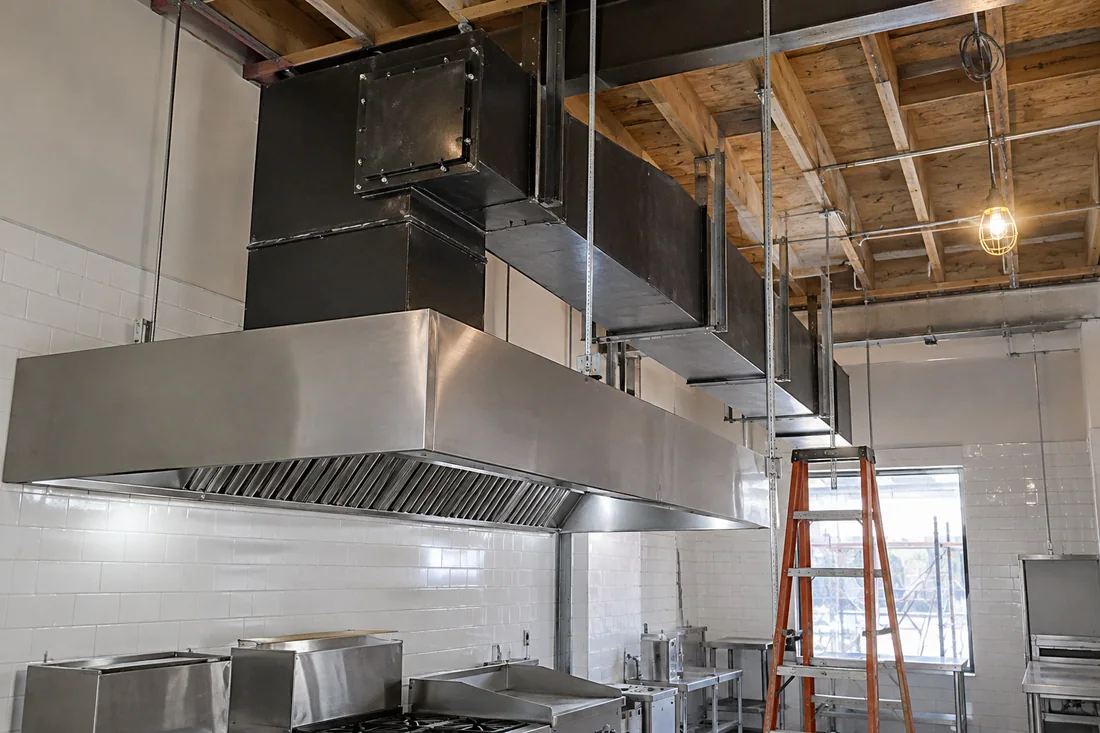
The grease duct carries hot, greasy air from the hood to an upblast exhaust fan on the roof. The California Mechanical Code sets how it’s built: welded steel, sloped back toward the hood and kept away from anything that burns.

Air the hood pulls out has to come back in. A makeup air unit brings outdoor air into the kitchen, through the hood’s front face or nearby diffusers, whenever the exhaust fan runs.
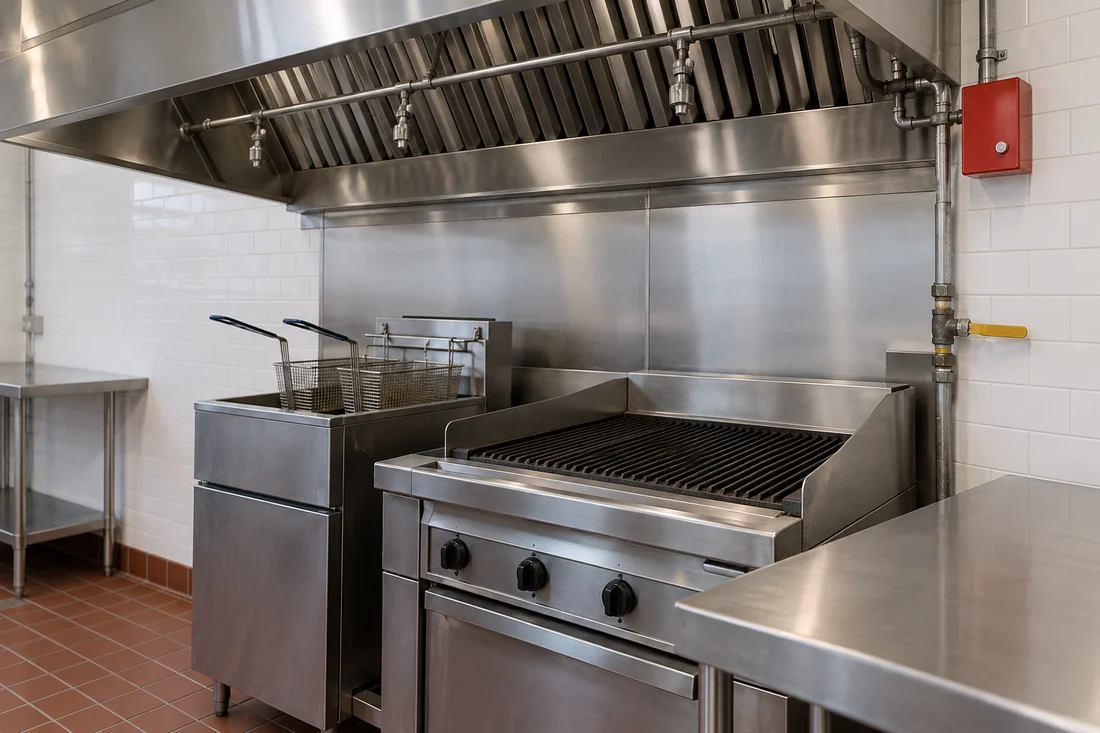
A fire suppression system puts nozzles over each appliance and inside the hood and duct. When a fusible link melts or someone pulls the manual station, it sprays a wet chemical agent and shuts off gas to the line.
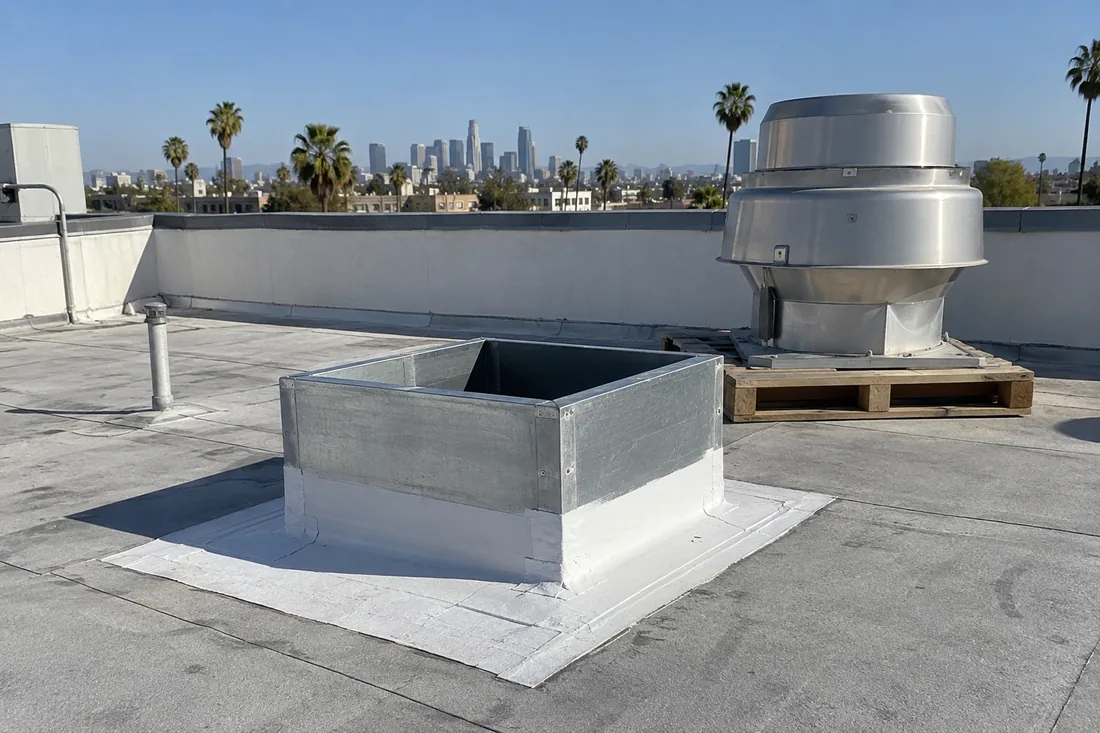
The exhaust fan and makeup air unit sit on roof curbs, raised and flashed frames that keep rain out of the opening. On older roofs, an engineer confirms the framing can carry the units first.
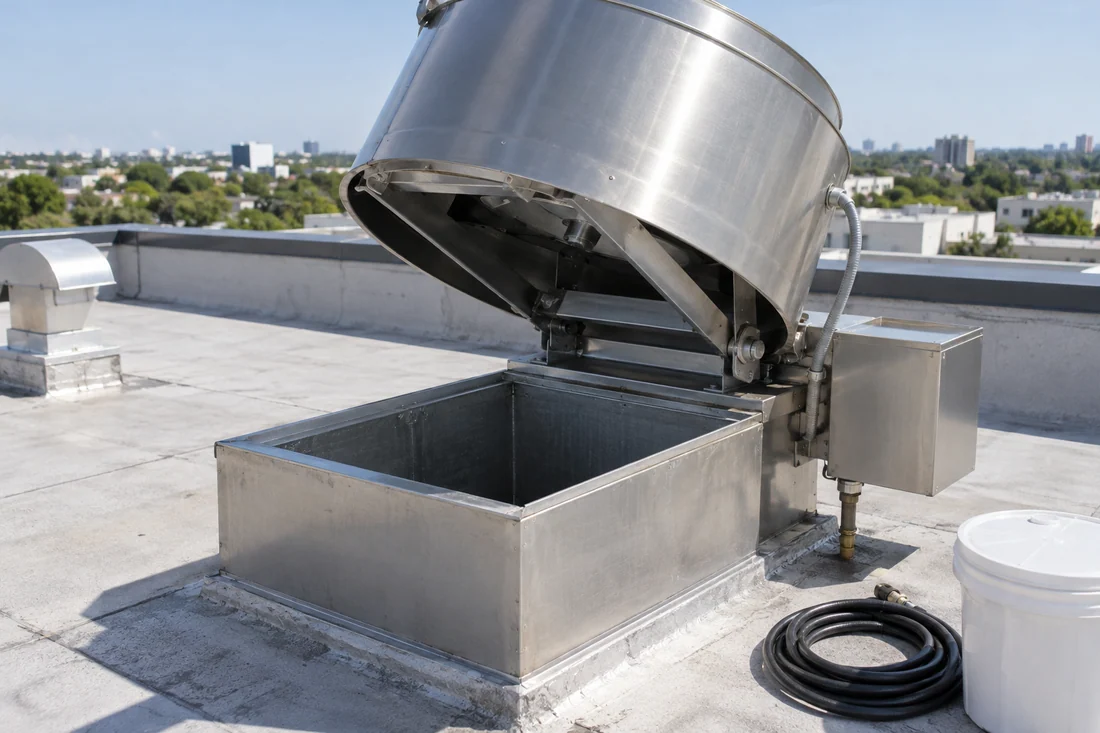
Grease builds up inside the duct, and your hood cleaning company has to reach all of it. Planned hood cleaning access means a full cleaning never involves cutting into your ceiling.
Second-generation hoods
An existing hood saves you weeks only if it fits your menu and passes today’s inspection. We check it before you sign the lease, not after.
Here’s what we test on a hood that’s already in place:
A hood can look clean and still fail. Old grease in the duct, nozzles placed for someone else’s equipment or a fan sized for a lighter menu each mean new parts.
You’ll get every finding in writing, with photos, before you sign. Lease terms stay with your broker or attorney.
Hood types
The shape of your cook line and the equipment on it pick the hood. Find the row that matches the line you’re planning.
Hood
Fits
Needs
Watch for
Wall canopy, Type I
Cook lines against a wall
Grease duct, suppression, makeup air
Overhang past each end of the line
Island canopy, Type I
Lines set in the middle of the room
More exhaust than a wall hood
Support from the structure above
Backshelf, Type I
Short lines under a low ceiling
A listing for the exact equipment
Little room to add equipment later
Condensate hood, Type II
Dishwashers and steamers
Moisture exhaust, no grease duct
A gutter and drain for condensation
Heat hood, Type II
Ovens that make heat, not grease
Exhaust sized to the heat
Menu changes that add grease
Most commercial hoods are factory-built and listed for certain equipment and airflow. A big change on the line can mean a different hood.
Island hoods pull the most air of any style, so they need the most makeup air too.
California’s Title 24 energy code has rules for commercial kitchen exhaust. We confirm with LADBS whether your hood triggers them.
Code and health requirements depend on your space, your menu and your city. We confirm them with each agency before work starts.
One walkthrough tells you which hood your menu needs, where the duct can run and what the roof will take. It’s free, and you don’t sign anything.
Questions
Short answers on cost, hood types, permits, timing, makeup air and fryers.
The hood’s type and length come first, then the duct route, the roof work and the makeup air. A short wall hood with a straight run to the roof costs far less than an island hood under floors of apartments. Your estimate prices each part on its own line.
Yes, if you cook on equipment that makes grease or smoke. Fryers, grills, griddles, charbroilers, ranges and woks go under a Type I hood with a fire suppression system. Equipment that only makes heat or steam may need a Type II hood, and we confirm which with the agency.
Yes. In the City of LA, a new or replaced hood needs a mechanical permit from LADBS, and it shows on your food-facility plans for the health department too. Outside the city, we confirm the permit with your city’s building department.
Swapping a hood onto a duct that stays usually takes about 1–2 weeks on site. A new hood, duct, fan and makeup air unit takes about 3–5 weeks after plan check and the hood’s build time.
Your hood can only remove the air that something replaces. Without makeup air, smoke escapes the hood and doors pull hard against you. The engineer sizes it to your exhaust, and we wire the unit to run with the fan.
Only if the hood’s length, airflow and suppression cover it. A new fryer often needs added nozzles, more hood or the right spacing from open-flame burners. We check the hood against the new equipment and confirm the change with the agency.
More restaurant services
Full restaurant remodels and build-outs, with building and health plan check run by one project manager.
Cook line, prep and dish layouts with the gas, power and plumbing roughed in to match.
Interceptor sizing, installation and pumping access for the drains under your kitchen.
From the blog
Now booking free walkthroughs
A hood sized to your menu keeps smoke on the line and goes into its fire inspection ready. Los Angeles Home Remodelers runs the hood, duct, fan, makeup air and permits under one contract. Book your free hood walkthrough today.
Mon–Sat, 8am–6pm
We measure the line, check the roof and price the hood system line by line. No charge, no obligation.
Thanks — we got your request. We'll call you to set up your free in-home visit.