Home › Restaurant Remodeling › Grease Interceptors
Grease Interceptor Installation in LA
Grease trap installation puts a grease control device between your kitchen drains and the sewer line, sized to your fixtures and set where a pump truck can reach it. Los Angeles Home Remodelers is a restaurant remodeling contractor that installs grease traps and in-ground interceptors across Los Angeles, CA.
One project manager handles LADBS plan check and the plumbing permit, the county health department’s review when your scope calls for it, LA Sanitation’s FOG rules and landlord approval. Most indoor traps go in within a day or two; most in-ground interceptors need about 1–2 weeks of site work. Pricing starts with a free walkthrough and a written, itemized estimate.
Bonded & Insured | Written Workmanship Warranty
We count your fixtures, find the sewer line and outline the install. No charge, no obligation.
Thanks — we got your request. We'll call you to set up your free in-home visit.
Grease trap installation in LA
Serving restaurants across Los Angeles, CA.
Grease trap installation starts with your drains, not the device. We count every sink and floor sink that’ll carry greasy water, then size and place the unit so it catches fats, oils and grease (FOG) before they reach the sewer line.
Most owners say “grease trap” for any of these units. In plumbing terms, a trap is the small unit near a sink, and a grease interceptor is the larger device, often buried outside, that serves the whole kitchen.
In the City of LA, LA Sanitation’s FOG program regulates grease from food service businesses, and most restaurants that cook need a grease control device. Beyond city limits, your own city or sewer agency sets the rules, and we check them for you.

Grease interceptor installation
Start with the site you have: a lot outside, a kitchen with no room to dig or a unit that’s already failing.
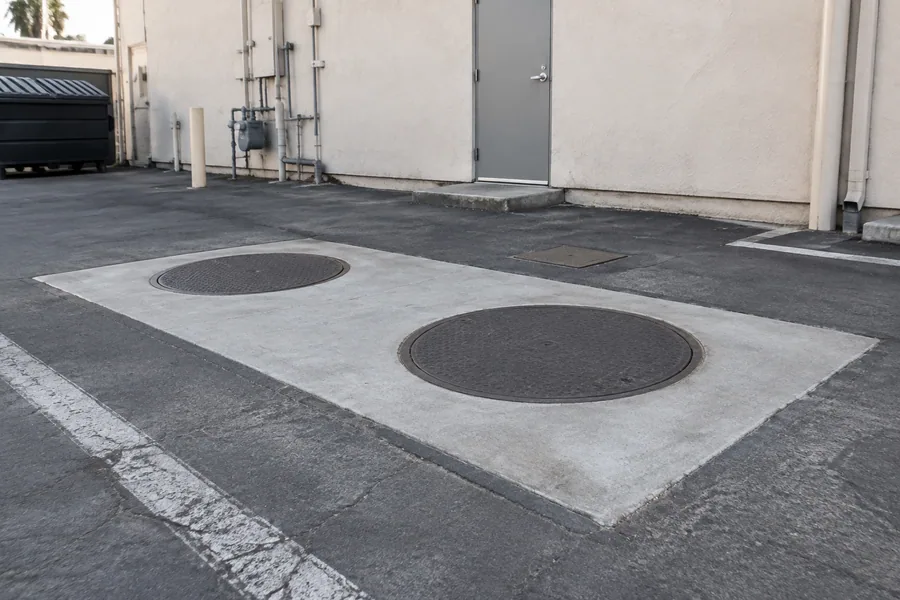
A gravity interceptor is a large tank buried outside the kitchen, usually under a parking area or side yard on your property. We saw-cut the paving, handle the excavation, set the tank level and connect it to your kitchen waste line and the sewer line.
Nothing gets buried until the inspector signs off. Then we compact, patch and set traffic-rated lids so cars can park on top.

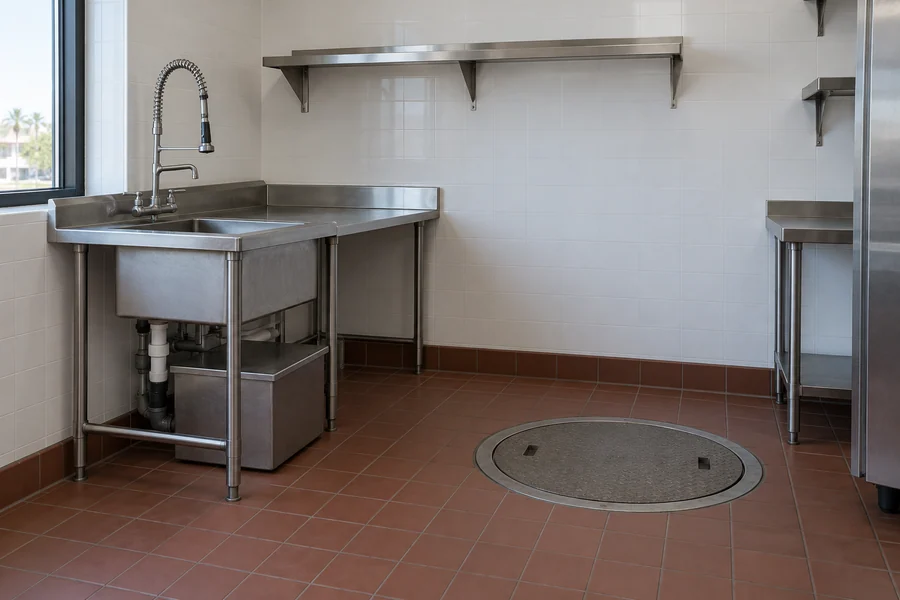
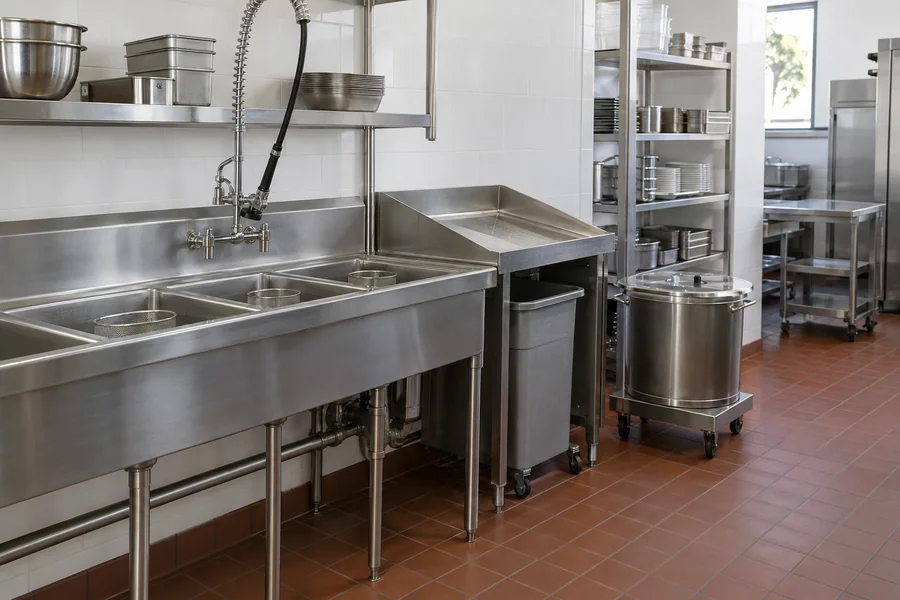
Plenty of older LA storefronts have no yard, no lot and no easy place to dig. A compact hydromechanical unit can sit beside the three-compartment sink or recessed into the kitchen floor where your approved plans allow it.
We leave open space above the lid, so your staff or pumping service can open it without dragging a prep table out of the way.
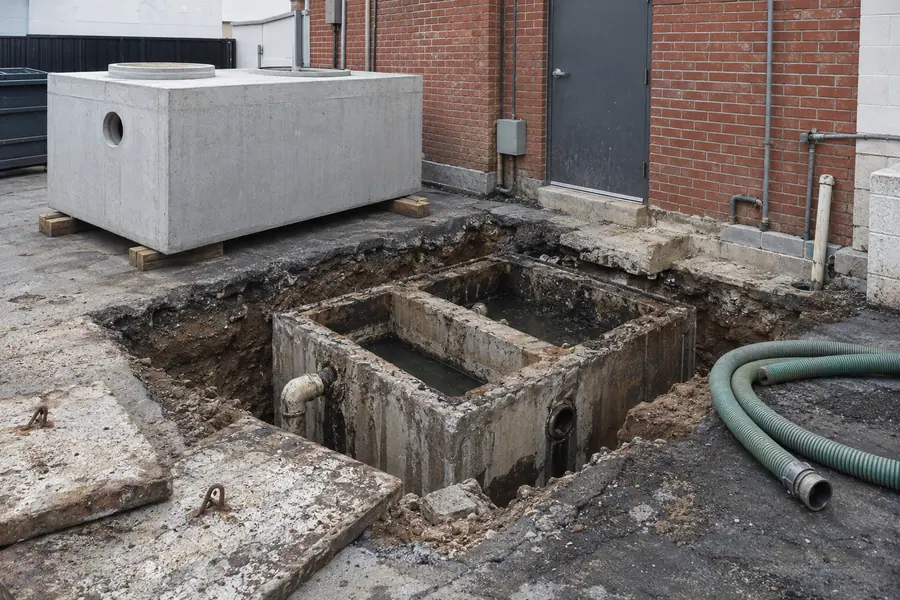
Backups, sewer odors and a notice from the grease program usually trace back to a unit that’s cracked, corroded or too small for today’s menu. We pump it, look inside and tell you whether it’s worth repairing.
Removal and tie-ins get planned around your closed days or after hours wherever the scope allows, and the new unit’s sized for the fixtures you run now.
How it works
You’ll know the device, its spot and any closed days before the first saw cut.
We walk the kitchen and the lot with you, list every fixture and find where the sewer line leaves the building.
The unit, its size and its piping go on the drawings for LADBS plan check, the health department’s review where it applies and your landlord’s sign-off.
Our crew handles the excavation, sets the unit and connects both lines. An inspector checks the piping while it’s still open.
Paving or slab gets patched to match, and you get a lid map plus the pumping access notes your hauler will ask for.
Interceptor basics
Five choices set what goes in the ground, where it sits and how easy it’ll be to keep clean.
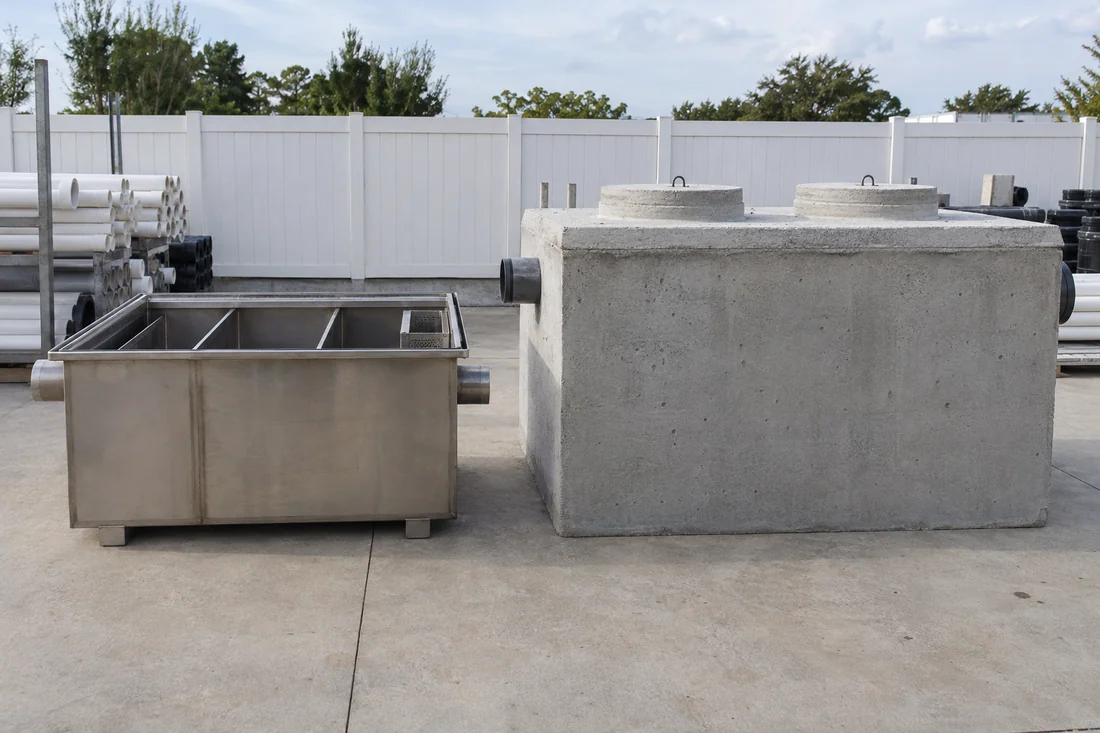
A hydromechanical interceptor separates grease with baffles and a flow control, so it’s compact enough for a kitchen floor. A gravity interceptor is a big buried tank that gives wastewater time to cool, so grease floats and food solids sink.
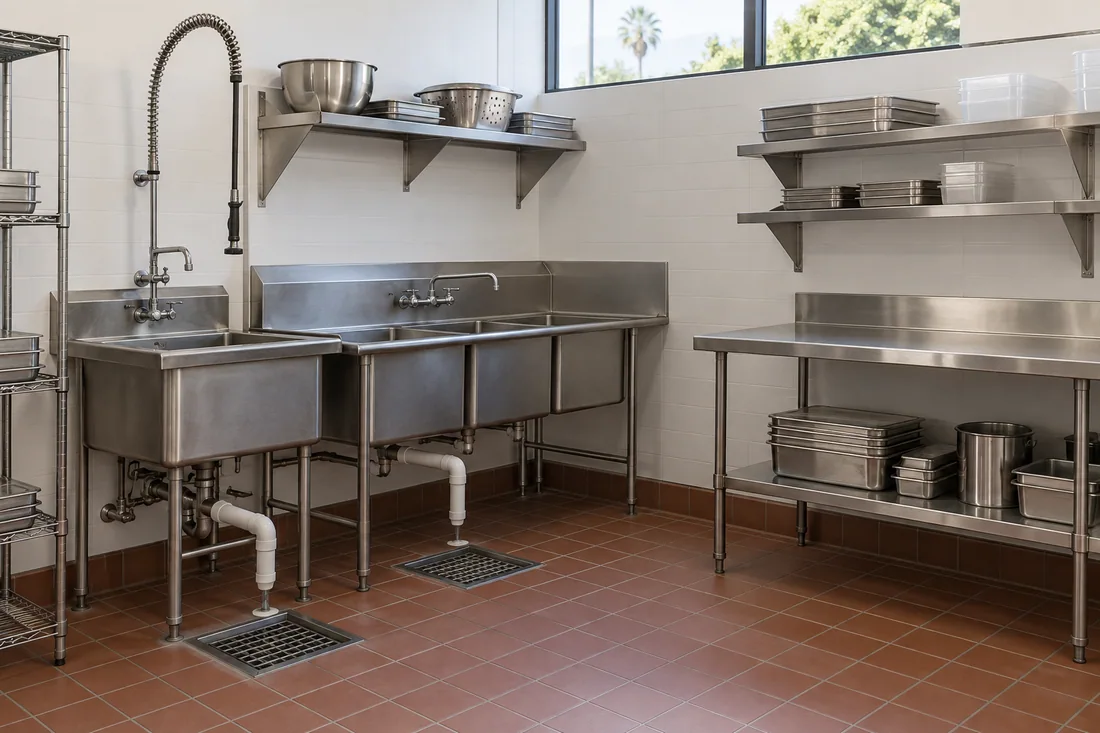
Sizing comes from what drains into the unit. The California Plumbing Code rates hydromechanical interceptors by flow and gravity interceptors by holding volume, and both start from your fixture list.
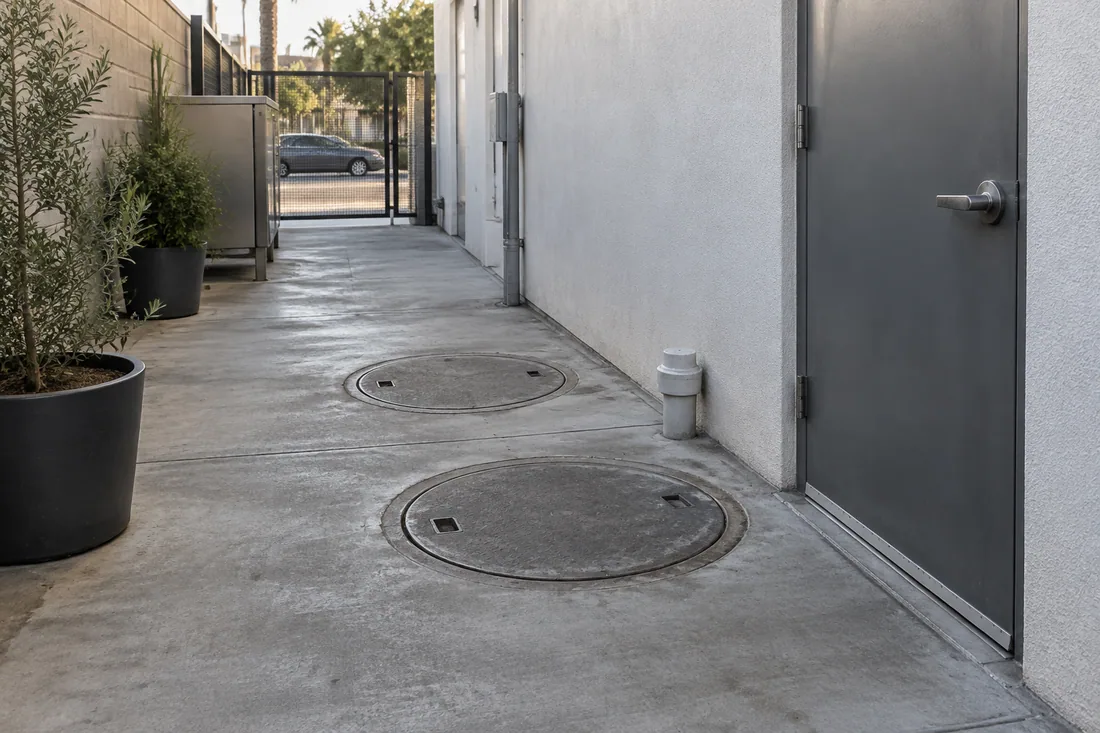
Your interceptor has to sit where a crew can open every lid and a pump truck hose can reach it, often a parking area or yard on your property.
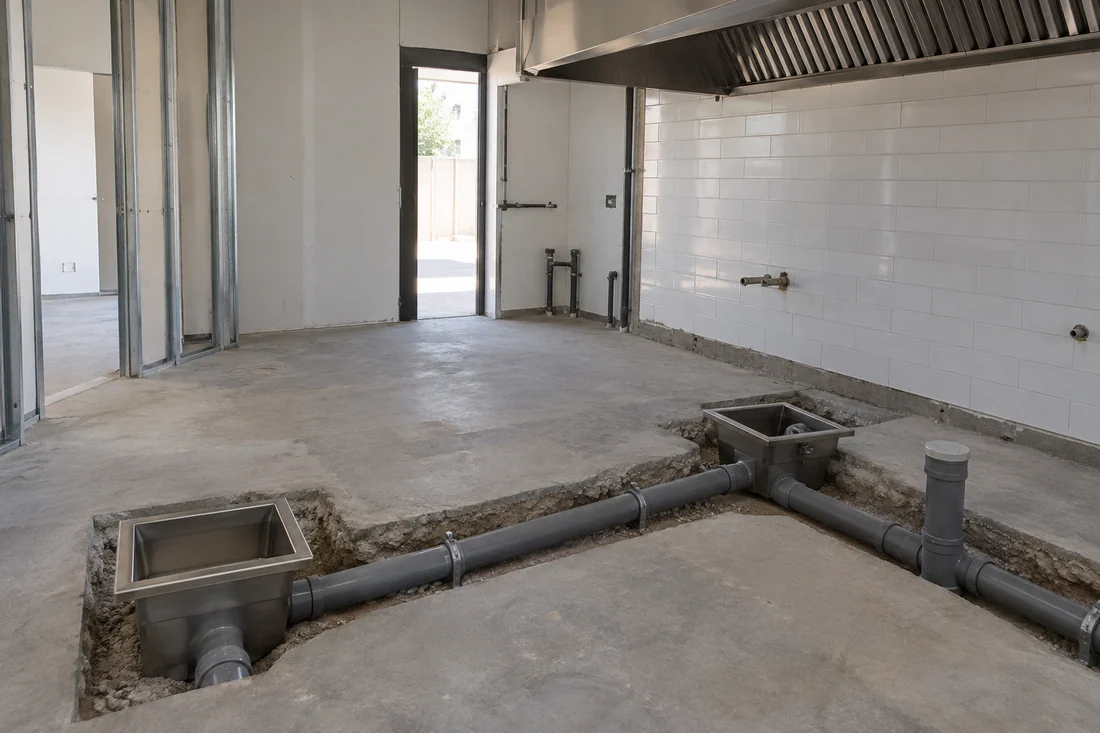
Greasy waste runs to the interceptor, and everything else bypasses it. We pipe the fixtures your approved plans list, usually the three-compartment sink, the dish area and floor sinks, with cleanouts along the way.
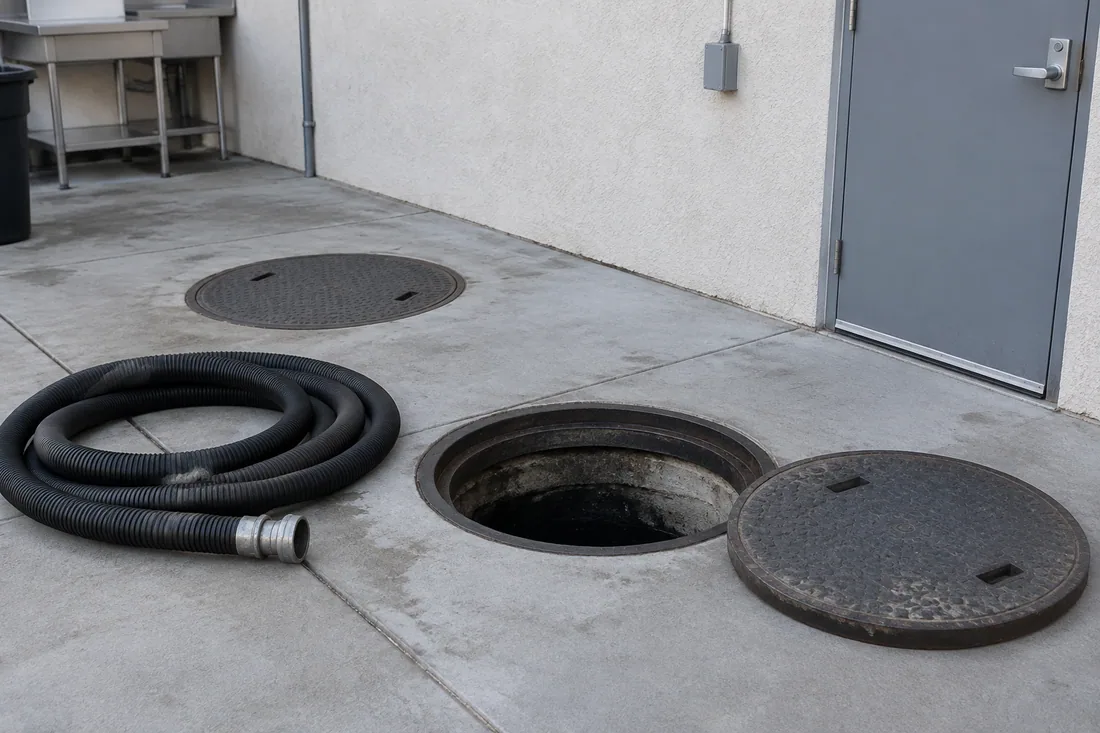
Every interceptor needs regular pumping, and in the City of LA the FOG program expects you to keep records of it. We set lids and risers so your hauler can empty it fully.
Second-generation spaces
A second-generation restaurant space often comes with an interceptor. Whether it can stay depends on its size, its condition and the fixtures you’ll add.
Here’s what we check on the walkthrough:
If it passes, you’ll budget for a pump-out and cleaning before opening. If it falls short, the replacement shows up on your estimate before you sign.
Code and health requirements depend on your space, your menu and your city. We confirm them with each agency before work starts.
Install, replace or reuse
The unit already in your space decides most of your grease scope, so we sort it into one of these three paths on the first walk.
Question
New install
Replacement
Reuse
When it fits
No unit yet, or a shell stubbed for one
The old unit is cracked, corroded or undersized
A sound unit sized for your fixtures
Site work
Saw-cutting, excavation and a new sewer tie-in
Pump-out, removal and a new unit set
Pump-out, cleaning and a look inside
Plumbing permit
Yes, with drawings for plan check
Usually, and we confirm the review path
Only if piping or fixtures change
Closed days for you
None if you haven’t opened yet
Tie-ins planned for closed days or after hours
Usually just a pumping visit
Watch for
Where the sewer line leaves the building
Old piping between the kitchen and the unit
Fixtures you add that the old sizing missed
Strip centers and food halls often share one interceptor among tenants. Your lease says who maintains it.
Grease programs often limit what may drain through a disposer. We confirm what yours allows before the drawings are final.
Other cities and sewer agencies run their own grease rules. We confirm the device, size and inspection steps with yours.
A grease program notice comes with a deadline. We scope the fix and line up the re-inspection, and the agency makes the call.
A single site visit shows which device fits, where it can go and whether the unit you have can stay. It’s free, and there’s nothing to sign.
Questions
Short answers on sizing, permits, the FOG program and downtime.
Grease trap installation means sizing a grease control device to your fixtures, setting it in the floor or the ground and piping your kitchen drains through it. Bigger jobs add excavation, a plumbing permit and patched paving.
Size and placement. A grease trap is a small unit near one or two fixtures, usually indoors. A grease interceptor is larger, often buried outside, and serves the whole kitchen. People use “grease trap” for both, so we ask what’s draining before we name a device.
Most likely, if you cook. In the City of LA, LA Sanitation’s FOG program covers food service businesses, and most restaurants that cook need a grease control device. We confirm the type and size with the agency for your scope.
Yes, in most cases. In the City of LA, LADBS issues the plumbing permit and inspects the piping before it’s covered. Other cities run their own building departments, and we confirm the permit path with yours before any digging.
Most indoor grease traps go in within a day or two. Most in-ground interceptors take about 1–2 weeks on site once the permit issues, from excavation to patching, with plan check and lead time before that.
Often, yes. Outside digging can run while you serve, and the kitchen tie-in moves to a closed day or after hours. When the only spot is inside the kitchen, we plan a short closure with you and give you the dates in writing.
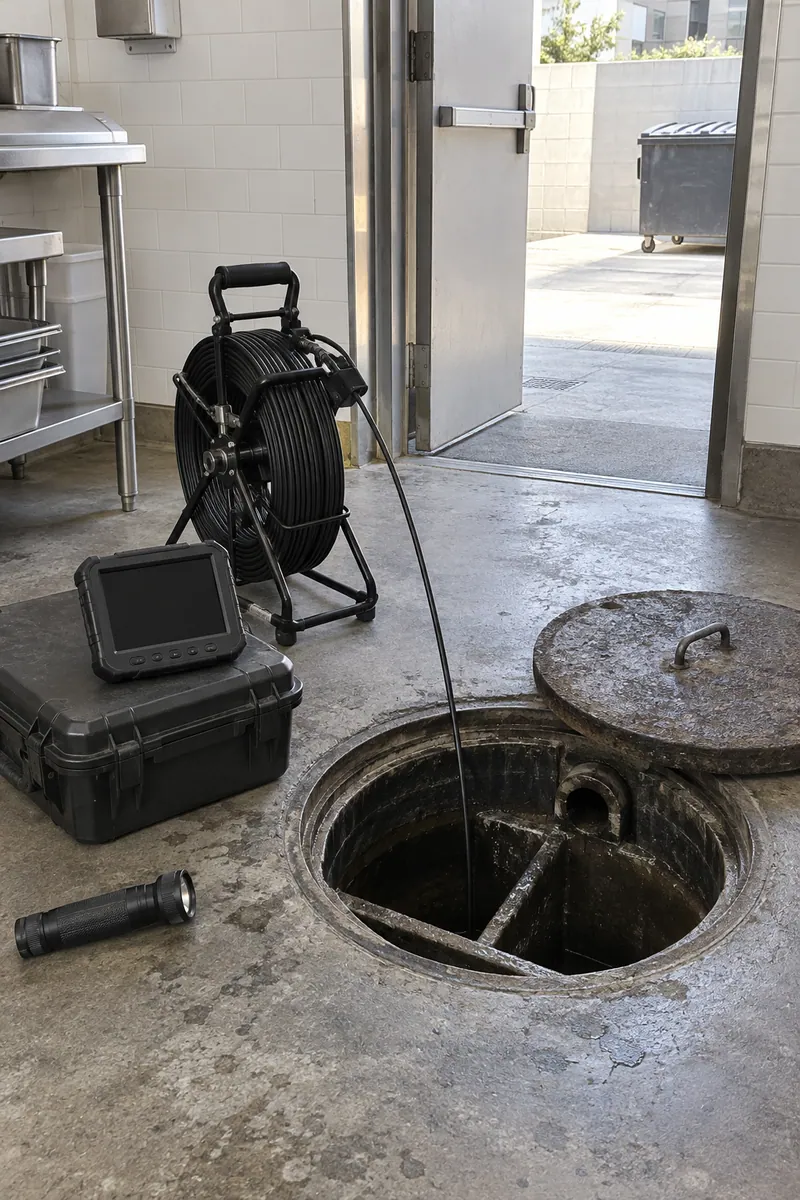
Not always. Backups can come from a unit that’s overdue for pumping, a broken baffle or a clogged sewer line downstream. We pump it, look inside and run a camera, then tell you whether a repair, a replacement or a bigger unit fixes it.
Usually, since digging the lot or cutting the slab touches property they own. Some leases name the landlord’s own vendor for this work. We send drawings, insurance certificates and the schedule for sign-off before we start.
Yes, for restaurants, cafés, bars and commissary kitchens across Los Angeles, CA. Send the address and your fixture list, and we’ll set up a walkthrough.
More restaurant services
Kitchen, dining room, bar and storefront remodels for LA restaurants under one contract.
Cook lines, prep and dish areas with equipment rough-ins set to your plan.
Quarry tile and resin floors sloped to your floor sinks and drains.
From the blog
Now booking free walkthroughs
A grease interceptor sized to your fixtures keeps FOG out of the sewer line and your kitchen drains moving. Los Angeles Home Remodelers runs the permit, the dig and the sewer tie-in as your single contractor. Book your free grease walkthrough today.
Mon–Sat, 8am–6pm
We count your fixtures, check any existing unit and price the install line by line. No charge, no obligation.
Thanks — we got your request. We'll call you to set up your free in-home visit.