Home › Restaurant Remodeling › Restaurant Flooring
Restaurant Flooring in Los Angeles
Commercial kitchen flooring has to take hot water, grease, dropped pans and a nightly hose-down, then pass the health inspector’s look at every seam and drain. Los Angeles Home Remodelers is a restaurant remodeling contractor installing restaurant flooring across Los Angeles, CA, from quarry tile and urethane cement in the kitchen to porcelain in the dining room.
One project manager handles the county health department’s plan check where your scope needs it, LADBS permits for drain work and your landlord’s approval. Most kitchens close about 3–7 days for a full floor, and dining rooms often go in overnight. A free walkthrough leads to a written, itemized estimate.
Bonded & Insured | Written Workmanship Warranty
We run water across the floor, tap for loose tile and look at every drain. Free, with nothing to sign.
Thanks — we got your request. We'll call you to set up your free in-home visit.
Restaurant flooring in LA
Serving restaurants across Los Angeles, CA.
Commercial kitchen flooring works harder than any other surface in your restaurant. It has to shed mop water to the drains, grip under grease and leave no gap where food soil hides.
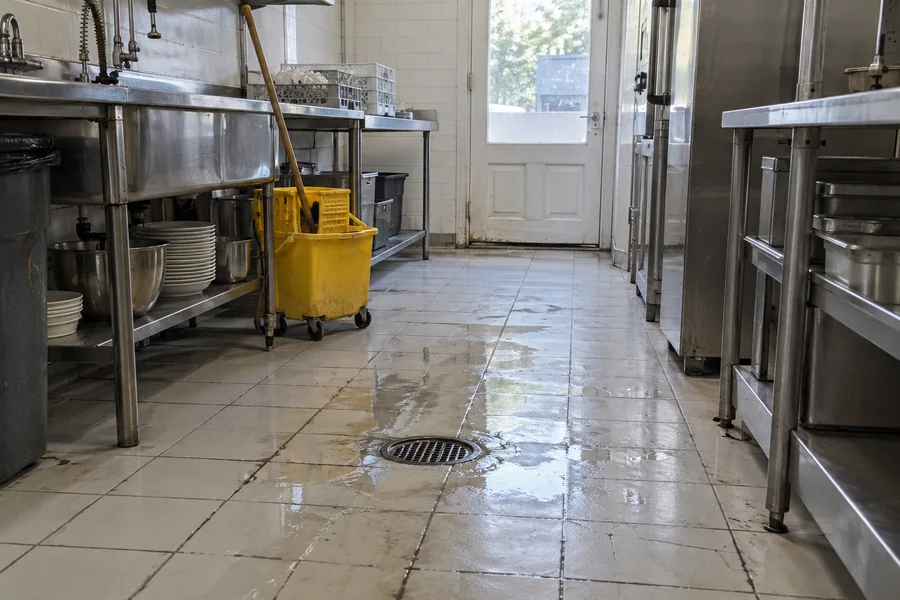
Older LA kitchens fail in the same spots: cracked grout by the fryers, a puddle near the dish pit and cove base peeling off behind the walk-in.
One crew takes your floor from tear-out to finish, so you’re never waiting on the next trade.

Flooring services
Choose one floor or combine them. Every kitchen job includes tear-out, slope and cove base.
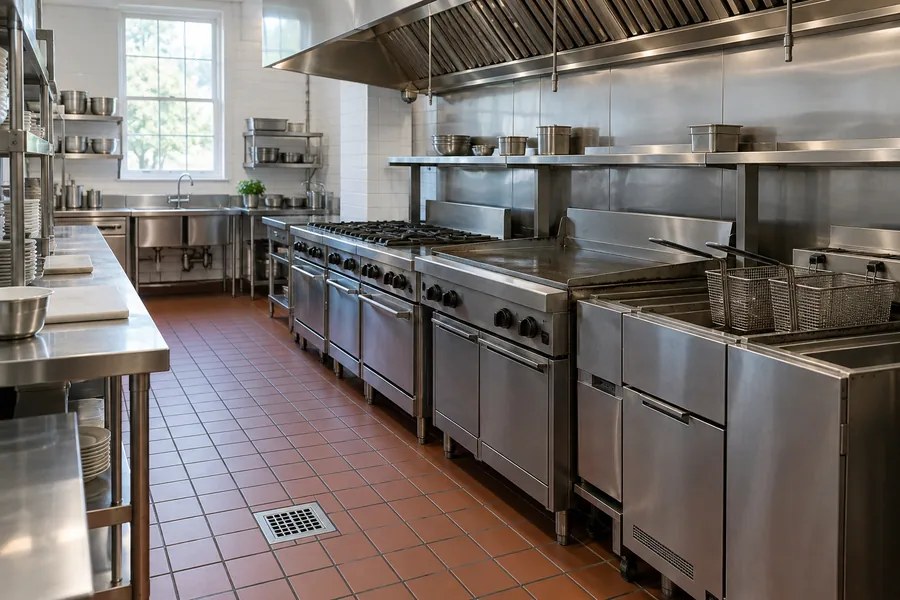
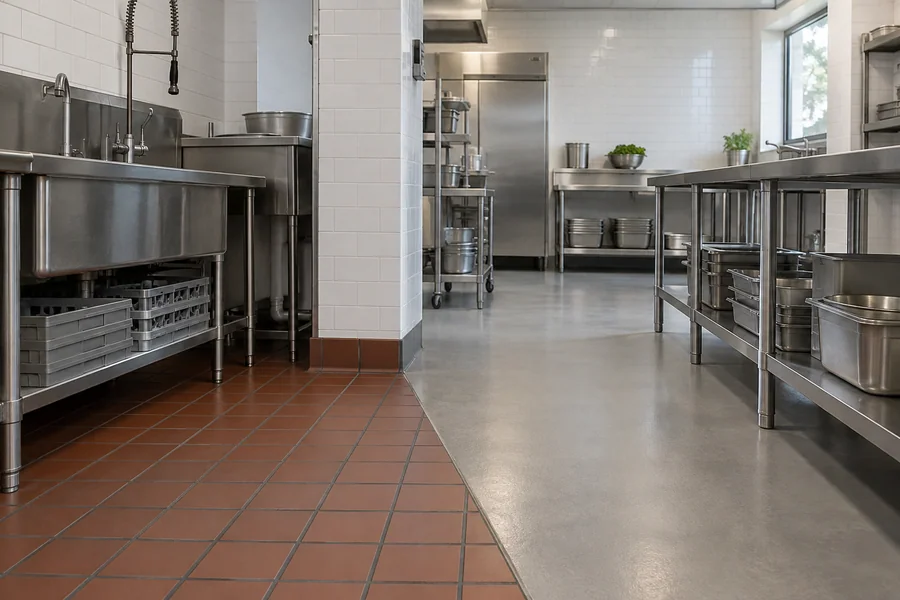
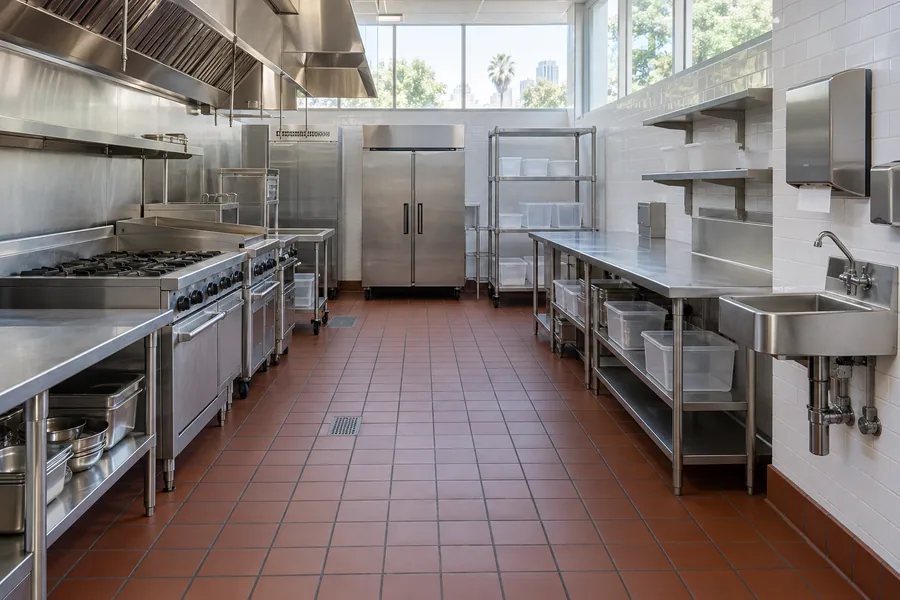
Quarry tile is the classic commercial kitchen floor: dense, unglazed clay tile that takes heat, heavy carts and a stiff brush every night. We set it on a sloped mortar bed with epoxy grout.
It’s the slowest of the three to install, and the hardest to wear out.

Resin floors pour as one surface with no grout lines, and the cove runs up the wall in the same material. Urethane cement handles boiling water and hot oil better than standard epoxy, so it’s our pick under the line.
Epoxy flooring suits prep rooms and dry storage.
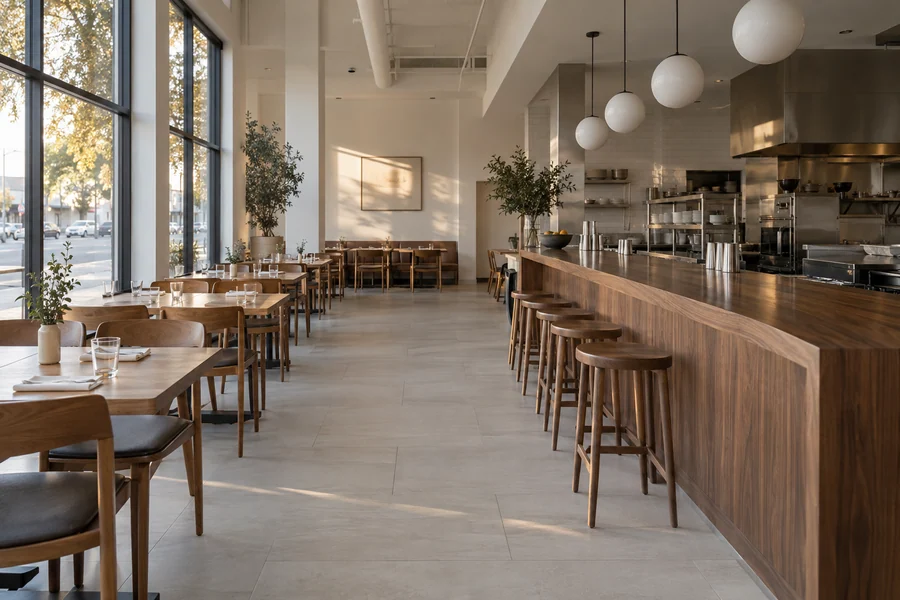
Dining room flooring has to look good under your lighting and survive chair legs and spilled drinks. We install porcelain tile, LVT (luxury vinyl tile) or sealed concrete out front, and rubber behind the bar.
We work overnight, section by section, so you don’t lose a service.
How it works
Four steps. Your closing days get locked to your slowest stretch before any tile comes up.
We tap for hollow tile, run water toward each drain and measure every area, including the walk-in and bar.
You choose a finish per area. Where the health department or LADBS needs to review it, we submit the finish schedule.
Old tile and mortar come up, drains get reset and the slope gets rebuilt so water runs off.
Finish, cove base and thresholds go in. After the cure, we flood-test the floor with you before you restock.
Floor details
Your inspector and your closing crew notice these details long before anyone notices the color.

Every wet area should fall toward a drain, so mop water leaves on its own. We float the mortar bed or resin to an even pitch that drains without letting speed racks drift.
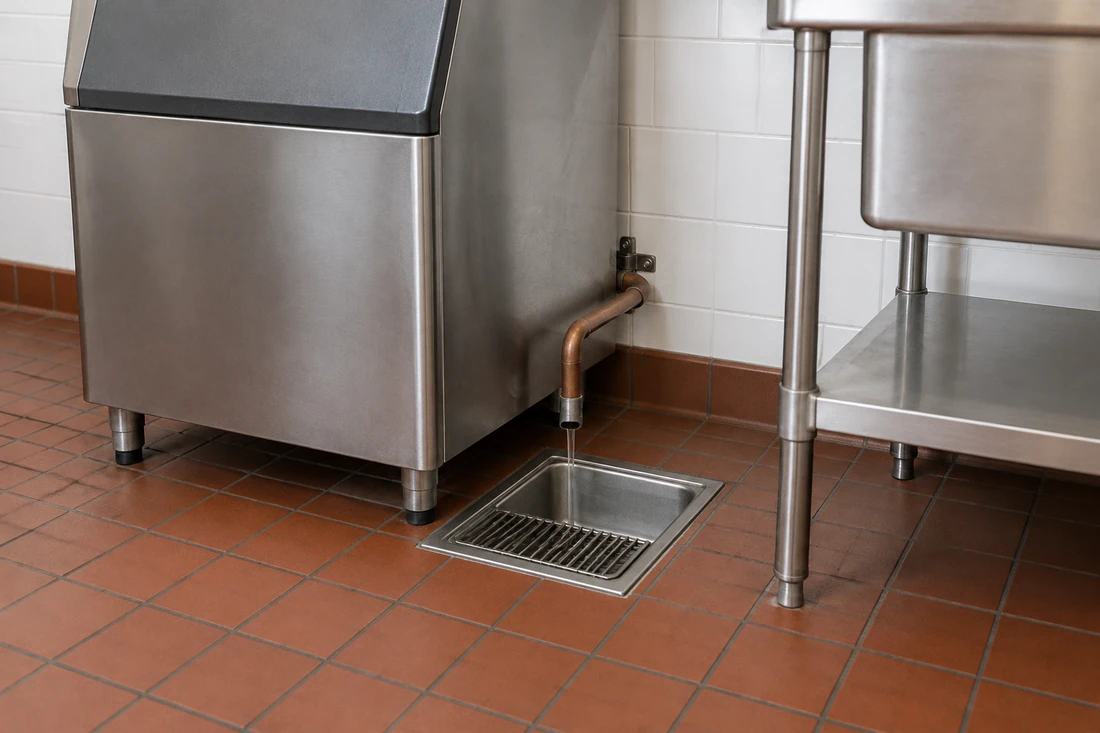
Floor drains take mop water; floor sinks take indirect waste from ice machines and prep sinks through an air gap. A drain set even a little high leaves standing water, so we set each one to finished floor height.

A coved base curves the floor up the wall, so a mop reaches everything and nothing builds up in the corner. We confirm the height and radius the county health department wants for your scope.
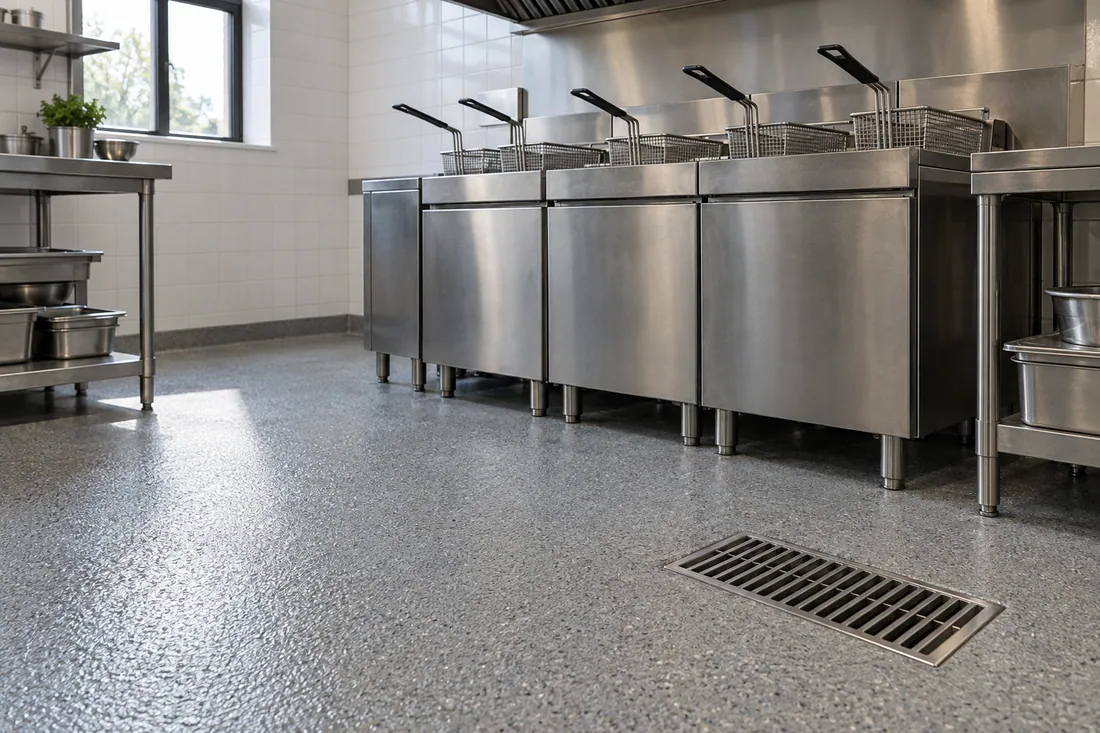
Grease and water make a smooth floor dangerous on a full night. We choose textured quarry tile or broadcast aggregate into a resin topcoat, fine enough to mop clean.
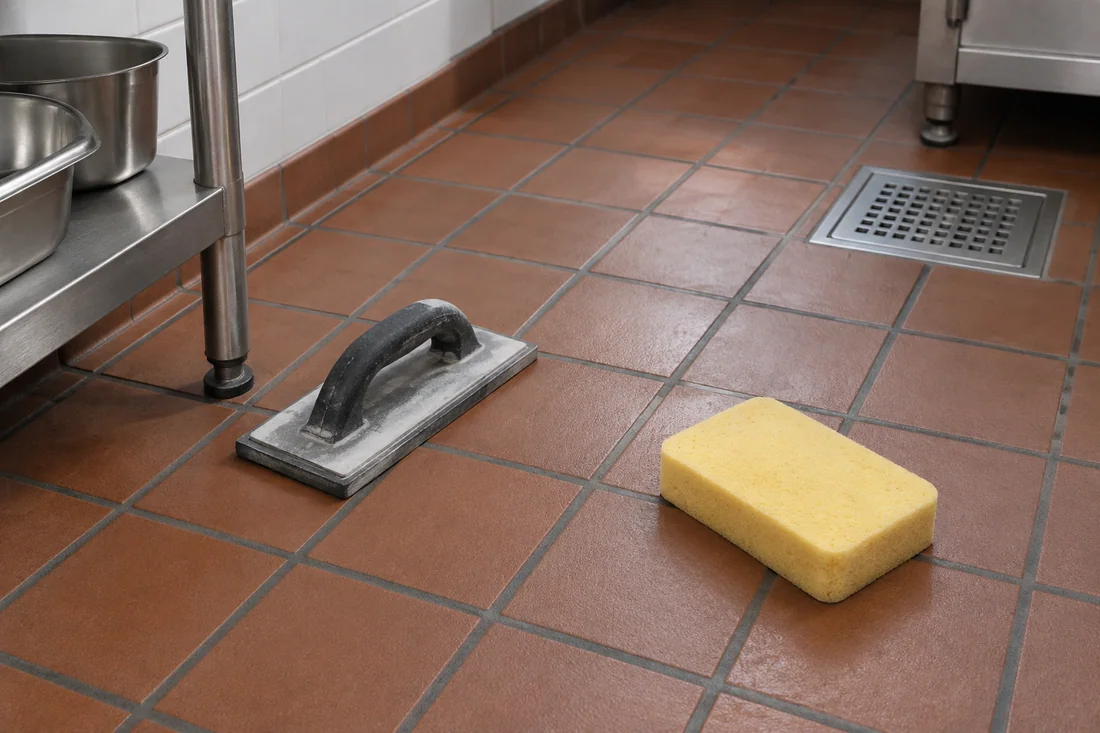
Cement grout soaks up grease and cracks under hot water, which is where most tile floors start to fail. Epoxy grout stays sealed and stands up to degreasers.

Dining rooms, bars and small kitchen areas can go in after close. A full kitchen floor means a few closed days, so we plan them around your slowest stretch.
Before tear-out
Most kitchen floors fail from water underneath, not wear on top. Cracked grout lets mop water into the mortar bed, and a wet bed loosens tile and starts to smell.
Here’s what we check before pricing your new floor:
If the slab under a wet bed is sound, only the tile and mortar come up. If it’s sunk near a drain, we cut out and repour that section first.
A new floor can need the county health department’s review, and moving a drain is plumbing work LADBS permits in the City of LA. We confirm both for your scope before demo day.

Flooring materials
Most restaurants mix two or three: a tough kitchen floor, a warmer finish out front and rubber behind the bar.
Material
Where it works
Watch out for
Closed time
Quarry tile
Cook line, dish pit and prep
Needs epoxy grout and a solid, sloped bed
Longest; mortar and grout must cure
Epoxy flooring
Prep rooms, dry storage and back bar
Can crack under boiling water; needs a dry slab
A few days, set by cure time
Urethane cement
Cook line and wash-down areas
Matte look and fewer color choices
Often the shortest kitchen closure
Sealed concrete
Some storage and service areas
Often not accepted where food is prepped
Short; recoat as it wears
Porcelain or LVT
Dining room, host stand and restrooms
LVT dents under heavy bar stools
Overnight, section by section
Rubber cushions bartenders who stand for hours and grips when ice hits the floor. We lay it over a base sloped to a drain.
Fryer splatter and kettle dumps hit the floor hot. Urethane cement and quarry tile take that heat; standard epoxy and vinyl don’t.
A flush threshold where the kitchen meets the dining room keeps servers with full trays from catching a toe.
Some resins smell strong as they cure. If your dining room stays open, we pick a low-odor system and ventilate.
One visit shows where the slope fails, which finish suits each area and how many days you’d close. It costs nothing.
Questions
Straight answers on materials, health inspections, permits, drains and closing days.
Call us, and you’ll talk with the project manager who’d run your install.
Quarry tile with epoxy grout, or urethane cement, in most kitchens. Both take heat, grease and daily scrubbing, and both can be coved at the walls. Quarry tile takes longer to install; urethane cement reopens sooner with no grout lines.
California’s Retail Food Code calls for smooth, durable, nonabsorbent, easy-to-clean floors in food areas, with coved base at the walls. The county health department reviews your finish schedule in plan check, and a few cities run their own. We confirm accepted finishes for your scope.
Often, yes. A new kitchen floor can need the county health department’s review, and adding or moving a floor drain or floor sink needs an LADBS plumbing permit in the City of LA. Other cities run their own building departments, so we confirm the path first.
Most full kitchen floors close the kitchen about 3–7 days. Urethane cement sits at the short end; quarry tile on a new mortar bed sits at the long end, because the mortar and epoxy grout need cure time. Dining rooms can often go in overnight.
Quarry tile, in most kitchens, as long as it sits on a solid, sloped bed with epoxy grout. Standard epoxy flooring can crack or lift under boiling water and fryer heat. For a jointless floor under the line, urethane cement is the tougher resin.
Usually the drain body sits above the floor around it, or the slope was never built in. New grout won’t fix either. We reset the drain to finished height, rebuild the slope and flood-test before the new finish goes down.
Yes, in most cases. We seal the kitchen off behind plastic walls, run the loud tear-out after close and keep the dining room path clear. Dining room flooring goes in overnight, one section at a time.
Rubber flooring or quarry tile, sloped to a floor drain. Bartenders stand there all shift on ice, syrup and broken glass. Rubber is easier on legs, while quarry tile is harder to damage.
More restaurant services
Kitchens, dining rooms and storefronts rebuilt for LA restaurants under one project manager.
Cook lines, prep, dish and storage laid out with the rough-ins your equipment needs.
Seating, bar builds, lighting and accessible seating for the front of house.
From the blog
Now booking free walkthroughs
A floor that drains and grips under grease keeps your line safe and your closing crew quick. Los Angeles Home Remodelers builds restaurant flooring from the slope up. Book your free floor walkthrough today.
Mon–Sat, 8am–6pm
We flood-test your drains, check the slab under the tile and price every area line by line.
Thanks — we got your request. We'll call you to set up your free in-home visit.