Home › Exterior Remodeling › Exterior Painting
Exterior House Painters in Los Angeles
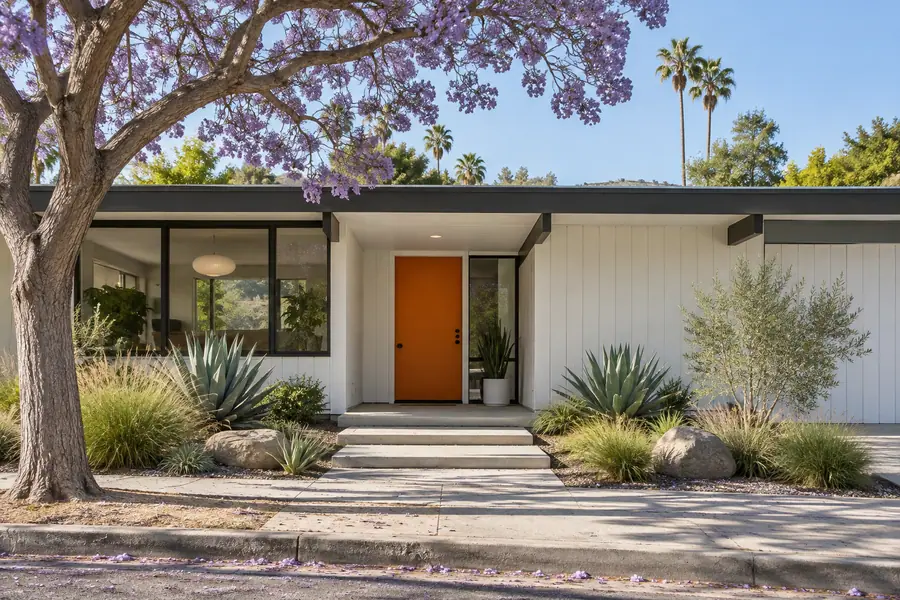
Exterior house painting from Los Angeles Home Remodelers gets your stucco walls, wood trim, eaves, fascia and doors washed, repaired, primed and finished in two full coats of acrylic or elastomeric paint. We’re a design-build exterior remodeling contractor across Los Angeles, CA.
One project manager runs the color samples, pressure washing, scraping, caulking and lead-safe prep on pre-1978 homes, and checks whether your HOA or historic district reviews colors. Most single-story house exteriors take about 1–2 weeks once prep starts, weather allowing, and two-story or hillside homes run longer. Your free in-home visit ends with a written, itemized estimate.
Bonded & Insured | Written Workmanship Warranty
We walk the house, check each wall and trim board for chalk and soft wood, and price the prep line by line. Free, with nothing to sign.
Thanks — we got your request. We'll call you to set up your free in-home visit.
Exterior painting in Los Angeles
Serving homes across Los Angeles, CA.
Exterior house painting lasts when the prep is right, so most of our hours go into washing, scraping, caulking and priming before a finish coat goes on. Because painting sits inside our exterior remodeling work, a stucco and carpentry crew backs up every job.
Each job starts with a walk around the house. We rub the walls for chalk, probe the trim for soft wood and mark every open joint, and you see that list before you pick a color.
Cracked or patched stucco goes to our stucco repair crew first, so paint lands on a sound wall.
Exterior painting services
Pick the job that matches your house. Each one gets the same prep, two coats and one project manager.
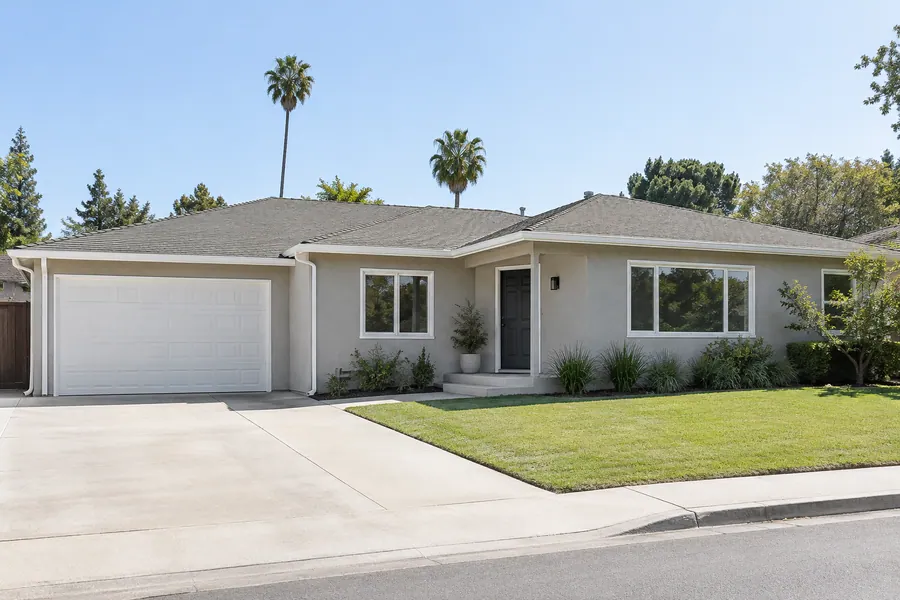
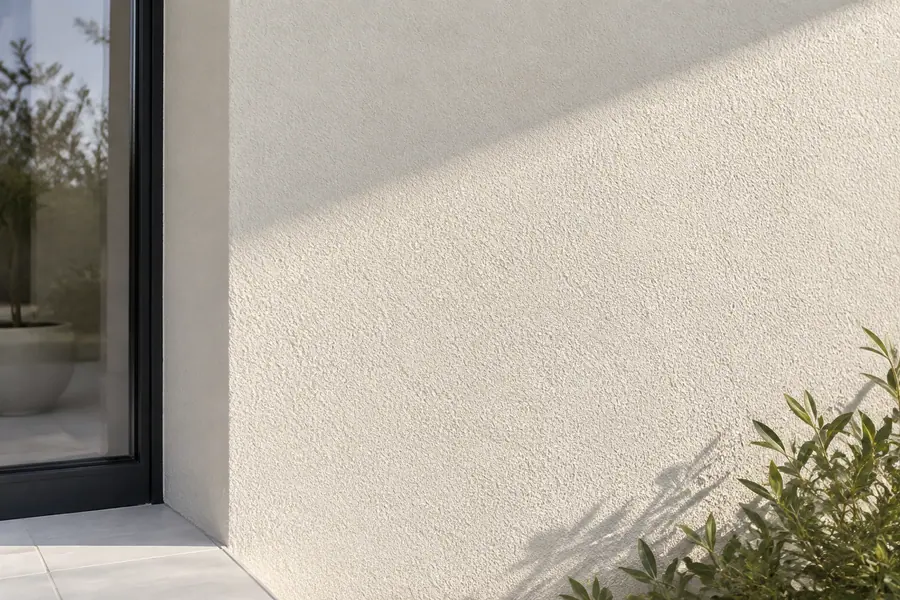
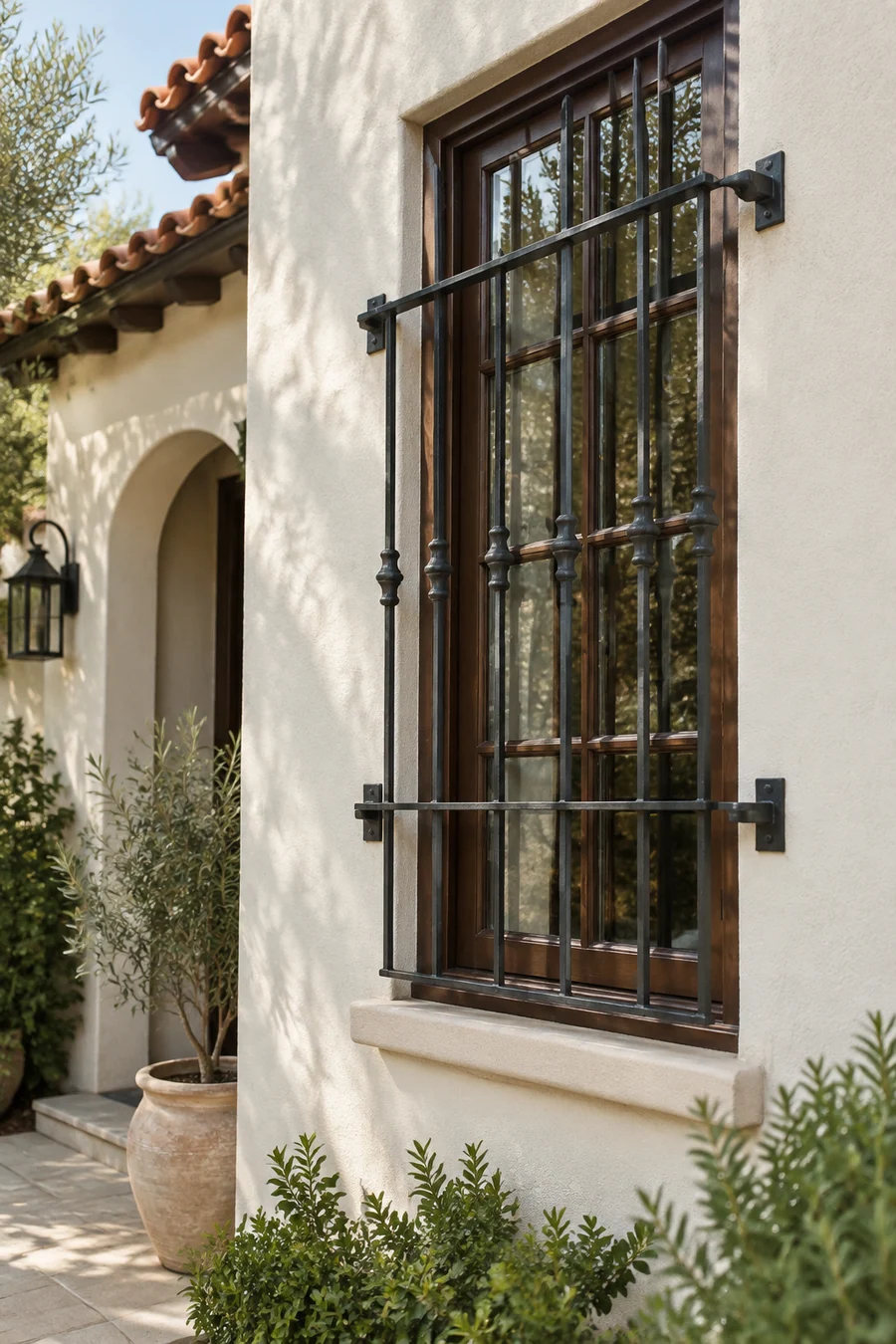
Your walls, trim, eaves, fascia, doors and garage door get washed, repaired and painted in one booking. For stucco painting, we spray and back-roll so the paint fills the texture, then brush the trim by hand.
Every surface gets two finish coats, in colors you’ve approved in writing before we buy a gallon.
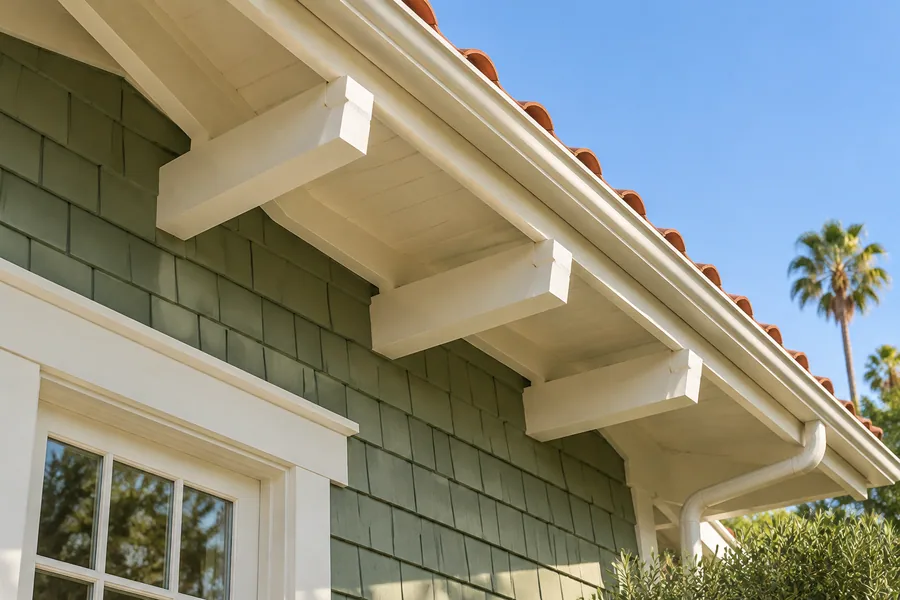
Trim gives out years before stucco does. Fascia, rafter tails, window trim and the front door take the sun and the gutter drips, so a trim-only repaint keeps the house sealed between full paint jobs.
We scrape to firm paint, swap soft boards once you approve them, and finish in satin or semi-gloss.
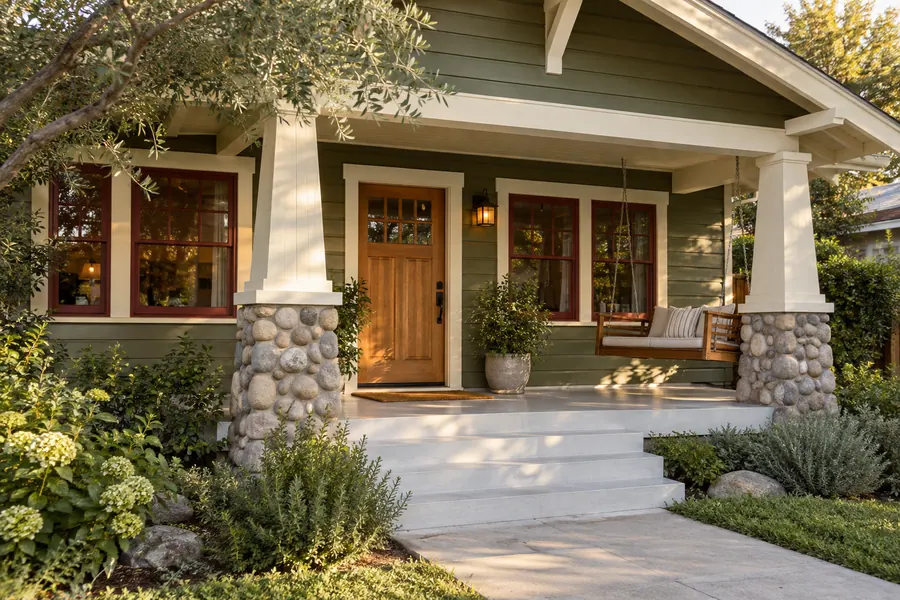
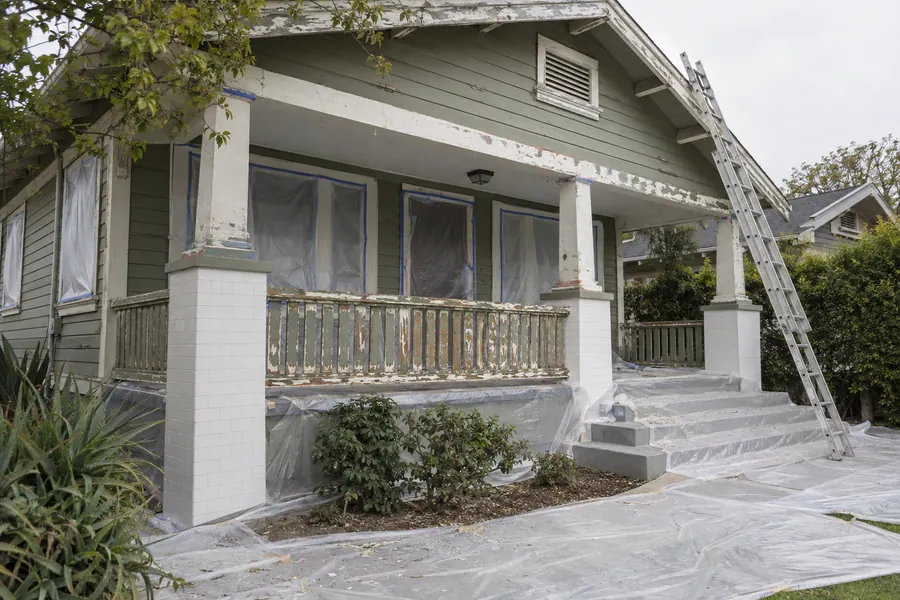
Wood siding, shingles and porch posts on a Craftsman bungalow need hand prep: scraping, sanding, filling and priming every bare spot. Most of these houses carry old lead paint, so we work lead-safe from the first scrape.
Boards past saving? Our siding installation page covers replacing them.
How it works
You approve the colors, sheens and scope before anyone opens a can.
We check every side of the house and paint large test patches on a sunny wall and a shady one. If your HOA reviews colors, we prepare the packet.
Crews lay drop cloths, cover cars, plants and windows, and test pre-1978 surfaces for lead. Then they pressure-wash the house and give the walls time to dry.
Loose paint comes off, cracked caulk gets cut out and replaced, and bare wood and patches get primer so the finish bonds.
Walls get two coats, then the trim and doors. We pull the masking, clean up and walk the house with you until your list is done.
Where the hours go
Prep, coating, trim and color each get their own step, and pre-1978 homes add lead-safe work.
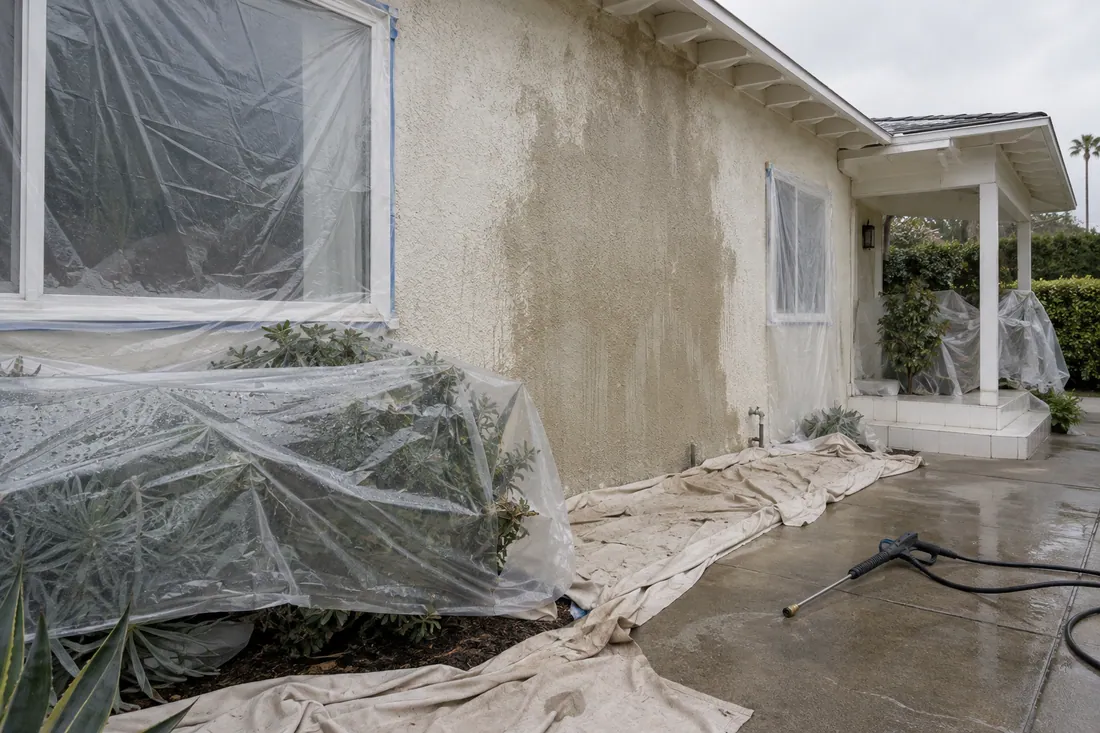
Paint only sticks to clean, dry, sound surfaces. Pressure washing at low pressure strips chalk, dust and cobwebs, then the walls get dry time before anyone scrapes or sands.
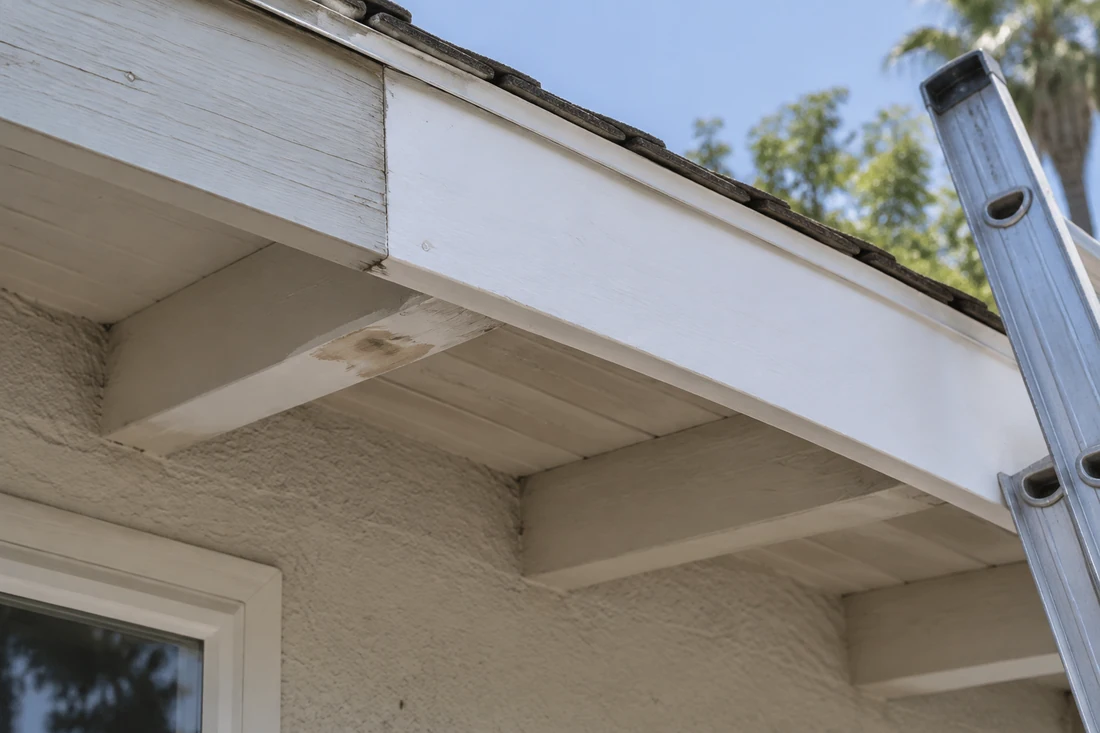
Paint can’t save soft wood. We probe fascia, sills and rafter tails for dry rot, then fill small spots with epoxy or replace the board, priced line by line for your approval.
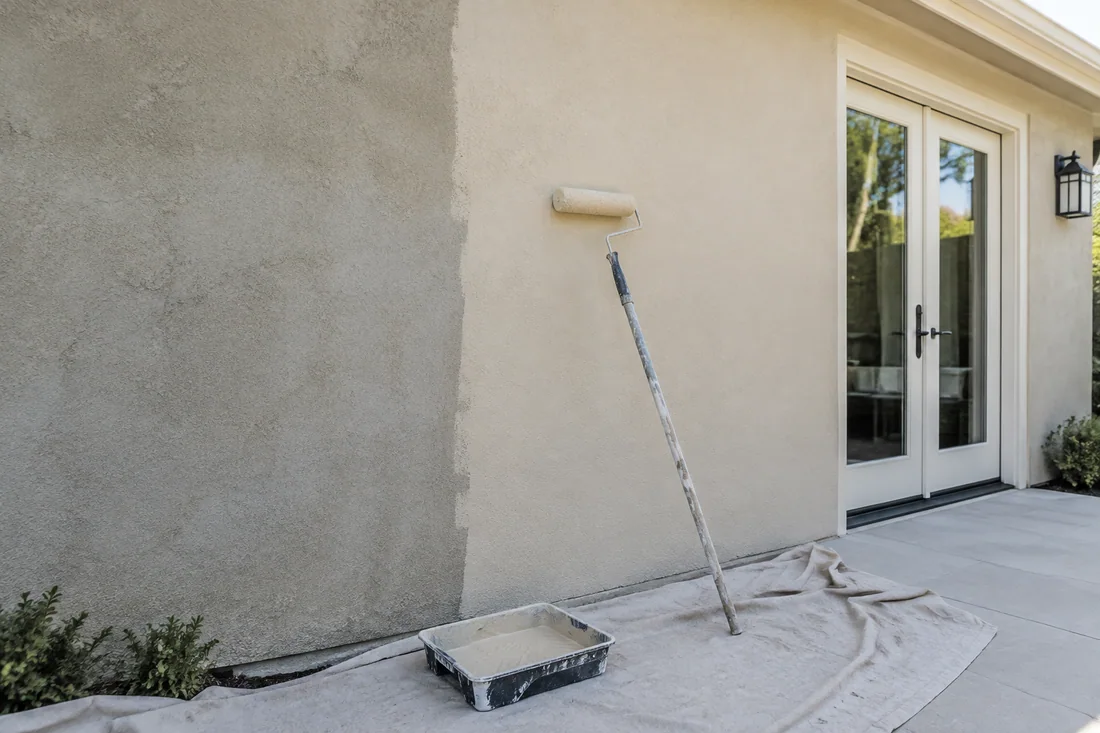
Acrylic masonry paint suits sound stucco and lets the wall breathe. Elastomeric coating goes on thick and stretches over hairline cracks, but it holds water in a damp wall, so we test before we choose.
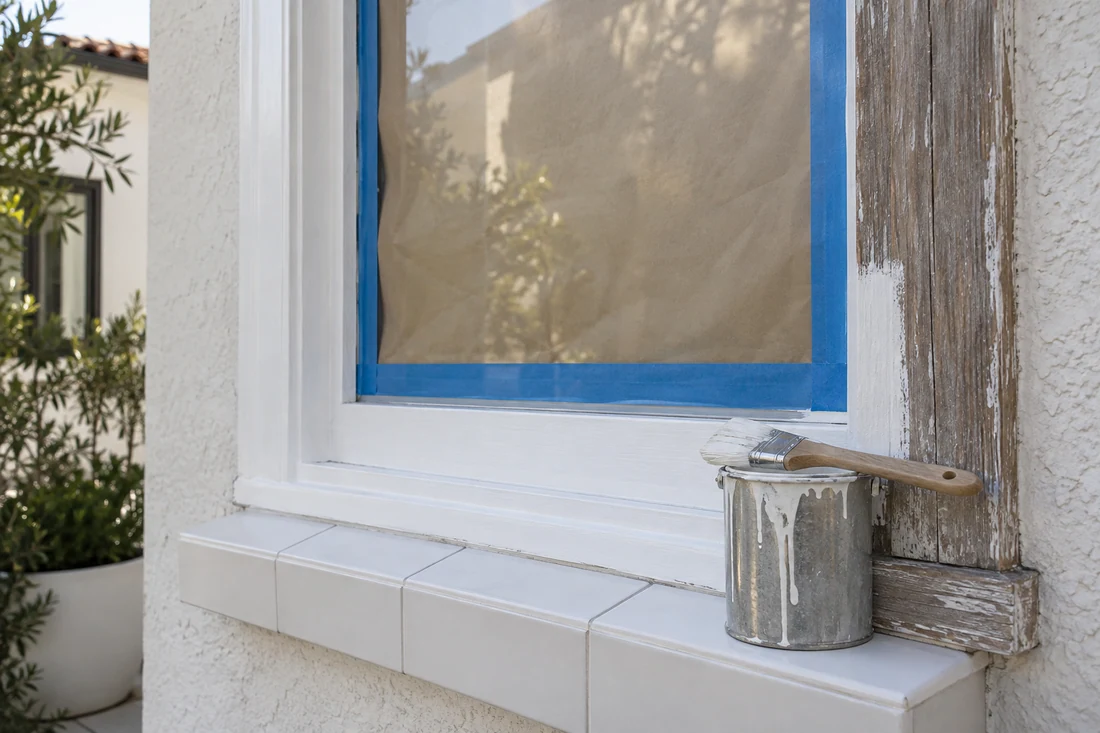
Trim painting takes more hand work than any wall. We brush rafter tails, fascia, soffits and window trim so every face and edge gets covered, then finish in satin or semi-gloss.
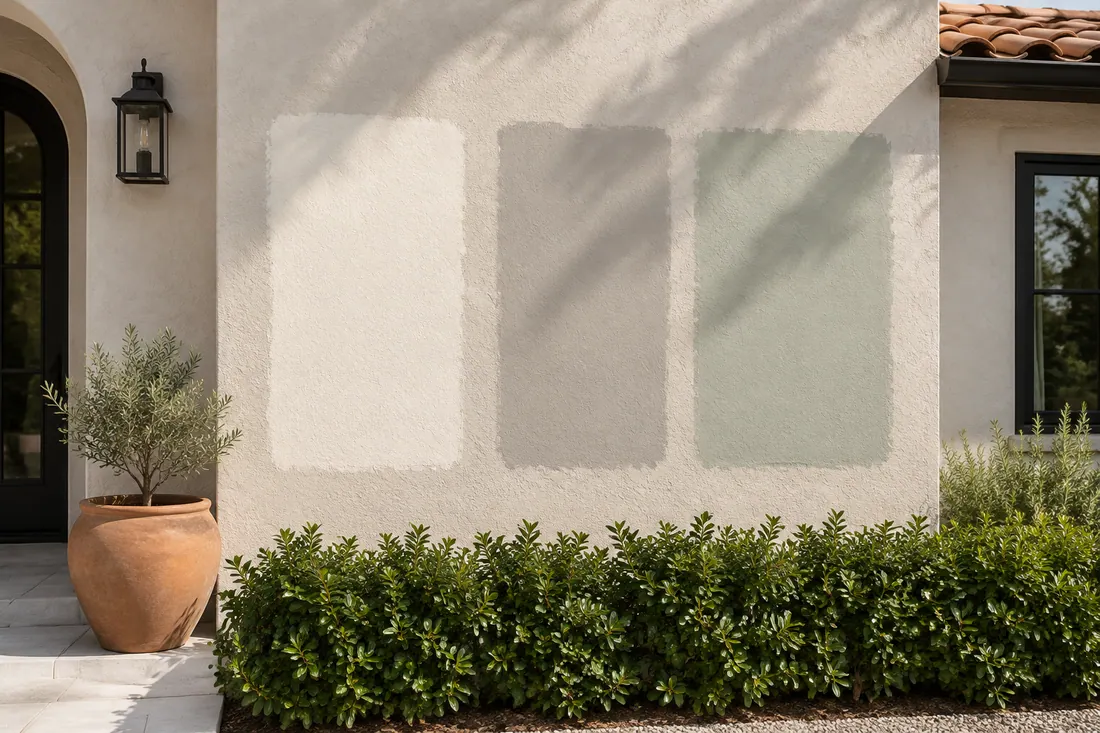
Colors shift outdoors. We paint large samples on two sides of the house so you see them in morning and afternoon light, and we send your HOA the color sheet and photos it asks for.
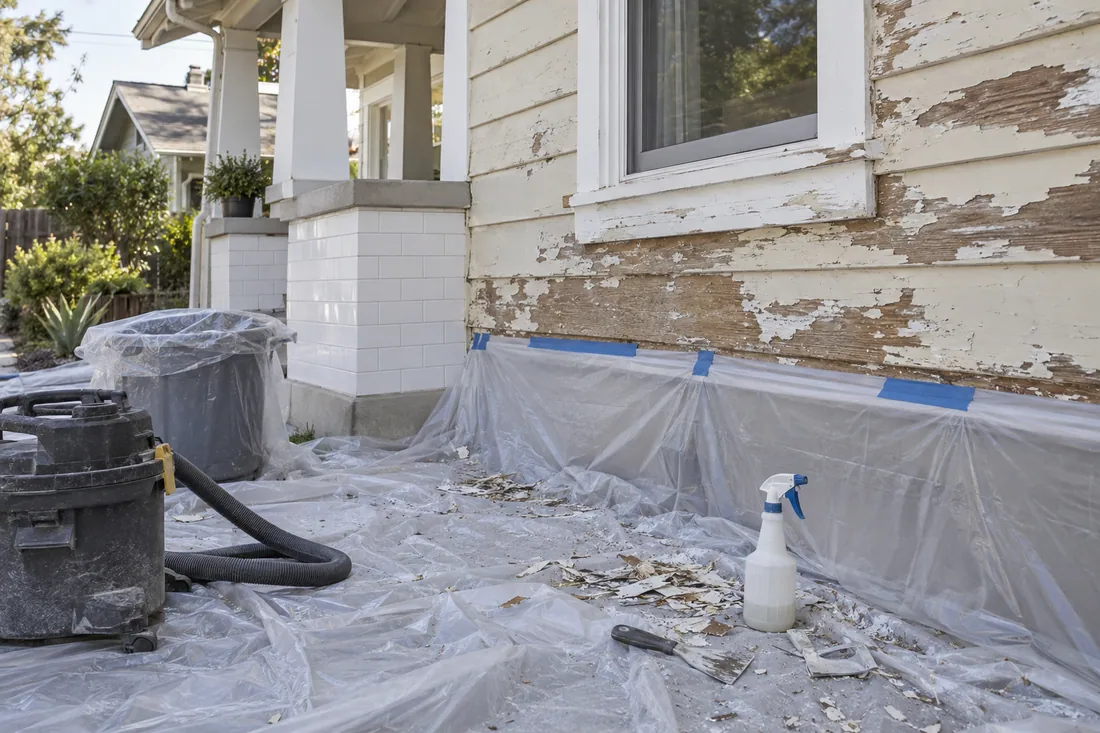
Homes built before 1978 may have lead paint under the top coats. Whenever we disturb old paint, we follow EPA lead-safe work practices under the RRP rule, so dust and chips stay contained.
Sun, fog and rain
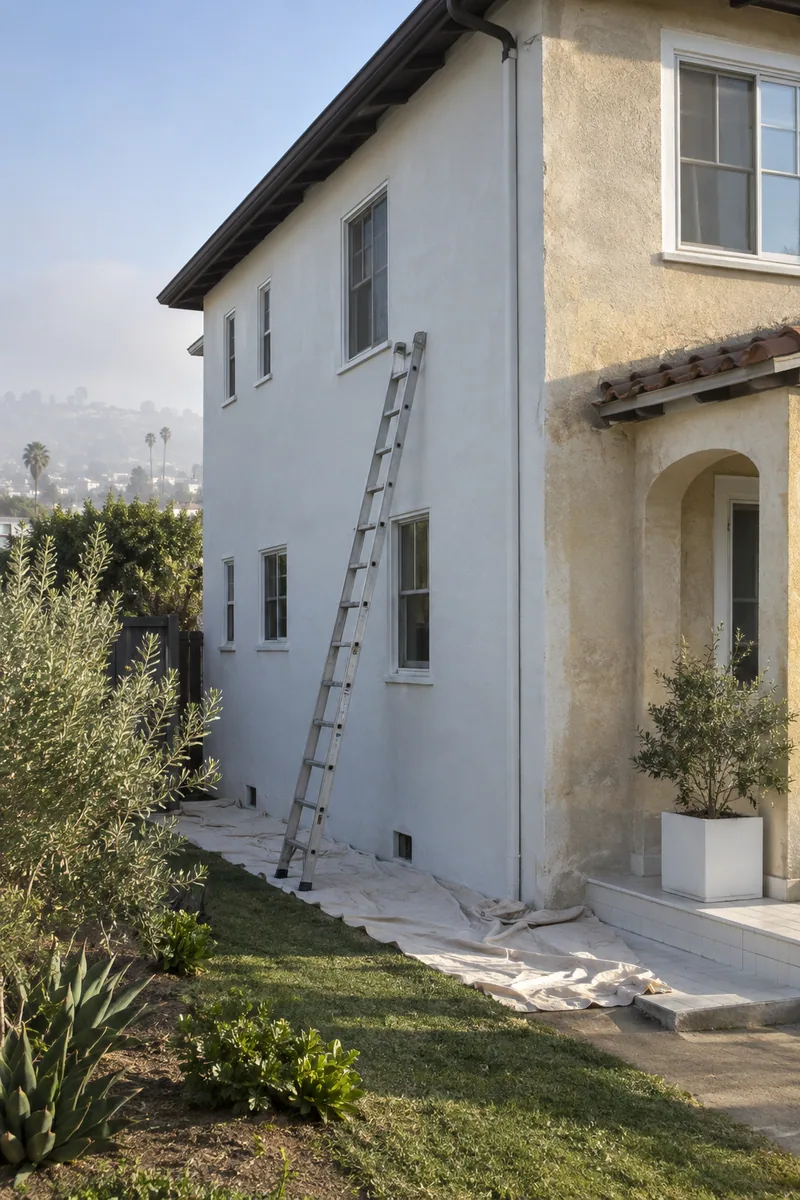
LA weather lets you paint most of the year, but sun, morning fog and winter rain still decide which wall gets painted when. We plan the order around them so each coat dries the way its label says.
Here’s how the weather shapes the schedule:
Sun is why LA paint fades: UV breaks color down fastest on south- and west-facing walls. Lighter colors show it less, and we’ll point out the shades that fade first before you choose.
Late spring through fall is the easiest season to paint. Winter jobs work too, with more days lost to rain, and we cover open work whenever a storm moves in.
Coatings compared
Match the coating to the surface and its condition first, then pick the color.
Coating
Best for
Watch out for
Usual sheen
Acrylic paint
Sound stucco, block and primed wood
Won’t bridge cracks that keep moving
Flat or low sheen on walls
Elastomeric coating
Stucco with many hairline cracks
Holds moisture in if the wall is damp
Flat to low sheen
Satin exterior enamel
Trim, fascia, eaves and window frames
Lap marks if rushed in direct sun
Satin
Semi-gloss enamel
Front doors, railings and shutters
Shows dents and poor sanding
Semi-gloss
Penetrating or solid stain
Fences, decks and raw cedar
Fades sooner than paint on sunny faces
Flat to matte
Bare wood, fresh patches and chalky spots get primer, so the topcoat bonds instead of peeling.
Spraying fills deep stucco texture fast. Back-rolling right after works the paint into the pores for an even film.
One coat can look even while it’s wet, then dry thin and fade early on the sunny side. Every wall gets two.
Over a damp wall or bare wood, its thick film traps water and blisters. We use it only on dry, sound stucco.
You’ll leave the visit with a chalk and moisture check, a lead test plan for an older house and a coating picked for each surface. It’s free.
Questions
Short answers on timing, coatings, lead paint, permits and colors.
Most single-story homes take about 1–2 weeks from washing to the final walk. Dry time after the wash, the scraping and wood repair, and any lead-safe prep set the pace. Two-story and hillside homes need ladders or scaffolding and run longer.
The prep sets the number more than the paint does. Wall area, the amount of trim, wood repair, lead-safe work and access on a hillside or two-story house all count, and your written estimate prices every line.
A repaint usually doesn’t need a building permit. Other rules still apply: EPA lead-safe practices on pre-1978 homes, South Coast AQMD limits on paint VOCs, and any HOA or HPOZ review, which we check before you choose colors.
Only if the stucco has many hairline cracks and the wall is dry. Its thick, stretchy film bridges small cracks. On sound stucco, a quality acrylic breathes better and is easier to recoat later.
Prep and wall orientation decide it more than the brand of paint. South and west walls fade and chalk first, and wood trim needs fresh paint sooner than stucco. Clean prep, two full coats and lighter colors stretch the time between repaints.
If it was built before 1978, it might, most often on wood trim, eaves, window sashes and old siding. We test the surfaces we’ll disturb, and if lead turns up, we follow EPA lead-safe practices from setup through cleanup.
Not without prep. New paint over loose paint or chalking comes off with it, often within a season or two. We wash the chalk off, scrape loose paint to a firm edge and prime before any finish coat.
Yes. Windows get masked only on the side we’re working, and we’ll tell you the day before if a door or the driveway will be blocked. Keep pets inside while the sprayer runs.
More exterior services
Roof, windows, walls and paint planned in the right order under one contract.
Crack repair, texture-matched patches and full re-stucco before the paint goes on.
Fiber cement, board-and-batten or shingle siding, with rotted boards replaced first.
From the blog
Now booking free in-home visits
Clean, sealed walls and two full coats keep exterior paint from peeling early. Book a free in-home visit, and we’ll check the prep and write you an itemized estimate.
Mon–Sat, 8am–6pm
We check the walls, trim and eaves, then price the prep and paint line by line. No charge, nothing to sign.
Thanks — we got your request. We'll call you to set up your free in-home visit.